People avoiding a specific allergen
If dried fruit is part of your desk lunch, match the exact pack’s ingredients and any precautionary warning to the allergen you avoid. Vegan or no-added-sugar wording does not answer that question.


For a working-from-home lunch, choose dried fruit by checking the current pack against the specific allergen you need to avoid, including ingredients, declared allergens and any precautionary warning. Plain raisins or prunes can have shorter ingredient lists than coated snacks, but a short list, “vegan” wording or a general brand statement does not establish suitability for every allergy. Products such as Asda Dried Mango and M&S Tropical Fruit Medley also show why sulphites need a product-by-product check.
If dried fruit is part of your desk lunch, match the exact pack’s ingredients and any precautionary warning to the allergen you avoid. Vegan or no-added-sugar wording does not answer that question.
Plain raisins or prunes may be easier to screen than a coated or mixed snack because there are fewer listed ingredients. The current pack’s full allergen information still matters.
Look for “sulphur dioxide” or “sulphites” in the ingredients and allergy information. Asda Dried Mango, Sofra Dried Apricots and M&S Tropical Fruit Medley are examples that declare them; the fruit type alone is not a reliable shortcut.
Start with the allergen you need to avoid, then check the complete product declaration and the pack you will actually eat.
| Priority | What to check | Your needs |
|---|---|---|
| Specific allergens | Read the ingredients and declared allergens for the exact product. Check any “may contain” or other precautionary statement for the allergen you avoid. | I need to screen both ingredients and possible cross-contact before adding dried fruit to lunch. The Food Standards Agency explains that UK businesses must declare use of the 14 regulated allergens; its precautionary-labelling guidance addresses possible unintentional presence. |
| Sulphites | Look for “sulphur dioxide” or “sulphites” in both ingredient and allergy information. Do not decide from the fruit name alone. | If I avoid sulphites, I need to rule them out on this pack. Asda Dried Mango and M&S Tropical Fruit Medley both declare them. |
| Added components | Check coatings and every ingredient in mixed snacks. Compare the complete declaration, not just the dried-fruit ingredient. | I want a straightforward desk snack without overlooking allergens in a coating. Whitworths SHOTS Raisin & Chocolate declares soya and sulphur dioxide and gives further precautionary warnings. |
| Current pack | Check the physical label before eating, even after reading an online listing. Resolve any unclear or conflicting allergen wording before choosing the product. | When I order lunch supplies online, I need the information on the pack in hand: retailer product details can change. |
Asda Dried Mango, Sofra Dried Apricots and M&S Tropical Fruit Medley declare sulphur dioxide or sulphites. Appearance does not settle whether a particular product suits someone avoiding them.
Search the exact pack’s ingredients and allergy information for both terms.
Whitworths lists raisins and sunflower oil for Sunny Raisins, and partially rehydrated prunes and potassium sorbate for its 1DERS prunes. Neither short list, on its own, settles possible cross-contact.
Read the complete allergen declaration and any precautionary wording for your specific allergen.
Whitworths SHOTS Raisin & Chocolate declares soya and sulphur dioxide; it also warns of possible peanuts, other nuts, milk, sesame and cereals containing gluten.
Screen coated and mixed products as complete snacks rather than treating them as equivalent to plain fruit.
Retailers warn that recipes and allergen information can change. A brand’s statement about one range does not replace the declaration on an individual pack.
Check the current pack before eating. If its wording is unclear or conflicts with the listing about an allergen you must avoid, do not assume it is suitable.
These examples show why suitability belongs to the individual dried-fruit product, not its brand or retailer.
Its range includes plain raisins and prunes as well as coated fruit snacks.
A prune-focused option for shoppers comparing plain dried-fruit snacks.
Its dried-fruit category lists types including raisins, prunes, mango and dates.
Its product pages provide examples of product-specific ingredients and allergy advice.
Its plain and mixed dried-fruit products carry individual allergen information.
These raisin and prune options fit the plain-fruit desk-lunch route. Check each current pack against your own allergen requirements before choosing.
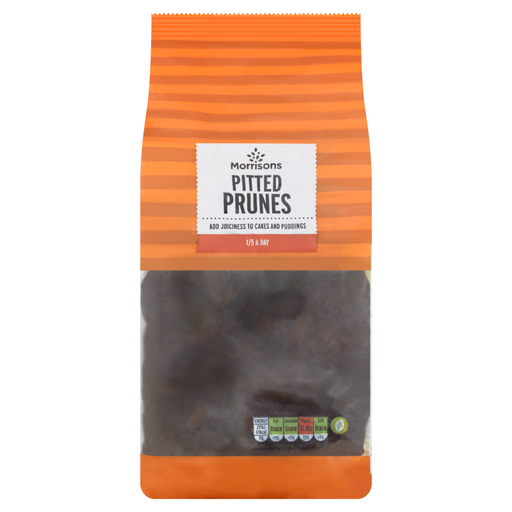 No image available
A plain-prune option for a desk lunch. The product information lists prunes and a preservative and says no allergens are listed; check that declaration on the current pack. Although pitted, the prunes may contain pieces of stone.
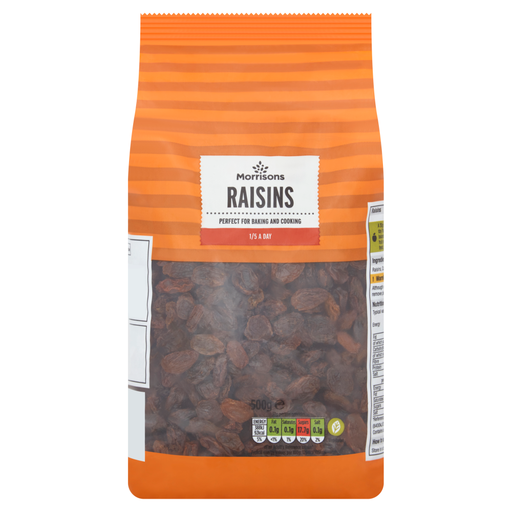 No image available
A raisin option if you prefer a short ingredient list: the product information lists raisins and cottonseed oil, with no allergens listed. Check the current pack for your specific allergen and any precautionary wording.
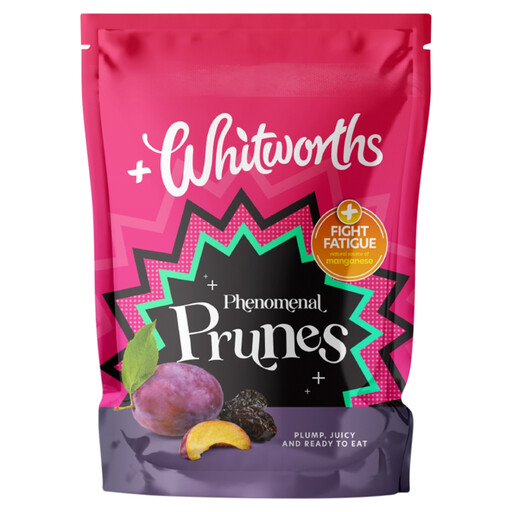 No image available
A prune snack for a desk lunch. Online allergen wording for this product conflicts, including wording about gluten, celery and crustaceans. If any of these matter to you, establish what the current physical pack says before choosing it.
No image availableA prune option for lunch, but do not rely on the online “none” allergen statement alone: other retailer information raises possible peanut, nut and sesame cross-contact. Check the current pack’s precautionary wording, particularly if you avoid those allergens. Check for pieces of stone when eating.
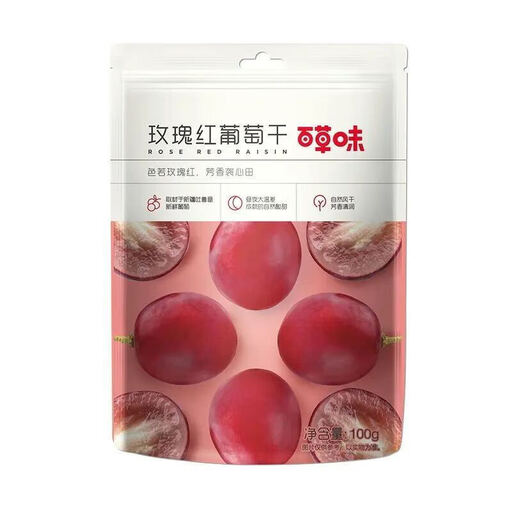 No image available
A raisin option for a desk lunch. The product information gives a single-ingredient list and says no allergens are listed; check the exact pack, including any precautionary statement, before deciding whether it suits your restriction.
No. Suitability depends on the allergen you avoid and the exact product. Check the current ingredients, declared allergens and any precautionary statement rather than treating a claim about one allergen as a claim about all of them. UK Food Standards Agency and Food Standards Scotland guidance covers declaration of the 14 regulated allergens used as ingredients.
It is precautionary wording about possible unintentional presence of an allergen, rather than an ingredient declaration, as explained by the Food Standards Agency. If the warning names an allergen you must strictly avoid, do not treat that product as free from it.
No. Neither description establishes the absence of your allergen or possible cross-contact. Read the exact product’s ingredients and allergen wording; some dried-fruit products, for example, declare sulphites.
Ingredients and allergen information can change, as retailer product advice notes. Before eating dried fruit bought online, compare the physical pack with the allergen you avoid; do not assume an older listing or a general brand statement still describes that pack.