For a named allergy or intolerance, choose dried fruit only after checking that the current pack’s free-from claim addresses the exact allergen you need to avoid. The Food Standards Agency distinguishes an allergen-specific free-from claim from simply finding no mention of an allergen in an ingredient list; check precautionary warnings and sulphites too. For a regular mid-morning snack, NHS guidance advises eating dried fruit at mealtimes instead because it is high in sugar and can stick to teeth.
Who is this for?
Shoppers avoiding a named allergen
Start with the specific allergen or ingredient you must avoid. Check the current pack’s ingredients, any matching free-from claim and precautionary wording; a general “free from” description does not cover every allergy.
Parents and regular snack buyers
If dried fruit is intended for a mid-morning routine, the timing matters as well as the label. NHS guidance advises having dried fruit at mealtimes rather than as a between-meal snack because it is high in sugar and can stick to teeth.
Shoppers comparing ingredients
Compare the ingredients on the exact pack if you have a preference about added oil or preservatives. A short ingredient list can help with that comparison, but it does not by itself establish allergy suitability.
What should you check?
Decide first whether you need an allergen-specific claim, then check the exact pack and whether dried fruit fits the occasion on which you plan to eat it.
| Priority | What to check | Your needs |
|---|
| Named allergen |
Match any free-from claim to the exact allergen. Read the ingredients and any “may contain” or “not suitable for” wording on the current pack. The Food Standards Agency says a free-from claim guarantees suitability for people with the relevant allergy or intolerance. |
“Free from” only helps me if it names what I need to avoid; a claim about another allergen does not answer that question. |
| Sulphites |
Look for sulphur dioxide or sulphites in the ingredients and allergy information. The Food Standards Agency identifies sulphur dioxide as an ingredient used in dried fruit; Sainsbury’s Apple Rings and M&S Orchard Fruits Medley both declare it. |
If I need to avoid sulphites, I cannot assume a fruit-based product leaves them out. |
| Ingredients |
Compare the full ingredient lists of the exact varieties, including any oil or preservative. M&S lists sultanas, raisins, currants and sunflower oil in its Mixed Dried Fruit; its Orchard Fruits Medley declares sulphites. |
I want to know what else is in the pack, without mistaking a shorter ingredient list for an allergy guarantee. |
| Snack timing |
Consider whether the fruit will be eaten with a meal or regularly between meals. NHS guidance advises keeping dried fruit to mealtimes because it is high in sugar and can stick to teeth. |
For a routine mid-morning snack, I would consider fresh fruit or another option that meets my dietary requirements. |
Common label-reading mistakes
-
Reading “free from” as covering every allergen
A claim about one allergen does not establish suitability for someone avoiding another. A product can also carry a precautionary warning even if the allergen is not an ingredient.
Identify the allergen you need to avoid, then read the matching claim, ingredients and precautionary statement on the current pack.
-
Overlooking sulphites
Sulphur dioxide is used in some dried fruit. Sainsbury’s lists it in Apple Rings, while M&S declares sulphites in Orchard Fruits Medley.
If you need to avoid sulphites, check the exact pack for “sulphur dioxide” or “sulphites” rather than relying on the fruit name.
-
Making dried fruit the everyday between-meal snack
The NHS advises eating dried fruit at mealtimes rather than as a snack because it is high in sugar and can stick to teeth.
For a regular mid-morning option, consider fresh fruit or another snack that meets your ingredient and allergy requirements.
-
Relying on an older product listing
Tesco cautions that food ingredients and allergen information can change when products are reformulated. An earlier listing may not describe the pack you are buying.
Read the physical pack at each purchase, particularly when changing flavour or pack size.
Brands and retailers to compare
These references help you compare formats and product labels; a brand or retailer name alone cannot establish whether a particular pack meets an allergy requirement.
Whitworths
Whitworths lists individual fruit snack multipacks, while Tesco lists Whitworths dried-fruit products.
- Its listed 1DERS Fruit Variety Pack provides a portioned format to compare with larger packs.
- Check the ingredients and allergy wording on the particular pack; the format does not establish a free-from claim.
Sunsweet
Sunsweet’s UK range is centred on prunes and prune juice.
- A relevant name to consider if prunes are the fruit you want.
- Check the chosen pack’s ingredients, allergen information and any precautionary statement for your specific requirements.
Tesco
Tesco lists own-label dried fruit alongside Whitworths products.
- Its listings include different fruit types and pack formats for comparison.
- Tesco cautions that ingredients and allergen information can change; use the pack label for the final check.
Sainsbury's
Sainsbury’s product listings provide ingredients for individual dried-fruit lines.
- Its Apple Rings and Dried Pineapple listings both name sulphur dioxide, making that ingredient visible when comparing those products.
- Those two examples do not describe every Sainsbury’s dried-fruit product; check the exact pack.
M&S
M&S provides product-level ingredients and explains its precautionary allergy wording.
- M&S lists sulphites and a warning for nut, peanut and sesame allergy sufferers on Orchard Fruits Medley; its Mixed Dried Fruit has a different listed ingredient mix.
- Compare the label of the particular product rather than treating either example as a range-wide allergy claim.
Dried-fruit options on Joybuy
These Joybuy options cover prunes, red dates, dates and figs. Compare the fruit and pack format, but check each current pack for the exact ingredients, free-from claims and precautionary warnings relevant to you. NHS guidance advises having dried fruit at mealtimes rather than as a regular mid-morning snack.
 Image unavailable
J.ZAO Prebiotic Pitted Chilean Prunes 500g
The pitted format may be useful if you prefer prunes without stones. Check the pack’s full ingredient list and allergen wording before choosing it for a specific dietary requirement.
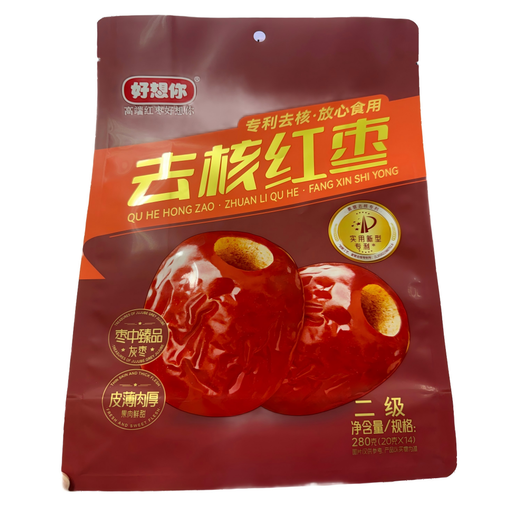 Image unavailable
Haoxiangni Grade 2 Fresh-Locked Pitted Red Dates Original Flavour 280g
Consider these if you prefer pitted red dates to prunes. Confirm the current pack’s ingredients and any allergy warnings before deciding whether they meet your needs.
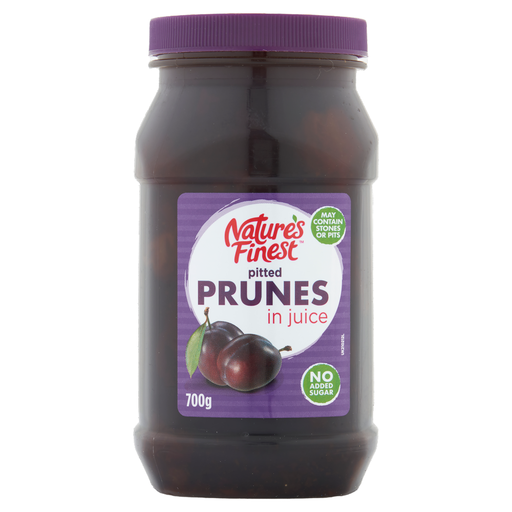 Image unavailable
Natures Finest Juicy Pitted Prunes 700g
This is another pitted prune option, in a 700g pack. Occasional pit fragments may remain; check the pack’s ingredients and allergy wording as well.
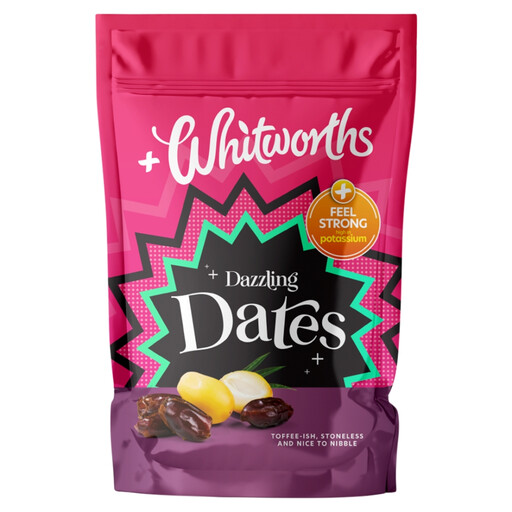 Image unavailable
Whitworths Dates 300g
Choose by the dates’ current pack label, not by the brand name alone. The supplied product warning mentions nuts and small children without clearly explaining its meaning; check the physical wording before buying for a child or someone with a nut allergy. Date stone fragments may occur.
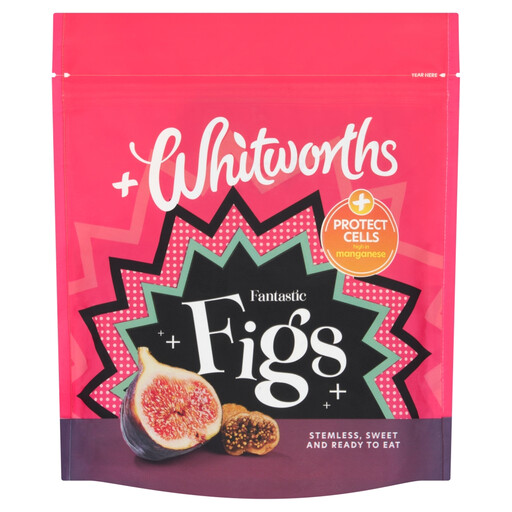 Image unavailable
Whitworths Figs 175g
These figs offer a different fruit choice from the dates and prunes above. The supplied product information warns that the manufacturing facility handles nuts and peanuts; if either allergy applies, check the physical pack’s precautionary wording before choosing them.
Frequently asked questions
What does “free from” mean for an allergen?
The Food Standards Agency says an allergen-specific free-from claim guarantees suitability for people with the relevant allergy or intolerance. Check that the claim names the allergen you need to avoid; it does not automatically cover other allergens.
Is dried fruit automatically free from sulphites?
No. The Food Standards Agency identifies sulphur dioxide as an ingredient used in dried fruit, and Sainsbury’s Apple Rings and M&S Orchard Fruits Medley both list it. If you need to avoid sulphites, check the ingredients on the exact pack.
Is an ingredient list enough to check an allergy?
No. Read the precautionary statement too: M&S explains that its “not suitable for” wording can indicate possible cross-contact during manufacturing, even when the allergen is not an ingredient.
Does dried fruit suit a regular mid-morning snack?
NHS guidance advises eating dried fruit at mealtimes rather than as a between-meal snack because it is high in sugar and can stick to teeth. For a regular mid-morning option, consider fresh fruit or another snack that meets your dietary requirements.


