Parents starting baby-led weaning
The NHS advises starting solids at around 6 months, when a baby can sit with a steady head, bring food to their mouth and swallow it. Those signs matter before deciding how to prepare any dried fruit.


Do not choose dried fruit for baby-led weaning on the strength of a reduced-fat label. Readiness for solids, preparation, supervision and meal timing matter more: Department for Education guidance says children under 12 months should not have raisins as a snack, although chopped raisins can be part of a meal. Check each product and portion for ingredients and physical hazards before serving.
The NHS advises starting solids at around 6 months, when a baby can sit with a steady head, bring food to their mouth and swallow it. Those signs matter before deciding how to prepare any dried fruit.
Raisins may look convenient to offer individually, but Department for Education food-safety guidance says not to give them as a snack at this age. Chopped raisins can instead form part of a supervised meal.
A plain fruit product, a mixed pack and a processed fruit snack need different label checks. Ingredients, texture and any stones or pips are more useful starting points than a reduced-fat claim.
Start with whether the baby is ready for solids and how the fruit will be served. Then compare the exact products, rather than assuming that a fat claim answers the feeding question.
| Priority | What to check | Your needs |
|---|---|---|
| Readiness and preparation | Use the NHS signs of readiness for solids at around 6 months. Check whether the fruit can be prepared to suit the baby’s eating skills; inspect it for stones, pips or hard pieces. Keep the child seated and supervised, as Department for Education guidance advises. | I want to use fruit in a meal my baby can manage, rather than assume that a soft-sounding product name means it is ready to serve. |
| Meal timing | For children under 12 months, do not offer raisins as a snack; Department for Education guidance allows them chopped as part of a meal. The NHS advises giving dried fruit such as raisins to toddlers with meals rather than between them because its sugars can cause tooth decay. | If I am planning a snack between meals, I would choose an age-appropriately prepared alternative instead of offering raisins on their own. |
| Product type and label | Compare ingredients and the sugars figure per 100g, and check for coatings or other additions. Inspect even a product labelled pitted: Marks & Spencer warns that stones may be present in its Organic Soft Prunes. | I need to know whether I am buying plain fruit, a mixed product or a processed fruit snack, and what preparation the exact pack requires. |
| Fat claim | Read the fat figure alongside the rest of the label, but do not use it in place of feeding and preparation checks. Marks & Spencer lists 0.2g fat and 34.7g sugars per 100g for its Organic Soft Prunes. | A reduced-fat claim would not tell me whether this fruit suits my baby’s stage or how to serve it. |
Fat content does not settle questions about readiness, texture or meal timing. As a concrete label comparison, Marks & Spencer lists 0.2g fat per 100g for its Organic Soft Prunes, but also warns that stones may be present.
Choose a product you can prepare appropriately, then check its ingredients and each portion before serving.
This conflicts with Department for Education food-safety guidance for children under 12 months. Its guidance also says babies and young children must not be left alone while eating.
If using raisins at this age, chop them as part of a meal and keep the baby seated and continuously supervised.
A pitted fruit product can still carry a warning about stones, as the Marks & Spencer prune label shows. First Steps Nutrition Trust also distinguishes some processed fruit snacks made from purées and juices from plain dried fruit.
Read the exact label, inspect the portion and prepare its texture for the child’s eating skills. Check mixed products for nuts, seeds, coatings and other ingredients rather than treating every fruit snack alike.
These ranges offer different products to compare; a retailer or brand name does not establish whether an individual item is suitable to serve.
Tesco Groceries lists several dried-fruit types, including raisins, sultanas, prunes, dates and apricots.
Marks & Spencer publishes ingredient and nutrition information for products such as its Organic Soft Prunes.
Whitworths lists dried-fruit snacks, including a variety pack of dried apricots and mango.
These options include fruit products labelled for young children and pitted prunes that could be prepared as part of a meal. They are not interchangeable: check each product’s ingredients and texture, and use the NHS readiness signs at around 6 months even where a pack says 4+ months.
 No image available
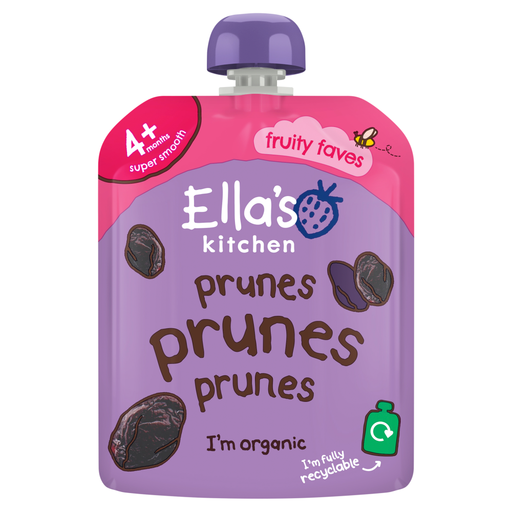
A prune product to consider when planning a fruit component for a meal. Check its ingredients and serving texture; the 4+ months label does not replace NHS advice to start solids at around 6 months when the baby shows signs of readiness.
 No image available
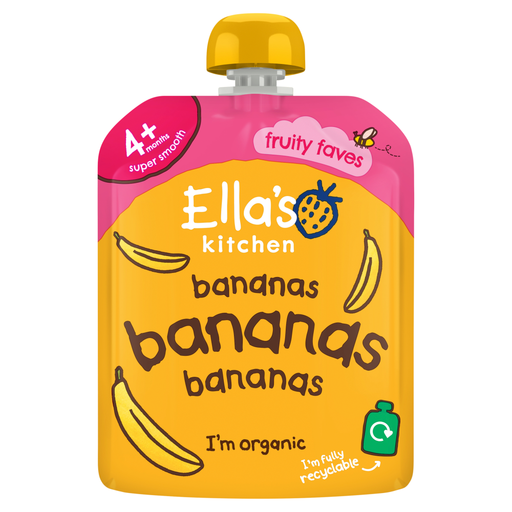
A banana product to compare if you would rather use a non-dried fruit option. Check its ingredients and texture before serving; a 4+ months label does not change NHS guidance on readiness for solids at around 6 months.
 No image available
An apple product for comparison with dried-fruit choices. Check its ingredients and how its texture will fit the meal; follow the NHS readiness signs at around 6 months rather than relying on the 4+ months pack description alone.
 No image available
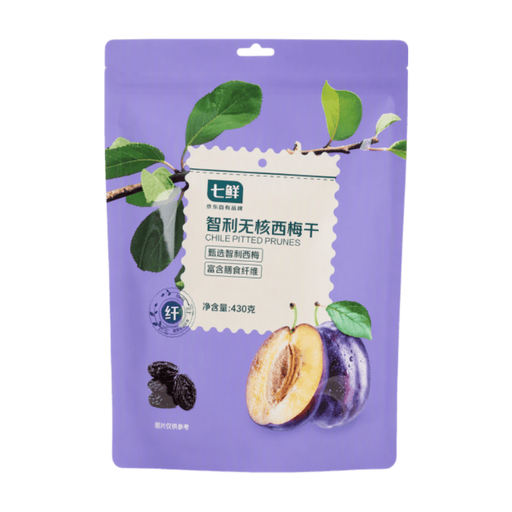
Plainly identified as pitted prunes for a carer considering dried fruit as a meal ingredient. Check the ingredients and inspect each portion for stones or hard pieces before preparing a texture the child can manage.
 No image available
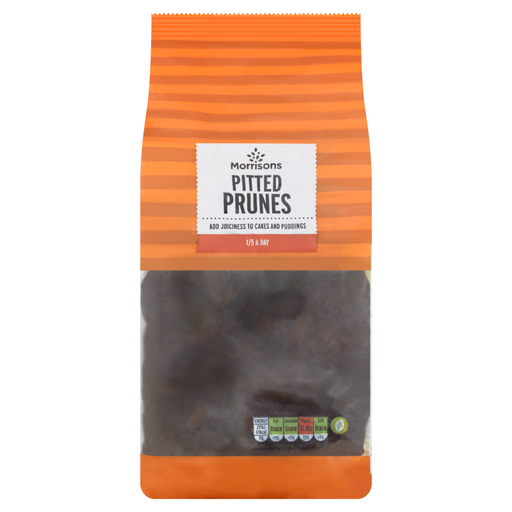
Another pitted-prune option for preparation as part of a meal, rather than an individual snack for a baby. Read the ingredient list, inspect for stone fragments and adjust the serving texture to the child’s eating skills.
Do not make a reduced-fat claim your main selection test. For example, Marks & Spencer lists just 0.2g fat per 100g for its Organic Soft Prunes, but also warns that stones may be present. Check readiness for solids, preparation, ingredients and meal timing instead.
Department for Education guidance says not to offer raisins as a snack to children under 12 months; they can be chopped as part of a meal. Keep the baby safely seated and continuously supervised while eating.
The NHS advises giving dried fruit such as raisins to toddlers with meals rather than as a between-meal snack, because the sugar it contains can cause tooth decay. For a baby under 12 months, follow the separate Department for Education advice not to offer raisins as a snack.
Yes. Inspect the portion before preparing it: Marks & Spencer warns that fruit stones may be present even in its Organic Soft Prunes. Remove any stones or hard pieces and prepare the fruit for the child’s eating skills.
Do not assume they are. First Steps Nutrition Trust distinguishes some processed dried-fruit snacks made from blended purées and juices from plain fruit. Check the product type and ingredients, then decide how it fits the meal you are preparing.