For a measured 30g dried-fruit addition to breakfast, Crazy Jack Organic Soft Apricots are listed by Ocado at 47 kcal per 30g, but you need to portion the pouch yourself. If carrying a ready-packed amount matters more, BEAR Raspberry Yoyos and Whitworths Sunny Raisins come in 20g and 14g packs respectively; compare pack weights alongside calories rather than treating those servings as equivalent. The NHS advises eating dried fruit at mealtimes, so take it with breakfast rather than saving it for a separate snack.
Who is each format for?
Breakfast planners comparing portions
A pouch suits you if you can measure the amount you intend to eat and want to compare its calories on a stated serving basis. The NHS uses 30g as its reference portion for dried fruit; a smaller box or pack needs to be read on its own weight.
People carrying breakfast
A ready-packed fruit option removes the need to portion a pouch before leaving. Sainsbury’s lists BEAR Raspberry Yoyos in individually wrapped 20g packs, while Whitworths lists Sunny Raisins in 14g boxes.
Shoppers checking ingredients
Read the current ingredient and allergen information if you avoid particular ingredients. Ocado lists Crazy Jack apricots as free from sulphur dioxide and sulphites, whereas Sainsbury’s lists sulphur dioxide in Forest Feast Williams Pear and notes that peanuts, nuts and sesame are prepared in its roastery.
What should you check before buying?
Start with the amount you will eat at breakfast, then decide whether measuring a pouch or carrying a ready-packed portion is more practical.
| Priority | What to check | Your needs |
|---|
| Serving size |
Read kcal alongside the declared weight. Ocado lists Crazy Jack apricots at 47 kcal per 30g; Whitworths lists Sunny Raisins at 47 kcal per 14g box. |
I want to compare the amount I will actually eat, not choose by the smallest calorie number on a pack. |
| Pack format |
Check whether fruit comes in a pouch to portion yourself or a ready-packed amount. Sainsbury’s lists BEAR Raspberry Yoyos in individually wrapped 20g packs. |
On mornings when I cannot measure fruit before leaving, a defined pack is easier to carry. |
| Meal timing |
The NHS says 30g of dried fruit counts as one 5 A Day portion and advises eating dried fruit at mealtimes rather than between meals to reduce tooth-decay risk. |
I plan to eat the fruit with breakfast, even if I take that breakfast with me. |
| Sugars |
Check total sugars per 100g and per serving; a no-added-sugar claim does not describe total sugars. The NHS describes 5g or less total sugars per 100g as low sugar. |
If I am comparing fruit products, I want to know what the nutrition panel says as well as what the front of the pack says. |
| Ingredients |
Read the ingredient list and current allergen information, particularly for coated fruit or products containing preservatives. Formulations differ between products. |
I need to check ingredients that matter to me rather than assume every dried-fruit pack contains only fruit. |
What is easy to overlook?
-
Comparing pack calories without pack weight
Whitworths lists 47 kcal for a 14g Sunny Raisins box, while Ocado lists 47 kcal for 30g of Crazy Jack apricots. Those figures describe different amounts of fruit.
Check the declared weight and the nutrition information for the portion you expect to eat before comparing products.
-
Saving portable dried fruit for a separate snack
The NHS advises eating dried fruit at mealtimes rather than between meals to reduce tooth-decay risk. A small pack is portable, but its packaging does not change that advice.
Put the pack with the breakfast you intend to take, rather than treating it as something to graze on later.
-
Reading ‘no added sugar’ as ‘low sugar’
Sainsbury’s lists BEAR Raspberry Yoyos at 48g total sugars per 100g despite the product’s no-added-sugar claim. The NHS describes low sugar as 5g or less total sugars per 100g.
Use the claim to understand what was added, and the nutrition panel to check total sugars and the amount in your serving.
-
Missing coatings or other ingredients
Marks & Spencer lists 296 kcal per 100g for its plain raisins and 445 kcal per 100g for its chocolate-coated raisins. The coated product also lists milk and soya ingredients. Other dried-fruit products may list sulphites or preparation-site warnings.
Compare products on the same weight basis and read the current pack’s ingredient and allergen information.
Relevant brand references
These examples illustrate different serving and pack formats; a brand name alone does not establish the nutrition or ingredients of another product in its range.
Crazy Jack
Ocado lists Organic Soft Apricots Ready To Eat in a 200g resealable pouch for shoppers who can portion fruit before breakfast.
- The listing states 47 kcal and 2.7g fibre per 30g, and says the product is free from sulphur dioxide and sulphites.
- The pouch is not individually portioned, and the listing warns that fruit pits may remain.
BEAR
Sainsbury’s lists Raspberry Yoyos as individually wrapped 20g fruit-based packs.
- The listing states 53 kcal and 2.2g fibre per 20g pack.
- A 20g pack contains less fruit by weight than the NHS’s 30g dried-fruit reference portion; compare weights before comparing pack calories.
Whitworths
Sunny Raisins offer a small, ready-packed raisin format for adding to breakfast.
- Whitworths lists 47 kcal per 14g box and ingredients of 99% raisins and sunflower oil.
- The 14g box is smaller than a 30g dried-fruit portion, so its per-box calorie figure is not a like-for-like comparison.
M&S
Marks & Spencer lists several dried-fruit formats, including raisins, soft apricots, figs and prunes.
- Its plain raisins listing gives 296 kcal per 100g, providing a stated weight basis for comparison.
- Check the particular pack: Marks & Spencer lists different nutrition and ingredients for its chocolate-coated raisins.
Joybuy dried-fruit options
These Joybuy options are ready-packed raisins, dried fruit and freeze-dried fruit for taking with breakfast. Their stated pack weights vary, so compare the nutrition panel for the amount you plan to eat.
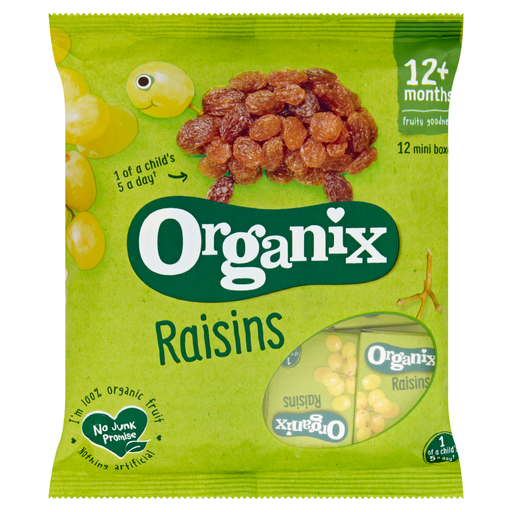 Image unavailable
Organix Goodies Raisins 12+ Months, 12 x 14g
The 14g boxes provide a defined amount of raisins to take with breakfast. Each box is smaller than the NHS’s 30g reference portion for dried fruit; check the pack’s nutrition information for your planned serving.
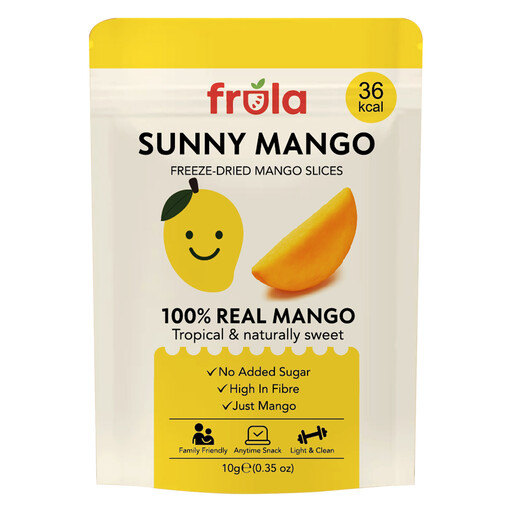 Image unavailable
Frula Freeze Dried Fruits Mango 10g
This 10g freeze-dried mango pack is a small amount to carry with breakfast. Its weight is below the NHS’s 30g dried-fruit reference portion, so check the pack’s nutrition information rather than comparing pack totals without noting weight.
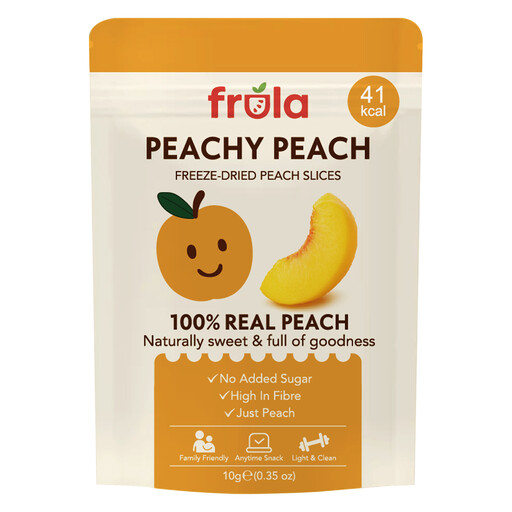 Image unavailable
Frula Freeze Dried Fruits Peach 10g
The 10g freeze-dried peach pack gives you a defined amount to take with breakfast. Compare its stated weight and nutrition panel with other packs before choosing by calories.
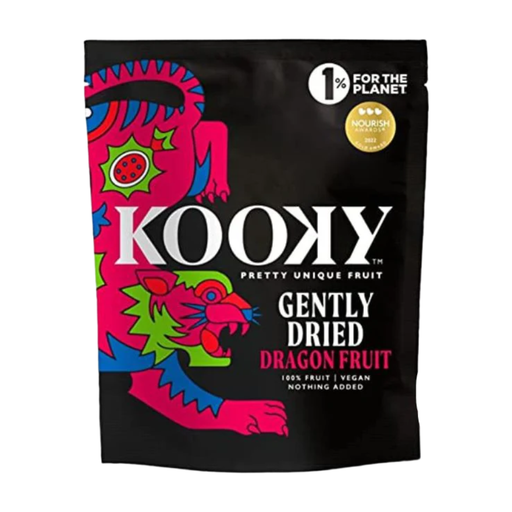 Image unavailable
Kooky Gently Dried Dragon Fruit 20g
This 20g pack is a defined amount of dried dragon fruit to carry with breakfast. It contains less fruit by weight than the NHS’s 30g dried-fruit reference portion; use the pack’s nutrition panel for a calorie comparison.
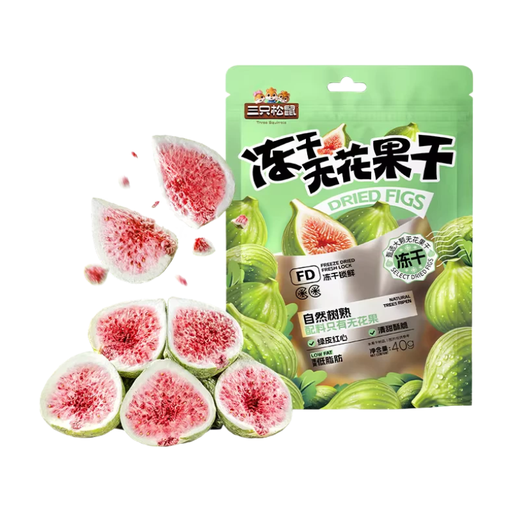 Image unavailable
Three Squirrels Freeze-Dried Figs 40g
At 40g, this fig pack contains more fruit by weight than the NHS’s 30g dried-fruit reference portion. If you want a smaller breakfast addition, check the nutrition panel for the amount you intend to eat rather than assuming the whole pack is one comparable portion.
Questions about dried fruit at breakfast
Can dried fruit count towards 5 A Day at breakfast?
Yes. The NHS says 30g of dried fruit counts as one 5 A Day portion and advises eating it at mealtimes, rather than as a between-meal snack, to reduce tooth-decay risk.
Does ‘no added sugar’ mean a fruit pack is low in sugar?
No. A no-added-sugar claim is not a measure of total sugars. The NHS describes low sugar as 5g or less total sugars per 100g; Sainsbury’s lists BEAR Raspberry Yoyos at 48g sugars per 100g despite the product’s no-added-sugar claim. Check both the per-100g figure and your serving.
Should I check the ingredients if I avoid sulphites or allergens?
Yes. Ocado lists Crazy Jack apricots as free from sulphur dioxide and sulphites, while Sainsbury’s lists sulphur dioxide in Forest Feast Williams Pear and notes that peanuts, nuts and sesame are prepared in its roastery. Check the current pack for the product you intend to buy.
How do chocolate-coated raisins compare with plain raisins?
For the two Marks & Spencer products listed, plain raisins have 296 kcal per 100g and chocolate-coated raisins have 445 kcal per 100g. The coated product also lists sugar, milk and soya ingredients, so compare the particular products and the amount you plan to eat.


