Hosts planning a sweet party spread
If dried fruit will sit alongside other New Year's Eve food, measured portions make it easier to compare products than pack size or the appearance of a full serving bowl.


For a New Year's Eve spread, compare plain dried apricots and prunes in measured 30g portions rather than assuming any dried fruit is low in calories. Sainsbury's lists 68 kcal per 30g for its SO Organic apricots, while Waitrose lists 75 kcal per 30g for its prunes with stones; check each pack's energy, ingredients, sulphites and stone warnings before serving it to guests.
If dried fruit will sit alongside other New Year's Eve food, measured portions make it easier to compare products than pack size or the appearance of a full serving bowl.
If you are choosing dried fruit instead of another sweet snack, compare kcal for the amount you intend to serve. A no-added-sugar description does not tell you how many calories that portion contains.
Shared bowls call for a check of the exact pack's sulphite declaration, added ingredients and stone warnings. The Food Standards Agency notes that sulphites are often used in dried fruit and that people with asthma have a higher risk of reacting to them.
Start with the portion you plan to put out, then compare energy on the same basis. The NHS uses 30g as one dried-fruit portion; it is a useful comparison quantity, not a claim that every 30g serving has the same energy.
| Priority | What to check | Your needs |
|---|---|---|
| Energy per portion | Compare labelled kcal for the same 30g quantity, calculating from per-100g figures if necessary. Check the chosen pack rather than applying another brand's figure: Sainsbury's SO Organic apricots list 68 kcal per 30g, and Waitrose Prunes with Stones list 75 kcal per 30g. | I want to set out small portions that fit the amount of food I am planning to serve, rather than treating a large open bowl as one serving. |
| Sugars and ingredients | Read sugars and energy on the same per-100g or per-serving basis, then inspect the ingredient list for sweetened fruit or candied peel. Tesco lists Sunsweet Stoned Prunes as no added sugar but still gives 229 kcal and 38g sugars per 100g. | A no-added-sugar label is not enough for my choice. If I am considering a fruit mix, I also want to know what has been added to it. |
| Sulphites and stones | Check the exact pack's allergen declaration and any stone or pit warning. M&S Collection Apricots list sulphites; Waitrose Prunes with Stones explicitly warn that they contain stones. | Guests will be helping themselves, so I need to identify ingredients and warnings before putting fruit into a shared bowl. |
| Serving time | Plan where measured portions fit into the party food. The NHS advises eating dried fruit at mealtimes rather than as a between-meal snack to reduce tooth-decay risk. | I would rather serve dried fruit with the main food than leave it out for repeated grazing throughout the evening. |
Fruit can contain sugars without sugar being added. Tesco lists Sunsweet Stoned Prunes as no added sugar, alongside 229 kcal and 38g sugars per 100g.
Compare kcal for your intended portion and read the ingredients as a separate check.
M&S Mixed Fruit with Cranberries and Apricots lists 340 kcal and 66g sugars per 100g. Its ingredients include sweetened cranberries, sweetened pineapple and candied peel, so it is not directly comparable with a plain single-fruit pack without checking the figures.
If you want a mix for flavour or presentation, compare its nutrition panel with the plain fruit you were considering at the same serving size.
The Food Standards Agency says sulphites are often used in dried fruit and identifies a higher reaction risk for people with asthma. Separately, stone-in prunes and some pitted or apricot products carry stone warnings.
Read the exact pack before serving, keep allergen information available to guests and make any stone warning clear.
Repeated helpings make it harder to judge the amount eaten. The NHS also advises having dried fruit at mealtimes rather than between meals to reduce tooth-decay risk.
Put out measured portions with the main party food instead of relying on an unrestricted grazing bowl.
These examples show why the fruit type alone is not enough to choose a pack: ingredients, declared energy and serving warnings differ between individual products.
Tesco lists Whitworths across several dried-fruit formats, including apricots, dates, raisins, sultanas and prunes.
Tesco's listing for Sunsweet Stoned Prunes provides an example of a no-added-sugar prune product.
Tesco's dried-fruit category includes snack-pack fruit, prunes, raisins, dates, mixed fruit and Whitworths products.
Sainsbury's SO Organic Dried Apricots provide a plain-apricot example with dried apricots as the listed ingredient.
M&S provides contrasting apricot and mixed-fruit examples for comparing a single fruit with a blend.
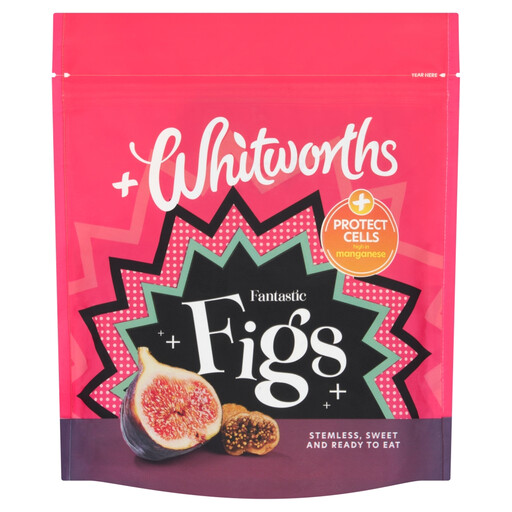
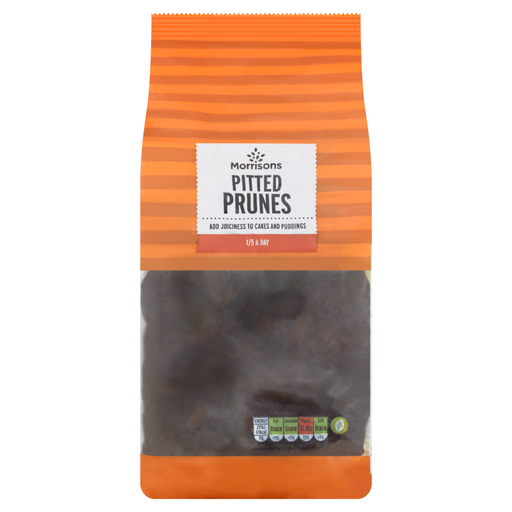
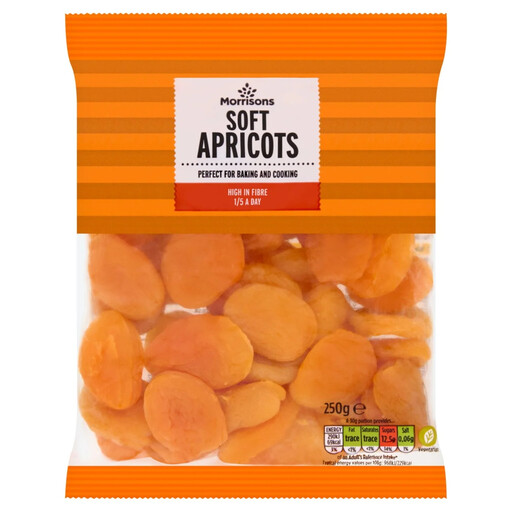
These figs, prunes and apricots are options to consider for measured New Year's Eve servings. Compare the energy and ingredient information on each pack; a fruit name or pack size alone cannot settle which suits your portion.
 No image available
Figs offer a different fruit choice for a measured party serving. Check the pack's energy per portion and its nut and peanut handling statement before serving guests with allergies.
 No image available
The pitted format may be convenient for a shared prune bowl, but pitting does not rule out residual stone fragments. Check the pack warning and portion information before serving.
 No image available
For an apricot serving, compare this pack's kcal for your chosen portion with other apricots rather than assuming their figures match. Check its sulphur dioxide declaration and warning about possible apricot stones before putting it in a shared bowl.
 No image available
Individual wrapping offers a way to put out separate prune portions. If you want fruit alone, check the ingredients for added isomaltose; also read the exact pack for any stone warning before serving.
No image available
These prunes are another option for measured servings. Before placing them in a shared bowl, confirm on the pack whether they are pitted and whether it gives a stone warning.
Compare kcal for the same amount, such as 30g; the NHS uses 30g as one dried-fruit portion. Use the chosen product's label, because “no added sugar” does not establish its energy value: Tesco lists Sunsweet Stoned Prunes as no added sugar and gives 229 kcal per 100g.
It depends on the packs being compared. M&S Collection Apricots list 217 kcal per 100g, or about 65 kcal per 30g, and Sainsbury's SO Organic Dried Apricots list 68 kcal per 30g. Tesco's figure for Sunsweet Stoned Prunes works out at about 69 kcal per 30g, while Waitrose Prunes with Stones list 75 kcal per 30g. Check the packs you intend to buy rather than applying these examples to every apricot or prune product.
Yes, particularly when serving guests who need ingredient information. The Food Standards Agency says sulphites are often used in dried fruit, including raisins, apricots and prunes, and notes a higher reaction risk for people with asthma. Read the allergen declaration and ingredients on the exact pack.
Serving measured amounts with the main party food is more consistent with NHS advice than leaving out an all-evening grazing bowl. The NHS advises eating dried fruit at mealtimes rather than between meals to reduce tooth-decay risk.