Lunch packers comparing calories
If you want dried fruit with lunch while keeping track of its energy content, compare labels at the same weight. A 14g snack box and a 30g serving do not answer the same question.


For a lower-calorie dried-fruit addition to an office lunch, the checked ASDA and Whitworths prune products contain about 49–51 kcal per 30g, less than the checked raisins and mixed-fruit products at the same weight. A Tesco raisin box contains just 40 kcal because it holds 14g, so choose between an equal-weight comparison and the portion you will actually pack. The NHS says 30g of dried fruit counts as one 5 A Day portion and advises eating it at mealtimes rather than between meals.
If you want dried fruit with lunch while keeping track of its energy content, compare labels at the same weight. A 14g snack box and a 30g serving do not answer the same question.
A small, pre-portioned box can go straight into a lunch bag. Check its weight as well as its calories: convenience and lower energy per 100g are different considerations.
Read the individual pack if sulphites or other ingredients matter to you. Mixed fruit can contain candied peel, and the Food Standards Agency notes that sulphur dioxide or sulphites are used in some dried fruit.
Start with the amount you intend to take to work, then compare energy at a common weight. Check the pack’s ingredients, allergens and storage instructions before putting it in your lunch bag.
| Priority | What to check | Your needs |
|---|---|---|
| Comparable calories | Compare kcal per 100g or the same 30g amount. ASDA Groceries lists its prunes at 162 kcal per 100g, equivalent to about 49 kcal per 30g; its Whitworths Phenomenal Prunes listing gives 214kJ per 30g, equivalent to about 51 kcal. | I want to compare the fruit itself, rather than mistake a smaller packet for a lower-energy product. |
| Portion format | Check both the pack weight and the labelled serving. Tesco Groceries lists 40 kcal for each 14g box of its Seedless Raisins 12 Pack, but 285 kcal per 100g. | A ready-measured box would be convenient for my lunch bag; I would still compare equal weights if calories are my main concern. |
| Ingredients and sugars | Read the ingredients and sugars per serving. Sainsbury’s Groceries lists 22.2g sugars per 30g of its Mixed Dried Fruit; Tesco Groceries lists candied peel, glucose syrup and sugar in its Dried Mixed Fruit. | If I am choosing a mix for variety, I want to know what is in it rather than assume it contains only plain dried fruit. |
| Lunch timing | The NHS says 30g of dried fruit counts as one 5 A Day portion and advises eating dried fruit at mealtimes, not between meals, to reduce tooth-decay risk. | I can put a measured portion with lunch instead of keeping an open bag on my desk to graze from later. |
| Pack warnings | Check the exact product’s allergen declaration, any warning about stones and its instructions for storage after opening. Tesco Groceries declares sulphites in its Dried Mixed Fruit. | If an ingredient or warning affects what I can pack, I need the details for the particular product I am buying. |
Tesco Groceries lists 40 kcal for a 14g raisin box. At the same product’s stated 285 kcal per 100g, 30g would contain about 86 kcal. The box has fewer calories because it contains less fruit.
Compare kcal per 100g or calculate the amount you plan to pack, then decide whether the smaller ready-measured portion suits you.
The checked Sainsbury’s and Tesco mixes contain candied peel. Their retailer-listed energy values are 97 kcal and 105 kcal per 30g respectively, compared with about 49–51 kcal per 30g for the checked ASDA and Whitworths prune products.
Read the ingredient list and compare an equal portion before choosing a mix for a lower-calorie lunch.
The NHS advises eating dried fruit at mealtimes rather than between meals to reduce tooth-decay risk.
Pack the portion with your lunch instead of leaving a larger bag open for the afternoon.
Tesco Groceries declares sulphites in its Dried Mixed Fruit. Warnings about occasional stones and instructions for storing an opened pack can also affect how you prepare dried fruit for lunch.
Check the allergen statement, stone warning and storage directions on the exact pack, particularly when packing food for someone else.
These brand examples illustrate different dried-fruit formats; the nutrition figures apply to the named products, not to every item from each brand.
ASDA Prunes 200g provide a labelled example for comparing a portion of prunes with other dried fruit.
Whitworths Phenomenal Prunes 190g offer another named prune product with a 30g nutrition figure.
The named Tesco products show the difference between a small raisin box and a mixed-fruit pack.
Sainsbury’s Mixed Dried Fruit is a named mixed-fruit example for shoppers considering variety.
The Marks & Spencer fruit-snack range includes prunes, apricots, dates, raisins and portioned raisin boxes.
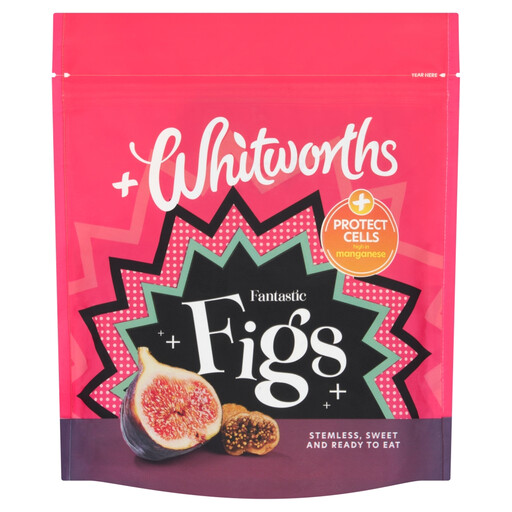
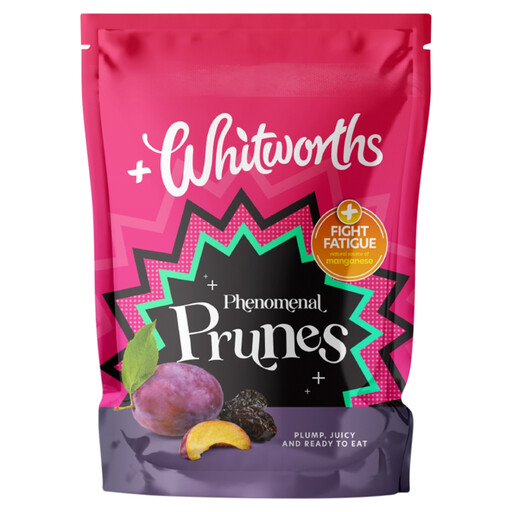
These figs and prune products are options for packing dried fruit with an office lunch. Compare their individual labels at the portion you intend to take; they are not the same products as the retailer examples above.
 No image available
For an office lunch, portion the figs from the 175g pack before you leave. Use the pack’s energy figure to compare your chosen amount with prune or raisin portions, and check its ingredient and allergen information if relevant.
 No image available
These prunes fit a lunch plan built around a measured portion. The 190g pack needs portioning for individual lunches; check its own nutrition panel rather than applying figures from Whitworths Phenomenal Prunes to this product.
 No image available
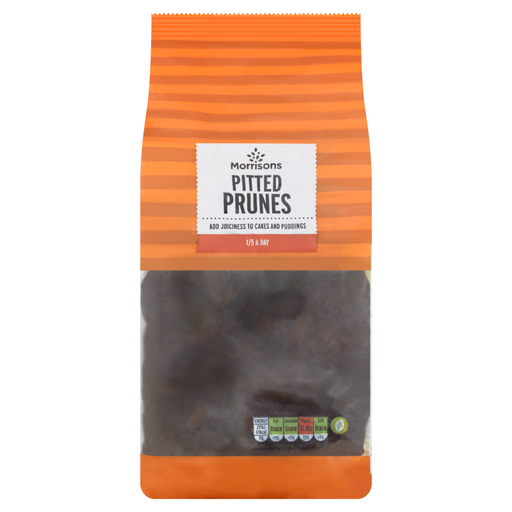
The 500g pack is a larger format for preparing separate lunch portions. Check its energy per 100g when comparing it with other prunes, and follow any stone warnings even though the product is labelled pitted.
 No image available
The individually wrapped format offers a way to pack prunes without transferring them to a container. Check the weight of the pieces you take and the pack’s ingredient and nutrition labels; wrapping does not establish the calories in your lunch portion.
 No image available
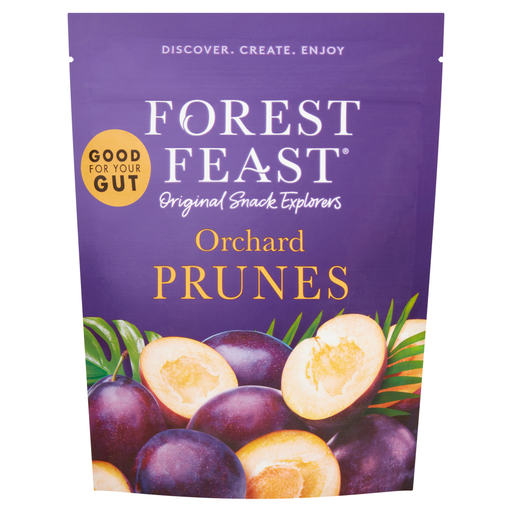
Measure out a lunch portion from this 200g prune pack and compare its labelled energy at the same weight as other options. Read its instructions for storing the remainder after opening.
Of the five named products compared at an equal weight, ASDA Prunes have the lowest listed energy, at about 49 kcal per 30g based on ASDA Groceries’ 162 kcal per 100g figure. Whitworths Phenomenal Prunes follow at about 51 kcal per 30g, calculated from the retailer’s 214kJ figure. This comparison does not cover every dried-fruit product.
The NHS says 30g of dried fruit counts as one 5 A Day portion. You can measure that amount to compare products on a common basis, or pack a smaller labelled portion such as a 14g raisin box; check the calories for the amount you choose.
A Tesco Seedless Raisins box contains 40 kcal because it holds 14g, according to Tesco Groceries. At an equal 30g weight, the same raisins work out at about 86 kcal, compared with about 49–51 kcal for the two checked prune products. The box’s advantage is its fixed smaller portion, not lower energy at an equal weight.
Put it with lunch if you are following NHS guidance: the NHS advises eating dried fruit at mealtimes rather than between meals to reduce tooth-decay risk.
Check the exact pack when an allergen matters to you. The Food Standards Agency notes that sulphur dioxide or sulphites are used in some dried fruit, and Tesco Groceries declares sulphites in its Dried Mixed Fruit. Do not assume that declaration applies to every prune, raisin or mixed-fruit product.