Campers watching portion energy
If dried fruit is a small sweet addition to your camping food, compare kcal per 100g across packs, then check the energy in the amount you intend to take. A large bag does not define a serving for you.


Among the five UK products compared by declared energy per 100g, Whitworths Favourites Apricots at 158 kcal and ASDA Prunes at 162 kcal have the lowest figures, according to Whitworths and ASDA Groceries. For camping, the choice also depends on how much you pack, whether the opened product needs refrigeration, and any sulphite or stone warnings on its label.
The most useful label detail changes with the way you plan to carry and eat the fruit.
If dried fruit is a small sweet addition to your camping food, compare kcal per 100g across packs, then check the energy in the amount you intend to take. A large bag does not define a serving for you.
Check what the label says about storage after opening, not just how an unopened pack can be kept. This matters particularly if one bag must last several days.
Read the ingredients, allergen information and stone warning on the particular pack. An apricot product may declare sulphur dioxide, and a pitted-fruit label may still warn of occasional stones.
Start with energy per 100g to compare products on the same basis. Then consider your planned portion and whether the pack’s storage instructions fit the trip.
| Priority | What to check | Your needs |
|---|---|---|
| Energy and portions | Compare kcal per 100g, then kcal for the amount you will pack. Whitworths lists 47 kcal per 30g for Favourites Apricots; Sainsbury's lists 68 kcal per 30g for its Ready to Eat Dried Apricots. | I want a measured amount for the trip rather than repeatedly eating from a large bag. A 30g portion gives me a useful basis for comparing these labels. |
| Ingredients and sugars | Read the ingredients for added sugars, syrups or fruit-juice ingredients, and compare sugars and energy on the same per-100g or per-serving basis. A no-added-sugar statement alone does not establish a lower energy value. | Whether I prefer a simpler ingredient list or a particular flavour, I still want to know what the portion contributes in kcal. |
| Storage after opening | Check the exact after-opening instruction and whether you can follow it for the length of the trip. Keep ready-to-eat fruit in intact packaging or a sealed food-safe container to protect it from contamination. | Without dependable cooling, I need a pack whose instructions fit how long I plan to keep it open. |
| Sulphites and stones | Check the current allergen declaration for sulphur dioxide or sulphites, and read any warning about stones. Apply the warning to the product in your hand rather than to every fruit of the same type. | I need to avoid an ingredient that conflicts with my requirements, and I want everyone sharing the pack to know about any stone warning. |
The declared energy can differ substantially between products. Whitworths lists 158 kcal per 100g for Favourites Apricots, while the BEAR dried pineapple listing at Sainsbury's states 303 kcal per 100g despite its no-added-sugar description.
Compare kcal per 100g first, then use the label to work out the energy in the portion you will actually carry.
ASDA Groceries' instructions for its prunes and figs call for refrigeration after opening and use within seven days. That instruction matters if an opened pack must last through a trip without cooling.
Choose a pack with after-opening directions you can follow, and keep its contents sealed and protected from contamination.
Otherwise, you may have to leave some of the opened fruit uneaten.
The Whitworths, Sainsbury's and M&S apricot products described here declare sulphur dioxide or sulphites. Some of the apricot, prune and fig products also carry warnings about occasional stones.
Read the current pack before taking it away, especially when sharing food or avoiding sulphites. Do not treat “pitted” as a reason to disregard a stone warning.
A measured portion of dried fruit can form one part of a camping food plan, but it does not replace planning the other food and drink needed for the trip.
Decide what else you will carry and how each item must be stored before leaving.
These examples show why the exact product label matters more than a brand-wide assumption about calories or storage.
Whitworths lists 158 kcal per 100g and 47 kcal per 30g for its Favourites Apricots.
ASDA Groceries lists 162 kcal per 100g for its prunes and 237 kcal per 100g for its figs.
Sainsbury's Ready to Eat Dried Apricots 500g list 228 kcal per 100g and 68 kcal per 30g serving.
Tesco Groceries lists Sunsweet Stoned Prunes 500g at 229 kcal per 100g.
M&S Collection Soft Apricots list 217 kcal per 100g, according to Marks & Spencer.
These prune and apricot packs offer two dried-fruit formats to consider for camping. Check their own portion, ingredient and after-opening information rather than applying the figures from similarly named products above.
 No image available
Individual wrapping may make it easier to pack a chosen number of prunes for a walk. Check the energy and ingredients for the amount you plan to eat; do not rely on the sugar-related wording in the longer product title to judge its calorie content.
 No image available
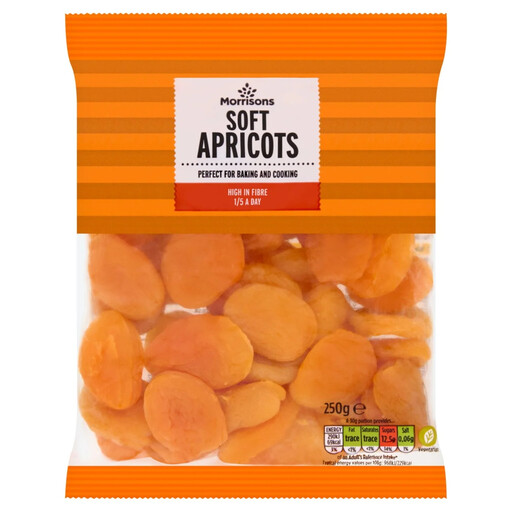
This 250g apricot pack is an option when planning portions to take camping. Its product information calls for refrigeration after opening and warns about sulphur dioxide and possible stones, so check those details against your storage arrangements and the current pack label.
A measured 30g portion is a useful comparison point: the NHS says 30g of dried fruit counts as one 5 A Day portion. Energy still varies by product. Whitworths lists 47 kcal per 30g for Favourites Apricots, while Sainsbury's lists 68 kcal per 30g for its Ready to Eat Dried Apricots.
If you are trying to keep track of portion energy, measure out what you plan to eat rather than using the bag as your portion. Compare the label’s energy figure with that amount before packing.
Follow the instructions for the particular pack. Sainsbury's Ready to Eat Dried Apricots specify cool, dry storage, whereas ASDA Groceries instructs refrigeration after opening for its prunes and figs. Keep ready-to-eat food sealed and protected from contamination during the trip.
Some do: the Whitworths Favourites, Sainsbury's Ready to Eat and M&S Collection apricot products described here declare sulphur dioxide or sulphites. Check the current ingredients and allergen information on the exact pack you are buying.
No. The BEAR dried pineapple listing at Sainsbury's says no added sugar but declares 303 kcal per 100g. Use the energy figure and your intended portion for a calorie comparison, and read the ingredients for the separate question of what has been added.