Cyclists with diagnosed food allergies
Match the exact product’s current ingredient list and any cross-contact or suitability warning to your allergen requirements. A fruit-based name alone does not establish whether a snack is suitable.


Choose dried fruit by checking that the current pack’s allergen information fits your requirements, then compare the carbohydrate in the portion you would carry. ASDA Groceries lists BEAR Fruit Splits Strawberry & Apple as gluten-free and nut-free, with no allergens present and 12 g carbohydrate per 20 g pack; its BEAR Dried Pineapple has 27 g per 35 g pack and specific gluten-free, nut-free and sulphite-free claims, but not a declaration covering every allergen. Neither example replaces a check of the physical pack, particularly if you have a diagnosed allergy.
Match the exact product’s current ingredient list and any cross-contact or suitability warning to your allergen requirements. A fruit-based name alone does not establish whether a snack is suitable.
Compare carbohydrate per pack or stated portion with the amount you expect to carry and eat. Plan food and fluids for the ride rather than treating one small fruit snack as a complete fuelling plan.
Check the exact pack rather than choosing by fruit type. ASDA Groceries lists sulphites in its Three Raisin Mix and warns that it may contain peanuts and nuts, while other dried-fruit products have different declarations.
Start with the allergen information for the exact product, then compare portions and ingredients against what you plan to take on the ride.
| Priority | What to check | Your needs |
|---|---|---|
| Allergen suitability | Read the current ingredients and any “may contain” or “not suitable for” warning. Check that each free-from declaration covers your particular requirement. | If I need to avoid an allergen, I cannot assume that a plain-looking fruit snack is suitable. M&S lists sulphites in Orchard Fruits Medley and marks it unsuitable for people with nut, peanut or sesame allergy. |
| Carbohydrate per portion | Compare the amount per pack or labelled serving, not just per 100 g. ASDA Groceries lists 12 g per 20 g BEAR Fruit Splits pack and 27 g per 35 g BEAR Dried Pineapple pack. | For a longer ride, I want to know what the portions I can actually carry contribute to my food plan. A small pack may need to be combined with other suitable food. |
| Ingredients | Check for added ingredients and preservatives if they matter to you. Tesco lists its cranberries as infused with pineapple-juice concentrate; Whitworths lists sulphur dioxide in Mixed Fruit. | I may want a particular ingredient list or need to avoid sulphites. “Dried fruit” does not tell me whether a product contains only fruit. |
| Pack format | Check individual portion sizes and whether a larger pack will need dividing before the ride. Recheck declarations when changing flavour or pack format. | I want portions I can carry and use while cycling, without losing track of how much each portion contains. |
Dried-fruit mixes can contain sulphites or carry warnings about nuts, peanuts or sesame. The fruit type does not establish allergen suitability.
Compare the current pack’s ingredients and warnings with your own requirements; do not use an incompatible product as an on-ride trial.
ASDA Groceries lists 12 g carbohydrate in one 20 g BEAR Fruit Splits pack. Its contribution depends on how many packs you carry and what else you plan to eat.
Use the labelled carbohydrate per portion to plan the food you will take, and consider fluids alongside it.
Product formulations differ: Tesco Cranberries are infused with pineapple-juice concentrate, while Whitworths Mixed Fruit includes candied peel and sulphur dioxide.
Read the full ingredient list if a single-fruit product or the exclusion of a particular ingredient matters to you.
Ingredients and allergy information can change, so a listing saved before a ride may not describe the pack in your hand.
Check the physical label when buying, particularly after changing flavour, pack size or multipack.
These examples show why declarations must be checked product by product; a statement about one snack does not apply to everything under the same brand or retailer name.
ASDA Groceries lists individually portioned BEAR fruit snacks with product-specific free-from declarations.
Whitworths product information illustrates how ingredients and allergen warnings can vary between its fruit mixes and snack formats.
Tesco’s Cranberries listing provides a portion value and an ingredient description that shoppers can compare with their requirements.
ASDA Groceries listings show the difference between explicit claims on particular BEAR snacks and warnings on a conventional raisin mix.
M&S Orchard Fruits Medley provides an example of a mixed-fruit product with both an ingredient allergen and suitability warnings.
These fruit snacks and larger dried-fruit packs offer different portion formats for cycling. Check each product’s current allergen information and carbohydrate label before deciding whether it fits your requirements.
 Image unavailable
The five 20 g portions offer a defined pack format for planning what to carry. Check the current label for carbohydrate per portion and the allergen declaration that applies to this raspberry variant.
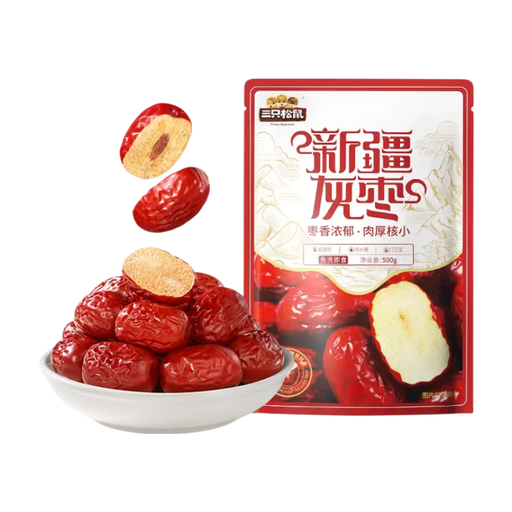 Image unavailable
The 500 g pack can be divided into portions before a ride. Use the portion you prepare to work out what you will carry, and check the pack’s ingredients, allergen information and carbohydrate values.
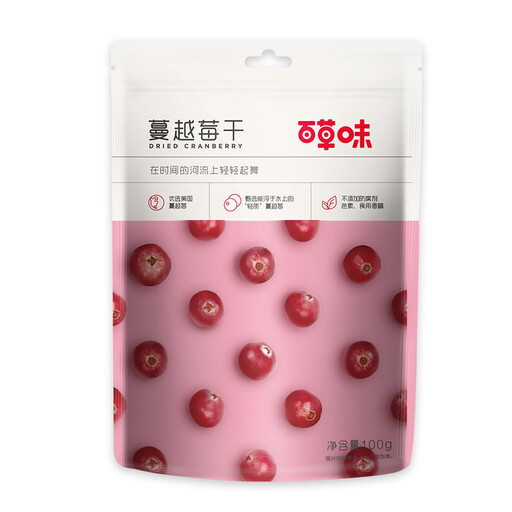 Image unavailable
The 100 g pack gives you the option of carrying it whole or dividing it into portions. Check the ingredient list if added ingredients matter to you, and use the labelled carbohydrate value for the amount you intend to eat.
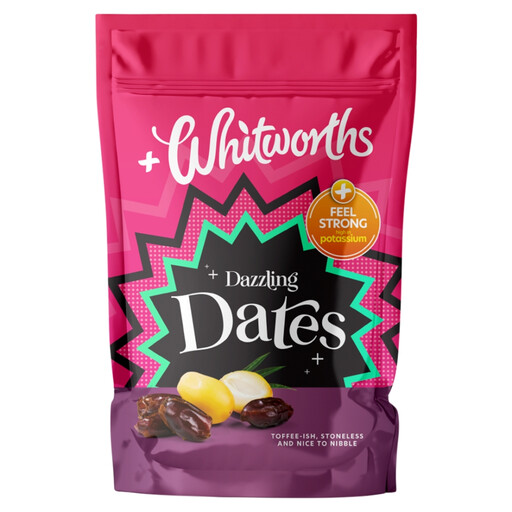 Image unavailable
The 300 g pack can be portioned before cycling. Read the label for this dates product rather than applying the ingredients or allergen information of another Whitworths fruit mix.
 Image unavailable
The twelve 14 g portions make it straightforward to count how many you plan to carry. Their small size makes checking carbohydrate per portion particularly useful; read the current pack for allergen suitability rather than inferring it from the short product name.
No. ASDA Groceries lists sulphites in Three Raisin Mix and warns that it may contain peanuts and nuts; M&S marks Orchard Fruits Medley unsuitable for people with nut, peanut or sesame allergy. Check the declaration on the exact pack against your requirements.
Use carbohydrate per pack or stated serving for the amount you expect to eat. ASDA Groceries lists 12 g carbohydrate per 20 g BEAR Fruit Splits pack and 27 g per 35 g BEAR Dried Pineapple pack. Plan the portions you will carry alongside other food and fluids.
Use it to compare products before shopping, but check the physical pack before buying or eating. Ingredients and allergy information can change, including when a product is reformulated or you choose a different flavour or pack size.
No. Tesco describes its Cranberries as infused with pineapple-juice concentrate and lists 25.2 g carbohydrate per 30 g portion. If a particular ingredient list or no-added-sugar claim matters to you, check the exact pack rather than assuming all dried cranberries have the same formulation.