Calorie-conscious revision snack planners
If you want a portable sweet snack, a measured amount makes energy figures easier to compare across packs. The NHS uses 30g as its dried-fruit portion reference.


For a calorie-conscious revision snack, compare dried-fruit labels using the same 30g amount rather than assuming that any fruit snack is low in calories. Check the ingredients as well as the energy figure: some mixes contain sugar, syrup or candied fruit. The NHS advises eating dried fruit at mealtimes, rather than grazing on it between meals.
If you want a portable sweet snack, a measured amount makes energy figures easier to compare across packs. The NHS uses 30g as its dried-fruit portion reference.
If you prefer a short ingredient list, check whether a fruit snack also contains sugar, syrup, candied peel or juice concentrate.
If you tend to leave an open pack beside your work, meal timing matters as well as portion size. The NHS advises having dried fruit at mealtimes rather than between meals.
Start with the amount you intend to eat, then compare energy and ingredients on the product labels.
| Priority | What to check | Your needs |
|---|---|---|
| Portion and energy | Compare energy per 30g. If the label gives only a per-100g figure, multiply it by 0.30; check whether the pack contains more than one portion. | I want an amount I can set aside before studying, rather than judging calories by the size of a pouch or a handful. |
| Ingredients | Read the full list for sugar, syrup, candied fruit and juice concentrate. Check the energy figure even when a pack says no added sugar. | A simple fruit ingredient list matters to me, but I do not want to mistake it for a lower-calorie label. |
| When to eat it | The NHS says 30g of dried fruit counts as one 5 A Day portion and advises eating dried fruit at mealtimes rather than between meals. | If I usually graze while revising, I need to plan dried fruit with a meal instead of leaving a pack open on my desk. |
| Fruit-and-nut mixes | Compare energy for the same weight and read the allergen information. Whitworths lists 133 kcal per 30g for its 1DERS fruit-and-nut mix, which contains peanuts. | I may want a fruit-and-nut mix, but I need to judge its labelled portion and ingredients separately from plain dried fruit. |
Pack weights and labelled serving sizes differ, so comparing figures for different amounts can mislead.
Use the energy figure for 30g on each label. Where only per-100g energy is shown, multiply it by 0.30.
Sainsbury’s lists candied peel made with glucose-fructose syrup and sugar in its mixed dried fruit; M&S lists concentrated pineapple juice in its cranberries.
Read the ingredient list when choosing between plain fruit and a sweetened or juice-infused product.
A measured amount helps you keep track of the portion, but it does not change the NHS advice to eat dried fruit at mealtimes rather than between meals.
Set aside the amount you intend to eat and have it with a meal, rather than repeatedly snacking from the bag.
Whitworths lists 133 kcal per 30g for its 1DERS fruit-and-nut mix. It contains peanuts, so its energy and ingredients need separate consideration.
Compare its labelled energy with plain-fruit options using the same weight, and check its allergen declaration.
These examples show why the exact product label matters; a brand name alone does not establish a calorie figure or ingredient list.
Whitworths has dried-fruit products and portion-oriented snack formats.
Sainsbury’s lists dried-fruit products including raisins, apricots, prunes and mixed fruit.
M&S lists plain fruit, fruit mixes and fruit-and-nut products in its fruit-snack range.
Tesco lists dried-fruit options including raisins, prunes, cranberries and dates.
These dried-fruit packs offer different pack sizes for revision-day planning. Check each label’s energy and ingredients for the amount you intend to eat, and follow NHS advice to have dried fruit at mealtimes.
 No image available
The 12 individual 14g packs offer a defined amount to take out for a revision day. Compare energy for the amount eaten rather than treating one mini pack as a 30g portion.
 No image available
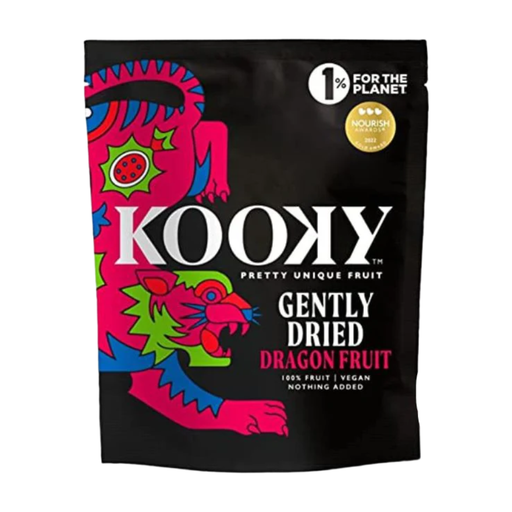
The 20g pack provides a defined amount to consider for a revision-day meal. Check its ingredient list and energy label if avoiding added ingredients or comparing it with 30g portions.
 No image available
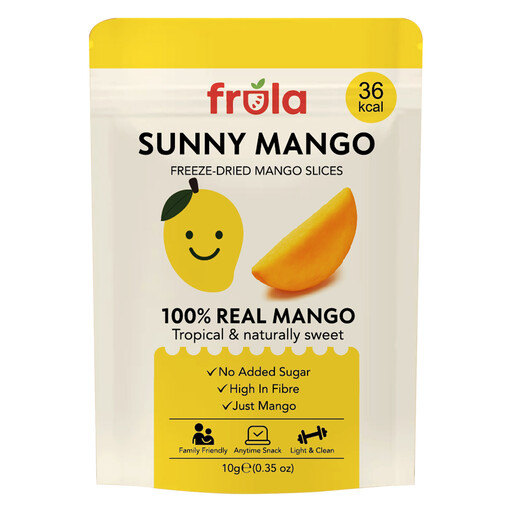
This freeze-dried mango comes in a 10g pack. Use its labelled energy figure when comparing the pack with larger dried-fruit portions; check the ingredients separately.
 No image available
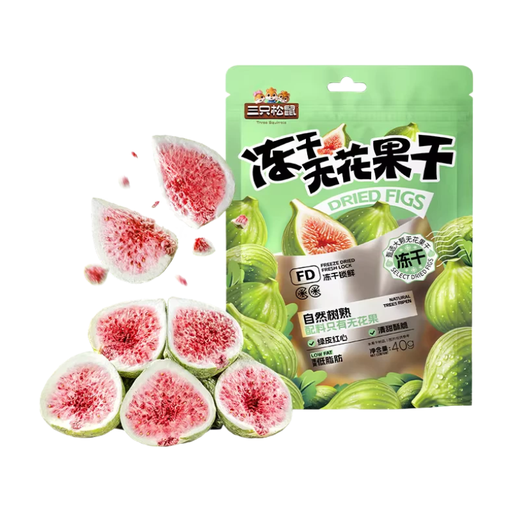
The 40g pack is larger than the NHS 30g dried-fruit portion reference. Check the label for the energy in the amount you plan to eat; do not apply figures for a different fig product to this one.
 No image available
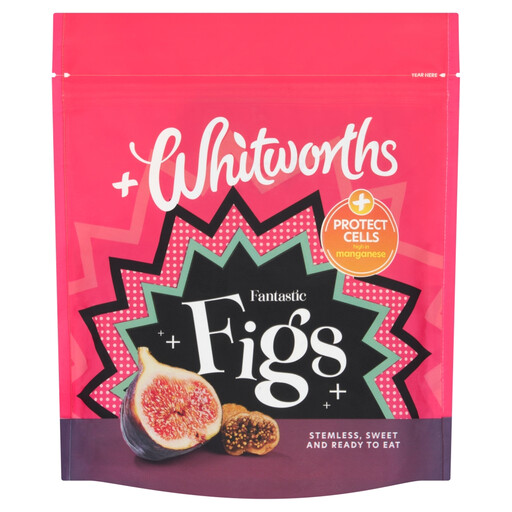
The 175g bag allows you to set aside a measured amount, but it is not an individual 30g pack. Check this variant’s label for its energy and ingredients rather than using figures for another Whitworths fig product.
Use 30g for a like-for-like comparison. The NHS says 30g of dried fruit counts as one 5 A Day portion; if a label gives energy per 100g, multiply that figure by 0.30 to calculate energy per 30g.
No. Compare the energy figures for the same amount: Sainsbury’s lists its no-added-sugar BEAR dried pineapple at 303 kcal per 100g, equivalent to about 91 kcal per 30g. Check the ingredient list as well as the claim on the front of a pack.
The NHS advises eating dried fruit at mealtimes rather than between meals to reduce tooth-decay risk. If you choose it on a revision day, plan a measured amount with a meal instead of repeatedly eating from an open pack.
Read the full ingredient list. Sainsbury’s Mixed Dried Fruit lists candied peel made with glucose-fructose syrup and sugar, while M&S Cranberries lists concentrated pineapple juice; a fruit name alone does not tell you how the product was prepared.