Families packing weekday lunches
Individual bags or cartons take no portioning at home. Check the weight of each one: NHS guidance uses 30g for a dried-fruit 5 A Day portion, while a smaller pack may suit a lunch that already includes other fruit.


Choose a clearly portioned dried-fruit pack that the pupil will eat with lunch, and check its ingredients rather than relying on a fruit-themed name. The NHS says 30g of dried fruit counts as one 5 A Day portion; a smaller pack can still be a lunch component, but it is not a full dried-fruit portion. Check the school’s packed-lunch policy and the individual pack’s allergen information before buying a multipack.
The useful pack size depends on what else is in the lunch and whether the pupil will eat the fruit at lunchtime.
Individual bags or cartons take no portioning at home. Check the weight of each one: NHS guidance uses 30g for a dried-fruit 5 A Day portion, while a smaller pack may suit a lunch that already includes other fruit.
A small raisin box or dried-fruit bag is easy to place in a lunchbox. If choosing between plain fruit and a coated or mixed snack, read the ingredients to see what is actually in the pack.
Read the current allergen statement and the school’s packed-lunch policy, particularly for fruit-and-nut mixes. The Food Standards Agency notes that sulphur dioxide and sulphites are used in some dried fruits, including raisins, apricots and prunes.
Start with the weight of the individual pack, then check when it will be eaten and what its label says. A multipack’s total weight does not tell you the size of each lunch portion.
| Priority | What to check | Your needs |
|---|---|---|
| Portion size | Find the grams in each bag or carton. The NHS counts 30g of dried fruit as one 5 A Day portion; a 14g carton is smaller than that. | I want to know whether the pack is a full dried-fruit portion or a smaller addition to lunch. |
| Eating time | Pack dried fruit with the meal. The NHS advises eating it at mealtimes rather than between meals because it can stick to teeth and increase tooth-decay risk. | The pupil can eat this with lunch, rather than keeping it for morning break or grazing on it through the day. |
| Ingredients and allergens | Read the ingredients, sugars per serving and allergen statement on the individual product. Check for coatings, nuts and sulphites where relevant. | If I am choosing plain fruit, I need to distinguish it from a mixed or coated snack and check any school restrictions. |
| Pack format | Compare the number and weight of individual portions with a larger bag you could portion at home. Follow the pack’s storage instructions and best-before date. | Ready-portioned packs save preparation; a larger bag lets me choose the amount if I have a suitable reusable container. |
The NHS advises eating dried fruit at mealtimes because it can stick to teeth and increase tooth-decay risk when eaten between meals.
Put the portion with the packed lunch and plan for it to be eaten as part of that meal.
The NHS dried-fruit 5 A Day portion is 30g. Sainsbury’s Mini Snack Raisins cartons contain 14g each, whereas Whitworths Sunny Raisins bags contain 30g each, according to their retailer listings.
Check the weight of the individual carton or bag, not just the number of packs in the multipack.
Coated fruit and fruit-and-nut mixes can have different ingredients and may raise different allergen or school-policy questions from plain raisins.
Read the ingredients and allergen statement, then check the school’s current policy before packing a mixed product.
Ingredients and allergen information can change between a listing and the pack being used.
Before packing it, check the physical pack’s ingredients, allergens, nutrition information, best-before date and storage instructions.
These examples show different portioning approaches; a brand name alone does not establish the ingredients or portion size of every product in its range.
Ocado lists Whitworths Sunny Raisins Fruit Pack as six 30g bags, matching the NHS weight for one dried-fruit 5 A Day portion per bag.
Sainsbury’s lists Mini Snack Raisins as 12 cartons of 14g each, a smaller lunch component than the NHS 30g dried-fruit portion.
M&S describes Taste Buds Raisin Snack Boxes as a lunchbox format: ten boxes with a total weight of 140g.
Tesco Groceries lists larger dried-fruit bags, including 1kg raisins and 1kg sultanas, for households that prefer to portion fruit at home.
Sunsweet is a reference for choosing prunes rather than a plain-raisin grab bag. Sunsweet’s own FAQ describes four to five prunes as a serving of its prunes.
These options are a 20g dragon-fruit pack and a multipack of 16g blueberry snacks. Both are smaller than the NHS 30g dried-fruit 5 A Day portion, so consider them as components to eat with lunch and check each product’s current ingredients.
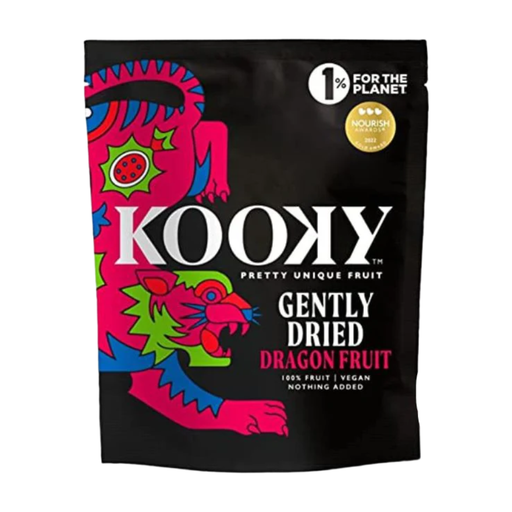 Image unavailable
The 20g pack is a smaller dried-fruit addition for a pupil who will eat it with lunch. It is below the NHS 30g dried-fruit 5 A Day portion; check the pack’s ingredients and allergen statement for the product being packed.
 Image unavailable
This multipack provides 16 individually portioned 16g snacks for repeat lunch packing. A single 16g pack is below the NHS 30g dried-fruit 5 A Day portion. If you want plain dried fruit, check this blueberry snack’s ingredients and sugars on the current pack before choosing it.
The NHS says 30g of dried fruit counts as one 5 A Day portion. Check the weight of the individual bag: a smaller pack can be part of lunch, but it is not a full 30g dried-fruit portion.
Pack it to be eaten with lunch instead. NHS guidance advises eating dried fruit at mealtimes rather than between meals because it can stick to teeth and increase tooth-decay risk.
Check the specific pack’s ingredients and allergen statement. The Food Standards Agency notes that sulphur dioxide and sulphites are used in some dried fruits and that people with asthma have a higher risk of reacting to sulphur dioxide.
Read the school’s current packed-lunch policy before buying the multipack, particularly where nuts are involved. Brighton & Hove City Council’s packed-lunch guidance describes policies developed by schools; the Department for Education’s school-food requirements concern food and drink provided in state-funded schools in England, not a universal rule for every packed lunch brought from home.
Individual cartons remove the need to portion fruit each morning; a larger bag lets you choose the amount but needs a suitable container. Check the weight of each ready-made carton against the portion you intend to pack, and follow the product’s storage instructions.