Film-night snackers comparing portions
If you are choosing dried fruit instead of another snack, compare the calories in an amount you would actually serve, not just the size of the packet.


Compare the energy in the portion you plan to eat rather than assuming dried fruit is low in calories. A measured serving of plain fruit keeps the comparison clearer than eating from a large bag; chocolate-and-nut mixes and no-added-sugar fruit each need their own nutrition and ingredient checks. The NHS advises eating dried fruit at mealtimes rather than between meals to reduce tooth-decay risk.
If you are choosing dried fruit instead of another snack, compare the calories in an amount you would actually serve, not just the size of the packet.
Ingredient lists help distinguish plain fruit from products containing chocolate, nuts, syrup or sweetened fruit. A no-added-sugar statement does not replace the nutrition panel.
Check the exact pack’s allergen information when buying for someone with an allergy. If the film snack is separate from a meal, bear in mind the NHS advice to eat dried fruit at mealtimes rather than between meals.
Start with a comparable serving, then check what else the product contains and whether dried fruit suits the occasion.
| Priority | What to check | Your needs |
|---|---|---|
| Portion and energy | Compare kcal per 100g, then use the stated serving or weigh the amount you intend to eat. A 25g pack and a 30g bowl are different portions. | I want to put one serving in a bowl before the film rather than keep eating from a larger bag. |
| Ingredients | Read the list for chocolate, nuts, syrup, sweetened fruit or other additions. Check energy and sugars separately from any no-added-sugar statement. | Plain fruit matters to me more than the extra flavours in a mix, or I want to know exactly what those extras are. |
| Allergens | Read both the ingredients and precautionary allergen wording on the exact pack; a fruit-and-nut mix is not interchangeable with plain fruit. | I am sharing the snack with someone who needs the pack’s allergen information checked. |
| Snack timing | The NHS advises eating dried fruit at mealtimes, not between meals, to reduce tooth-decay risk. | If the film is well after dinner, I want to consider whether dried fruit fits that advice. |
Energy varies by product and portion. For example, the Morrisons Dried Pitted Prunes listing gives 225 kcal per 100g, while Tesco lists 544 kcal per 100g for its Mixed Fruit & Nut.
Compare like-sized servings as well as the per-100g figures before choosing a pack.
Tesco Mixed Fruit & Nut includes nuts, chocolate-coated raisins and sweetened cranberries. Its 544 kcal per 100g is for that mix, not for dried fruit generally.
Check the ingredients first, then compare nutrition figures for the products you would actually eat.
Tesco lists BEAR Dried Mango & Passionfruit as having no added sugar, alongside 324 kcal and 59g sugars per 100g.
Use the ingredient list to check for additions and the nutrition panel to compare energy, sugars and serving size.
The NHS advises eating dried fruit at mealtimes rather than between meals to reduce tooth-decay risk. Mixed snacks can also introduce allergens that need checking.
If movie night is a separate snacking occasion, consider another suitable option; if choosing dried fruit, read its full ingredient and allergen labelling.
These examples show why the exact product and serving matter more than the brand name alone.
Its dried-fruit information includes a serving example for prunes.
Its Mixed Fruit & Nut illustrates how additions change the snack being compared.
Mixed Dried Fruit provides a vine-fruit example for checking ingredients and nutrition together.
Sunsweet’s UK material discusses prunes as a snack.
Dried Mango & Passionfruit is an example of a no-added-sugar fruit snack.
These raisin and prune packs offer different ways to plan a fruit portion for movie night. Check the exact pack’s nutrition and ingredients before choosing.
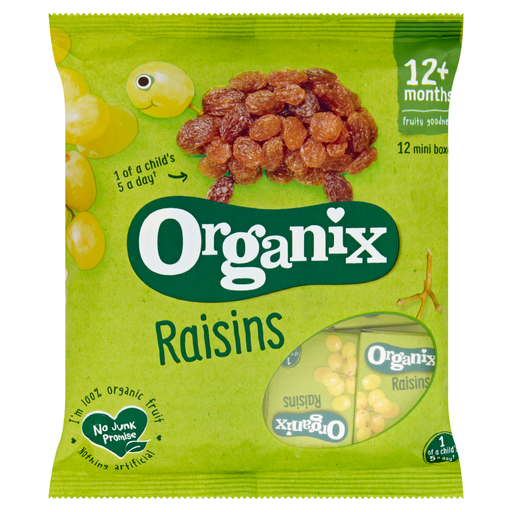 No image available
The 12 x 14g format gives you a defined pack size for a film-night serving. Check the nutrition information for the amount you plan to eat.
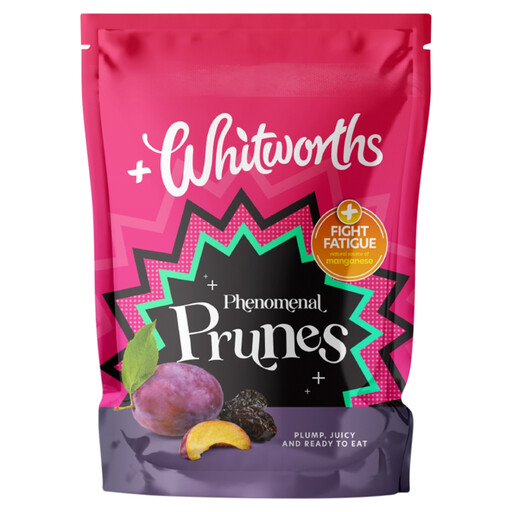 No image available
For a planned prune serving, measure out the amount you want from the 190g pack before the film. Use this pack’s nutrition panel rather than a serving figure for another Whitworths product.
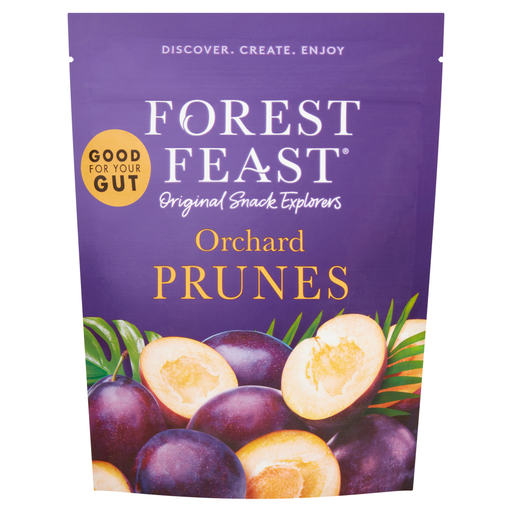 No image available
This 200g prune pack is another option if you prefer to serve a measured amount. Compare its labelled energy for that amount with other packs on the same basis.
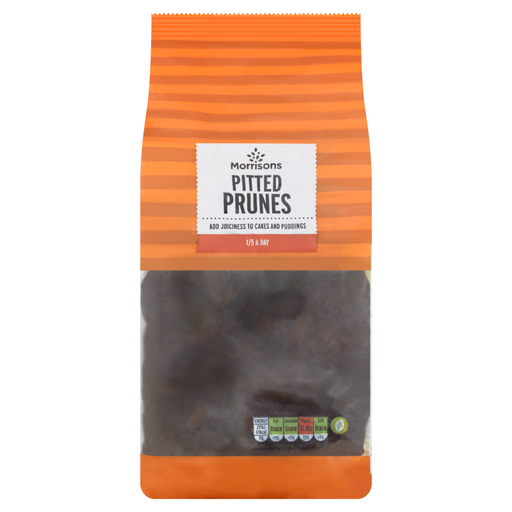 No image available
Portion this 500g pack separately if you want a smaller film-night serving. The Joybuy listing gives 225 kcal per 100g and lists pitted prunes and potassium sorbate as ingredients.
 No image available
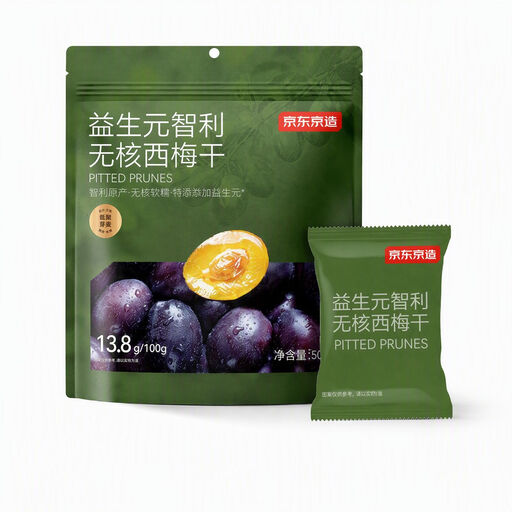
Individual wrapping may help you set aside a portion from the 500g pack. If you want only plain fruit, check the ingredient list: this product is described as containing added low-polymer isomaltose.
No. The amount and recipe matter: the Joybuy listing for Morrisons Dried Pitted Prunes gives 225 kcal per 100g, Tesco lists 324 kcal per 100g for BEAR Dried Mango & Passionfruit, and its Mixed Fruit & Nut has 544 kcal per 100g. Compare the portions you would actually eat.
A measured 30g portion is a useful comparison size; the NHS says 30g of dried fruit counts as one 5 A Day portion. Check the chosen pack’s energy per serving or per 100g, then serve the amount you intend to eat.
Not necessarily. Tesco lists BEAR Dried Mango & Passionfruit as having no added sugar, but its panel gives 324 kcal and 59g sugars per 100g. Check the nutrition panel and ingredients separately.
The NHS advises eating dried fruit at mealtimes rather than between meals to reduce tooth-decay risk. If the film is separate from a meal, consider a different suitable snack.
Read both the ingredients and precautionary allergen statement on the exact pack. Tesco Mixed Fruit & Nut, for example, contains almonds and cashews; a plain-fruit name or a shorter ingredient list is not a substitute for checking the label.