Regular walkers preparing several outings
A larger bag suits you if you are happy to divide the fruit into portions before each walk and have somewhere suitable to keep the remainder.


For repeated hikes, a larger bag of dried fruit makes sense if you can divide it into trail portions and store the rest as directed. Individual packs save preparation, while fruit-and-nut mixes offer a different combination of ingredients and need especially careful allergen checks.
A larger bag suits you if you are happy to divide the fruit into portions before each walk and have somewhere suitable to keep the remainder.
Individual packs are easier to put straight into a daypack or share without dividing a larger bag. Whitworths and M&S list portioned raisin formats.
A mix gives you nuts alongside dried fruit, but its exact ingredients matter. Check the current pack for nuts, peanuts, sulphites and cross-contact warnings relevant to you.
Start with how you will carry and store the food, then compare portions and ingredients across the formats you would actually use.
| Priority | What to check | Your needs |
|---|---|---|
| Pack format | Compare the total pack weight with the amount you will take on each walk. For a larger bag, read its instructions for storage after opening. | I prepare snacks for several walks and can divide a bag before leaving, or I would rather pick up a ready-packed portion. |
| Portion size | Check the weight of each box or sachet. Whitworths lists Sunny Raisins in 14g and 18g portions; the NHS uses 30g of dried fruit as its 5 A Day reference portion. | A small pack fits my daypack, but I want to know how much fruit it contains rather than treating every pack as the same-sized portion. |
| Ingredients | Read the full list rather than relying on the name on the front. Tesco lists raisins and sunflower oil for its 500g raisin pack; Whitworths lists peanuts, raisins and sweetened dried cranberries in its 1DERS fruit-and-nut mix. | Fruit alone may be what I want, or I may prefer a mix containing nuts. Either way, I need to know what is in this particular pack. |
| Allergens | Check the current ingredient and allergen statements, including warnings about possible cross-contact. M&S says its Fruit and Nuts mix is not suitable for people with peanut, nut or sesame allergy. | If an allergy affects my choice, I need to assess the exact product and variant before packing it for a walk. |
| Eating occasion | The NHS advises eating dried fruit at mealtimes rather than between meals to reduce tooth-decay risk. Consider that guidance if you plan to eat it repeatedly while walking. | I want a practical trail portion while understanding how eating dried fruit throughout a hike differs from NHS advice. |
Whitworths’ 1DERS fruit-and-nut mix lists peanuts and sweetened dried cranberries. M&S Fruit and Nuts lists several tree nuts and sulphites, with further allergy warnings.
Read the full ingredients and allergen statement on the current pack, particularly when switching varieties.
A large pack leaves fruit for later walks. Tesco’s instructions for its 500g raisins specify cool, dry storage and an airtight container after opening.
Take a portion for the walk and store the remainder according to that pack’s label.
Pack sizes vary: Whitworths lists 14g and 18g Sunny Raisins portions, while the NHS’s 5 A Day reference for dried fruit is 30g. The NHS also advises eating dried fruit at mealtimes to reduce tooth-decay risk.
Check the packet weight when planning what to carry, and take the eating occasion into account.
These examples illustrate pack formats and label differences; the details apply to the named products, not every product from each brand.
Tesco lists Seedless Raisins in 500g and 1kg packs, offering two sizes of the same type of dried fruit to consider for repeated walks.
Whitworths lists portioned Sunny Raisins as well as fruit-and-nut products, so its formats serve different packing preferences.
M&S lists a 500g raisin pack, a ten-box raisin snack pack and a separate fruit-and-nut mix.
These options include larger bags to portion yourself and smaller packs for a daypack. The red dates, raisins, sultanas and blueberry snacks differ in fruit type and format, so check the individual label as well as the pack weight.
 No image available
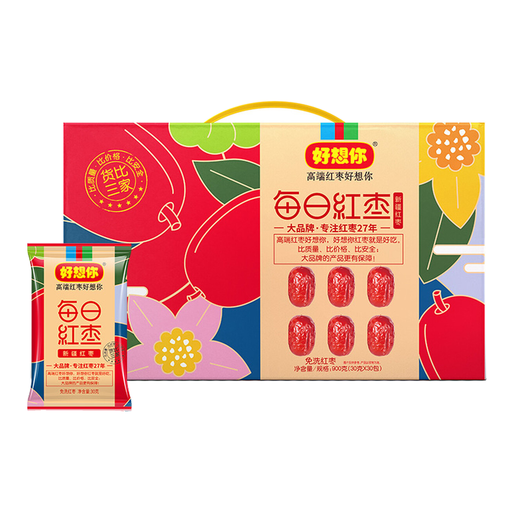
Thirty 30 g sachets let you put a portion into a daypack without dividing a larger bag. Check for pits before eating dates on the move.
 No image available
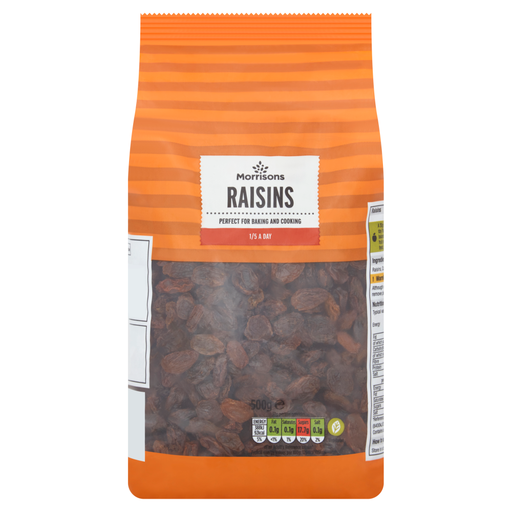
This 500g bag suits walkers who prefer to divide raisins into their own trail portions. Follow the pack’s instructions for storing what remains.
 No image available
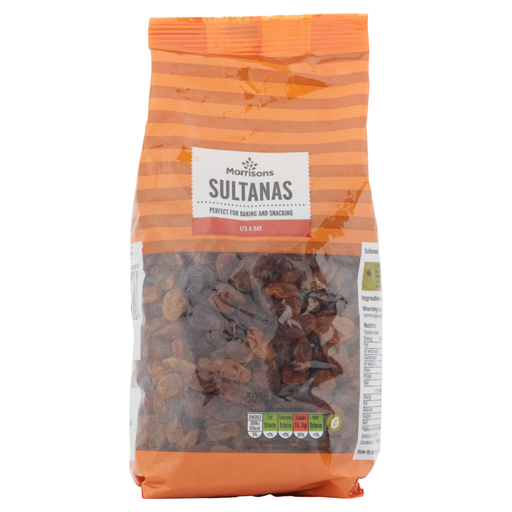
A 500g sultana bag offers another fruit choice for preparing portions before a walk. Check its own ingredients and storage directions rather than assuming they match a raisin pack.
 No image available
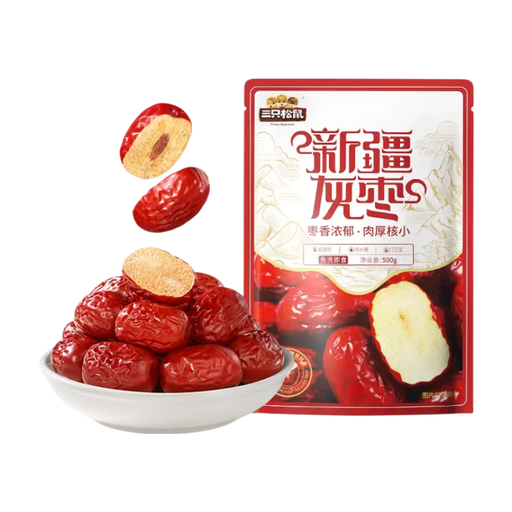
This 500g pack can be divided into smaller amounts for separate walks. Check whether the dates are pitted before choosing how to pack and eat them.
 No image available
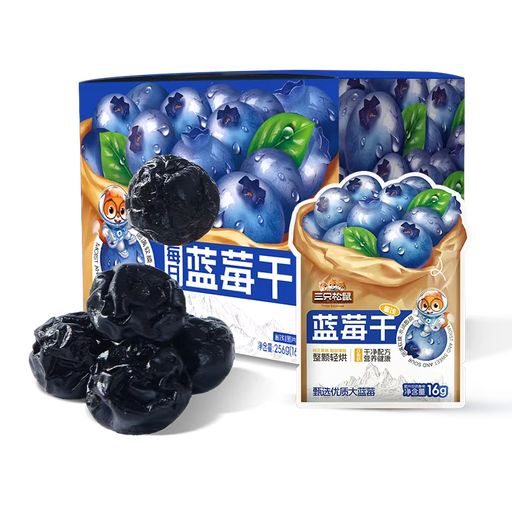
Sixteen 16g packs offer a small, ready-packed snack for a daypack. Read the ingredients if sweetening affects your choice.
The NHS states that 30g of dried fruit counts as one 5 A Day portion. That is a dietary reference, not a rule that every hiking snack pack must weigh 30g.
No. Check the current label for the exact mix: M&S Fruit and Nuts lists cashews, pecans, pistachios and sulphites, and states that it is not suitable for people with peanut, nut or sesame allergy.
Follow that product’s storage instructions. Tesco’s 500g raisins listing specifies a cool, dry place and an airtight container once opened; take a separate portion for the walk if you want to leave the larger pack stored at home.
The NHS advises eating dried fruit at mealtimes rather than between meals to reduce tooth-decay risk. If you plan to snack on it during a walk, take that difference into account when deciding what and when to pack.