Households sharing weekday elevenses
Separate inner packs let people take individual shares without opening a communal bag. Check both the number of packs and the weight of each one: more packs do not necessarily mean more dried fruit.


Choose a dried-fruit multi-pack if separate portions make household sharing easier, but consider a different option when elevenses is a snack between meals: the NHS advises eating dried fruit at mealtimes to reduce tooth-decay risk. For dried fruit eaten with a meal, a 30g pack matches the NHS 5 A Day portion by weight; smaller packs serve a different sharing need, so compare their ingredients, inner-pack weights and price per kg rather than pack count alone.
Separate inner packs let people take individual shares without opening a communal bag. Check both the number of packs and the weight of each one: more packs do not necessarily mean more dried fruit.
A labelled 30g dried-fruit pack matches the NHS 5 A Day portion by weight. Smaller 14g and 20g formats offer separate shares, but neither is a 30g portion on its own.
Individual packs can simplify sharing, but the exact ingredients and warnings still matter. Check allergen declarations and any warning about stones before choosing a product for someone else.
Decide when the dried fruit will be eaten, then compare portion sizes and labels before weighing up value.
| Priority | What to check | Your needs |
|---|---|---|
| Meal and portion | Check the weight of one inner pack, not just the outer pack. The NHS counts 30g of dried fruit as one 5 A Day portion and advises eating dried fruit at mealtimes, not between meals, to reduce tooth-decay risk. | If elevenses is separate from a meal, I need to consider another snack. If the fruit is part of breakfast or another meal, a 30g pack makes that portion straightforward to identify. |
| Ingredients and warnings | Read the exact flavour’s ingredients and allergen declaration, plus any warning about stones. The Food Standards Agency notes that sulphur dioxide and sulphites are often used in dried fruit. | Everyone sharing the pack needs a suitable product, so I will check its current label rather than assume another flavour or brand has the same ingredients. |
| Sharing and value | Compare inner-pack count, grams per pack and price per kg. Formats such as 12 × 14g, 5 × 20g and 5 × 30g provide different amounts of fruit and different numbers of shares. | For repeated household use, I want enough separate packs in a size we will use; the outer-pack count alone will not tell me which option meets that need. |
The NHS counts 30g of dried fruit as one portion, but advises eating it at mealtimes rather than as a between-meal snack to reduce tooth-decay risk. Individual packaging does not change that advice.
If elevenses is separate from breakfast or another meal, consider a different snack; keep dried fruit for a meal if you choose it.
A box of 14g shares and a pack of 30g portions meet different needs. A higher pack count does not establish how much fruit the household gets or whether each share is the right size.
Compare grams per inner pack, total weight and price per kg alongside the number of people sharing.
Ingredients and warnings vary by product. Whitworths lists sulphites and a possible-stones warning for its 1DERS apricot-and-mango variety pack; those details should not be assumed for other packs.
Read the exact pack’s ingredient list, allergen declaration and stone or pit warnings whenever you change product or flavour.
These examples show different ways to buy dried fruit; a brand reference does not mean every product in its range has the same portion size or ingredients.
Its 1DERS Fruit Variety Pack contains five 30g packs: two mango and three apricot, according to Whitworths.
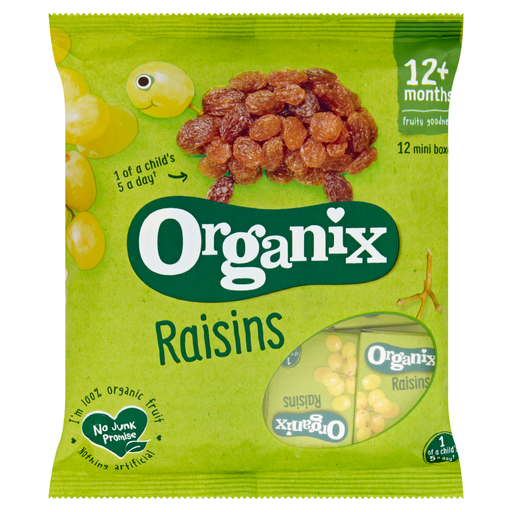
Its Mini Snack Raisins come as 12 separate 14g boxes, according to the Sainsbury's listing.
The Marks & Spencer fruit-snack catalogue lists Taste Buds 10 Raisin Snack Boxes alongside other fruit-snack formats.
Sunsweet lists pitted prunes in a 200g pouch and a 500g canister.
These options include small raisin and berry packs, 30g red-date sachets and a fruit-and-nut mix. Compare the fruit-only packs separately from the mixed snack: a sachet’s total weight is not necessarily its dried-fruit weight.
 No image available
Twelve 14g raisin packs provide separate small shares. Each pack is below the NHS 30g dried-fruit portion by weight; plan to serve dried fruit with a meal rather than as a between-meal elevenses snack.
 No image available
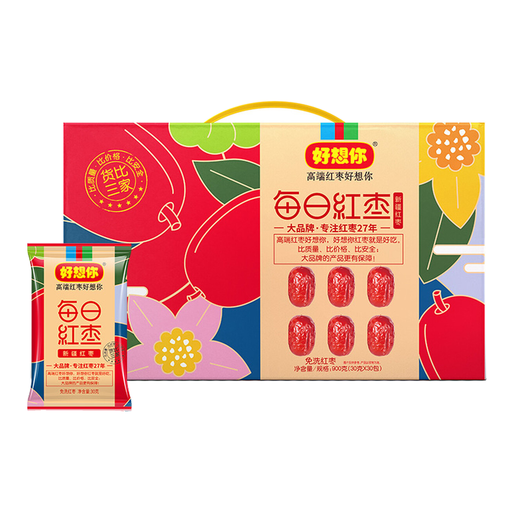
The 900g pack contains 30 separate 30g sachets. That sachet weight matches the NHS dried-fruit 5 A Day portion by weight when eaten with a meal. Check the packaging and each date for pits before serving.
 No image available
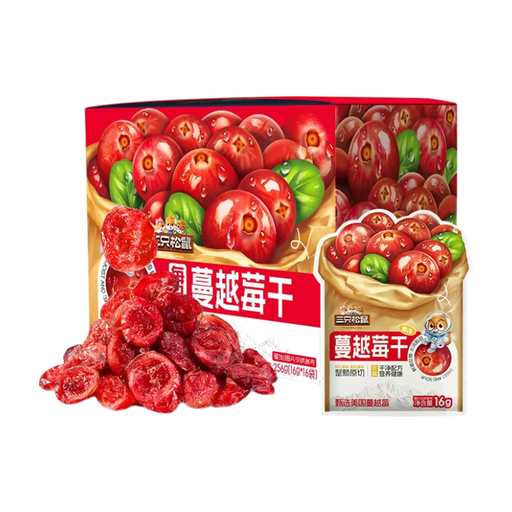
Sixteen separate 16g packs suit households dividing up smaller shares of cranberries. Each pack is below the NHS 30g dried-fruit portion by weight; check the exact ingredient and nutrition labels if added sugar matters to your choice.
 No image available
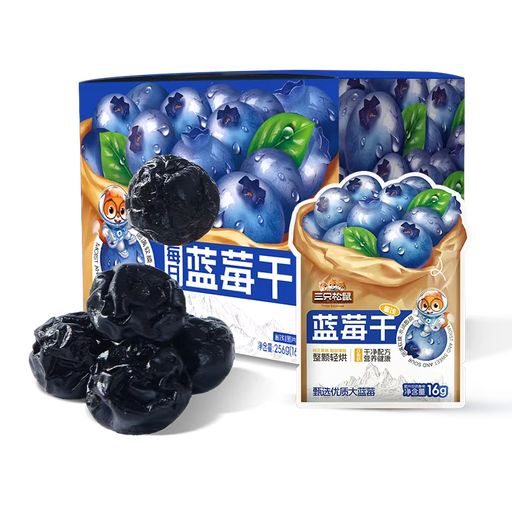
This 256g dried-blueberry pack is divided into sixteen 16g shares. The inner packs are smaller than the NHS 30g dried-fruit portion by weight; check the ingredient and nutrition labels when comparing them with other fruits.
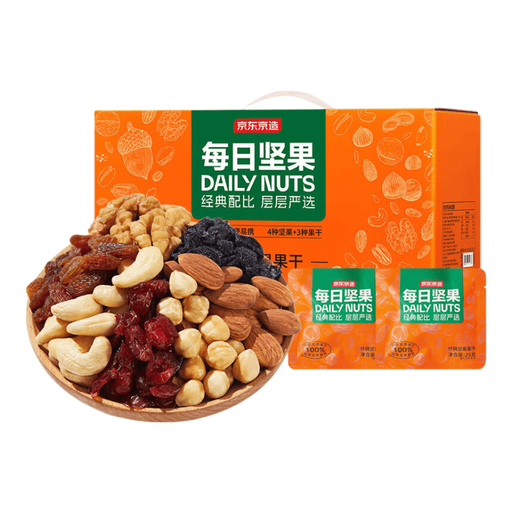 No image available
Thirty sachets divide a mix of nuts and dried fruit for sharing. Because each sachet contains more than dried fruit, do not treat its total weight as a 30g dried-fruit portion. Check the exact nut and allergen declarations before offering it to others.
It can make sharing easier, but the NHS advises eating dried fruit at mealtimes rather than as a snack between meals to reduce tooth-decay risk. If elevenses is separate from a meal, consider another snack instead.
Not necessarily. The NHS identifies 30g of dried fruit as one portion; a 14g raisin box or 20g fruit stick is smaller by weight, while a 30g dried-fruit pack matches that portion size. The NHS also advises eating dried fruit at mealtimes.
Check the current label of the exact product, including its ingredient list, allergen declaration and warnings. The Food Standards Agency notes that sulphur dioxide and sulphites are often used in dried fruit; do not apply one pack’s ingredient or allergen claims to another flavour or brand.
Follow the storage instructions on the exact product label. Keep the outer packaging available while using the inner packs so you can refer back to ingredient, allergen and best-before information.