Parents managing a child’s food allergy
Match the ingredients and any “may contain” or “not suitable for” warning on the current pack to the child’s individual allergy plan. Broad descriptions such as “natural” do not answer that question.


Choose dried fruit for a nursery lunch by matching the current pack’s ingredients and allergy warnings to the child’s specific allergy plan; a general “free from” or fruit-only description is not enough. Check the nursery’s rules before packing it, and serve dried fruit with lunch rather than as a separate snack, in line with NHS advice that it can stick to teeth.
Match the ingredients and any “may contain” or “not suitable for” warning on the current pack to the child’s individual allergy plan. Broad descriptions such as “natural” do not answer that question.
Consider when the dried fruit will be eaten, the child’s age and whether its form needs preparing. NHS advice places dried fruit at mealtimes because it can stick to teeth; Department for Education guidance says not to offer raisins as a snack to children under 12 months.
Check supplied food against known dietary requirements and the setting’s food rules. Department for Education early-years guidance emphasises allergy management and supervision while young children eat.
Start with the named allergy and the exact pack. Then check whether the fruit’s format, serving time and preparation fit the child and the nursery’s rules.
| Priority | What to check | Your needs |
|---|---|---|
| Allergy labelling | Read the current pack’s full ingredient list and any precautionary or “not suitable for” warning. Compare each named allergen with the child’s allergy plan and the nursery’s requirements. | I need to know whether this particular pack is suitable for the child’s named allergy, not whether dried fruit is generally described as “free from”. |
| Fruit and additives | Check the exact product, not just the fruit name. M&S Food lists sulphites in its Collection Soft Apricots; its Dried Pineapple also says it is not suitable for people with nut, peanut or sesame allergies. | Before choosing a flavour or pack size, I need to rule out ingredients and warnings that matter for this child. |
| Serving time | Plan dried fruit as part of lunch or another meal. The NHS advises mealtime use because dried fruit can stick to teeth. | I want a lunch component rather than a between-meal dried-fruit snack. |
| Age and preparation | Follow the nursery’s preparation and supervision rules. Department for Education guidance says not to offer raisins as a snack to children under 12 months; check stone warnings even on products described as pitted. | The fruit needs to suit the child’s age and eating ability, and adults need to know how it will be served. |
Those descriptions do not settle allergen suitability. M&S Food’s Dried Pineapple lists sulphites and carries warnings for nut, peanut and sesame allergies.
Compare the current pack’s ingredients and warnings with the child’s named allergy; exclude a product if it carries a relevant “may contain” or “not suitable for” warning.
Product labels differ: Whitworths lists raisins and sunflower oil for Sunny Raisins, while M&S Food lists sulphites for its Collection Soft Apricots.
Read the exact pack each time you buy or supply it, including after a change in packaging.
The NHS says dried fruit can stick to teeth and advises eating it at mealtimes to reduce the risk of tooth decay.
Put it with lunch rather than packing it for a separate snack occasion.
Department for Education guidance says not to offer raisins as a snack to children under 12 months. Tesco’s listing for Sunsweet Stoned Prunes warns that an occasional pit or pit fragment may remain despite mechanical pitting.
Follow the nursery’s age and preparation rules, inspect fruit where stone warnings apply, and ensure young children are supervised while eating.
These examples show why the individual product label matters; a brand name alone does not establish suitability for an allergy.
Sunny Raisins are a pre-portioned raisin option to consider if the current pack and nursery rules fit the child’s needs.
Stoned Prunes are a different dried-fruit format from raisins, subject to the child’s needs and the nursery’s rules.
Its dried-fruit products illustrate differences that matter when checking a named allergy.
These are raisin, fig and longan options to assess for a nursery lunch. None should be chosen for a particular food allergy without checking the current pack and the nursery’s rules.
 No image available
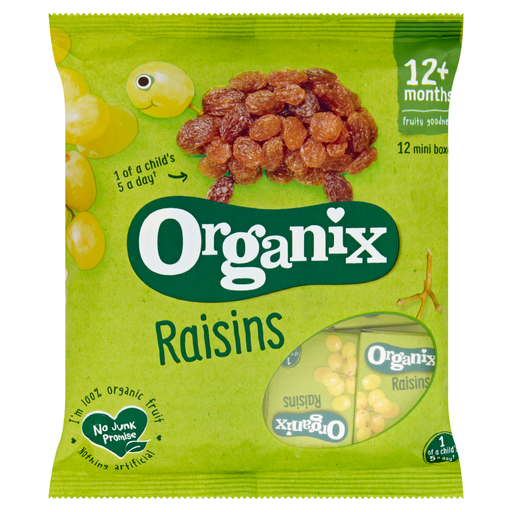
The 12 x 14g box format offers individual portions for lunch. The product is labelled 12+ months; check the current pack against the child’s allergy plan, and follow NHS advice to serve dried fruit with a meal.
 No image available
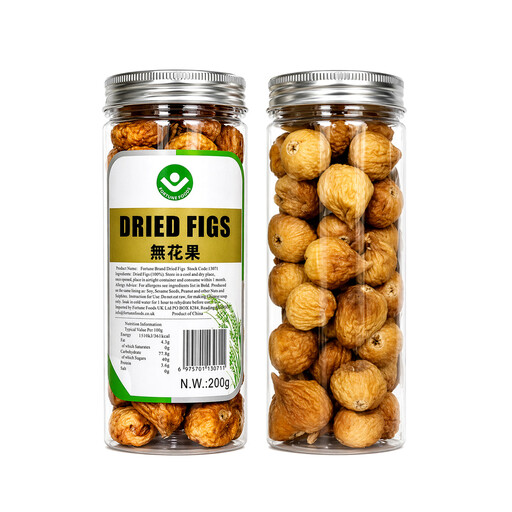
The 200g pack can be portioned for a nursery lunch if the setting accepts figs. Check the physical pack’s ingredients and allergy warnings, and prepare the fruit in a form appropriate for the child.
 No image available
For this 400g pack, agree the serving and preparation with the nursery before packing longan for lunch. Read the physical pack’s ingredients and allergy warnings against the child’s individual plan.
No. Suitability depends on the child’s named allergy and the current product’s ingredients and relevant warnings. Check the pack against the child’s allergy plan rather than relying on broad “free from” or vegan wording.
Pack it with lunch or another meal instead. The NHS advises mealtime use because dried fruit can stick to teeth and eating it between meals can increase tooth-decay risk.
Not without checking the child’s age, allergy plan and nursery rules. Department for Education guidance says not to offer raisins as a snack to children under 12 months and says young children must be supervised while eating.
Yes, if the child needs to avoid sulphites. M&S Food lists them in its Collection Soft Apricots and Dried Pineapple, so those named products are not choices for that need; check the label of any other product separately.
Ask which allergy information it needs and what rules apply to dried fruit, preparation, supervision and food sharing. Department for Education guidance tells early-years settings in England to take food allergies and intolerances seriously; the setting can explain how it manages the child’s requirements at lunch.