Students stocking a first shared cupboard
A 500g pack lets you try dried fruit in breakfasts or cooking without committing cupboard space to a larger bag. Think about who will use it and how often before buying for the household.


Choose a 500g pack for a first cupboard or occasional use; consider 1kg if breakfasts, baking or shared cooking will use it regularly and you can store it dry after opening. Check whether you want plain fruit or a blend, and use the serving information on the exact pack. The NHS counts 30g of dried fruit as one 5 A Day portion and advises eating it at mealtimes rather than between meals.
A 500g pack lets you try dried fruit in breakfasts or cooking without committing cupboard space to a larger bag. Think about who will use it and how often before buying for the household.
If porridge, cereal or baking will use dried fruit repeatedly, a 1kg bag may be practical. Make sure you have somewhere dry to keep it after opening.
Pack size is different from serving size. The NHS counts 30g of dried fruit as one 5 A Day portion and advises having dried fruit at mealtimes rather than between meals.
Start with how often the cupboard will use dried fruit, then check the fruit blend and the label on the particular pack.
| Priority | What to check | Your needs |
|---|---|---|
| Pack size | Compare the net weight with how often you expect to use it. Check that you can keep a larger opened bag dry. | I am stocking a new cupboard, so 500g may be enough to start. For regular shared breakfasts or baking, I could make use of 1kg. |
| Fruit blend | Read the ingredients rather than relying on the pack name. Sainsbury's mixed dried fruit contains sultanas, raisins, currants and candied mixed peel. | For cereal, I may want plain raisins or sultanas; for a recipe calling for a blend, mixed fruit makes more sense. |
| Serving information | Read the nutrition panel for the exact product and its stated serving. The NHS counts 30g of dried fruit as one 5 A Day portion and advises having it at mealtimes. | I want to use the serving information rather than treat an open bag as a single snack. |
| Ingredients and allergens | Check the current ingredients and allergen declaration, particularly when switching fruit types or products. The Food Standards Agency notes that sulphur dioxide and sulphites are used in some dried fruit. | If sulphites or another ingredient matter to me, I need to check this particular pack, not a different product's label. |
Sainsbury's mixed dried fruit includes candied mixed peel alongside sultanas, raisins and currants. That changes what you are adding to cereal or a recipe.
Read the ingredients before choosing a blend; pick plain raisins or sultanas when that is what you intend to use.
The NHS counts 30g of dried fruit as one 5 A Day portion and advises eating it at mealtimes rather than between meals to reduce tooth-decay risk.
Check the pack's serving information and put the amount you plan to use into a bowl or meal.
Sulphur dioxide and sulphites can be used in dried fruit. The Food Standards Agency notes a higher risk of reaction for people with asthma.
Check the ingredients and allergen declaration on the exact pack, especially when changing product or fruit type.
These ranges offer different fruit types and pack sizes; a brand reference does not mean every product in its range has the same ingredients.
ASDA's 500g seedless raisins are a plain-raisin option for breakfasts or baking.
Sainsbury's lists raisins, sultanas and mixed dried fruit in larger cupboard formats.
Tesco's dried-fruit range includes raisins and other fruit types.
Whitworths offers smaller branded dried-fruit formats, including snacking raisins.
M&S Food lists raisins, sultanas and other dried fruits in several formats.
These options include 500g raisins and sultanas alongside red-date packs in different formats. Choose by the fruit you will use and the amount your cupboard can accommodate; dates are not a substitute for raisins in every recipe.
 No image available
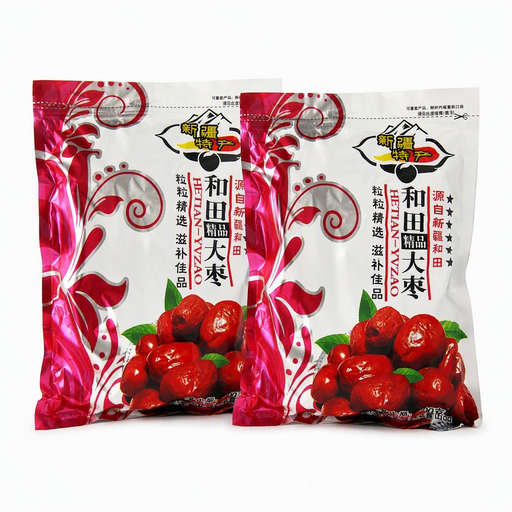
Two 500g packs suit a cupboard that will use dried dates regularly. Check whether the dates have stones before adding them to recipes.
 No image available
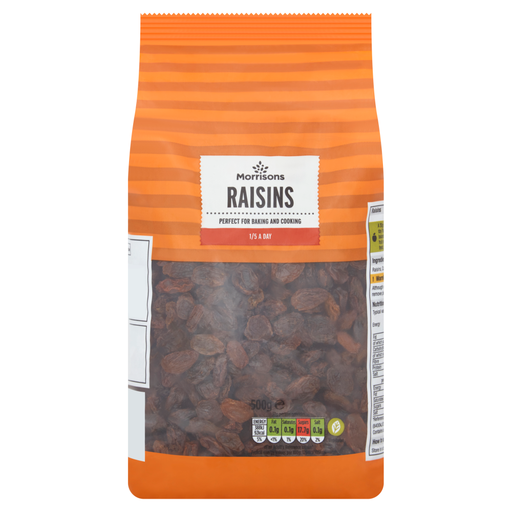
A 500g raisin pack is a manageable starting size for cereal, porridge or occasional baking. Check the current label for ingredients and serving information.
 No image available
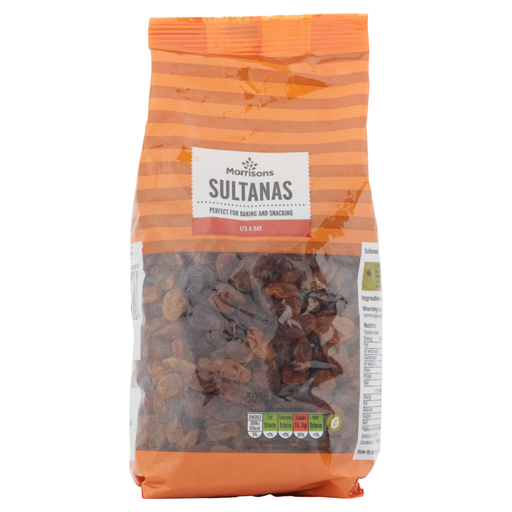
This 500g sultana pack offers another single-fruit choice for breakfasts or baking without committing to a larger bag. Check its ingredients and serving information on the current label.
 No image available
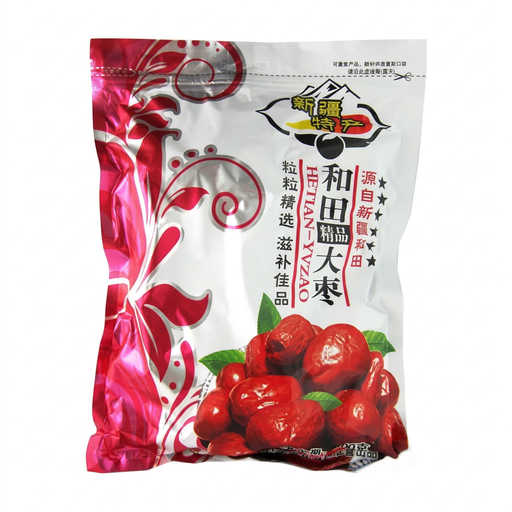
Choose this 500g date pack if you want dates rather than raisins without taking on two packs at once. Check whether the dates have stones before using them in recipes.
 No image available
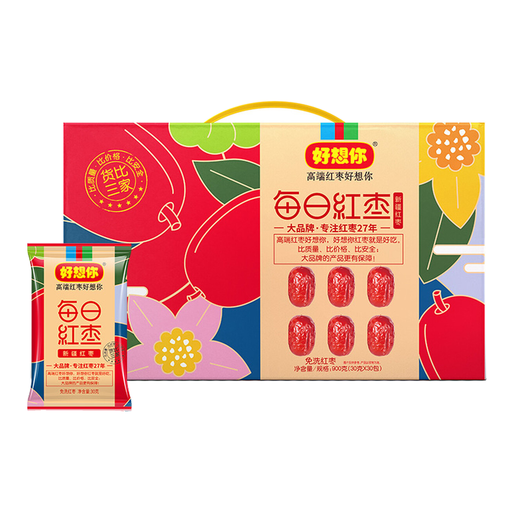
Thirty individual 30g sachets offer a different format from a single large bag for a shared cupboard. Check the dates for stones before using them in recipes.
The NHS counts 30g of dried fruit as one 5 A Day portion, equivalent to around 80g of fresh fruit. Use the pack's serving information rather than its total weight when planning a portion.
A 1kg bag makes sense if breakfasts, baking or shared cooking will use it regularly and you can keep it dry after opening. For occasional use or a first cupboard, 500g is a smaller commitment; also check whether you need plain fruit or a mixed blend.
The NHS advises having dried fruit at mealtimes rather than between meals to reduce tooth-decay risk. Its guidance counts 30g as one 5 A Day portion, regardless of how large the bag is.
Check the exact pack's ingredients and allergen declaration if sulphites are a concern. The Food Standards Agency says sulphur dioxide and sulphites are used in some dried fruit, including raisins, dried apricots and prunes, and notes a higher risk of reaction for people with asthma.