What should you check before buying?
Start with the amount you expect to eat, then compare energy for that amount alongside ingredients and pack format. Shopping priorities can overlap: the SOS-UK figures below describe different questions answered by approximately 1,500 students in September 2018, not a dried-fruit preference survey.
| Priority | What to check | Your needs and survey context |
|---|
| Calories per portion |
Compare kcal for the same 30g amount. If the label gives kcal per 100g, multiply that figure by 0.3; the NHS uses 30g as one dried-fruit portion for 5 A Day. |
I want to know what my usual amount contributes, rather than judging a product by its bag size or its fruit-based name. |
| Food-shop cost |
Compare unit prices for different pack sizes, as well as whether you can use a larger bag before its quality declines after opening. |
I need room in my food budget for the rest of my shop. In the September 2018 SOS-UK student survey, 87% said they considered price when buying food; that was not a dried-fruit-specific result. |
| Shopping convenience |
Consider where you will shop and whether individual packs or a bag you portion yourself fit your routine and storage space. |
A shop I can get to easily matters during move-in. Location or convenience influenced where 75% of respondents to the September 2018 SOS-UK student survey decided to shop for food; it did not measure preference for portion packs. |
| Ingredients and allergens |
Read the ingredient list for candied fruit, syrup, juice or other additions. Check the physical pack for allergens and precautionary statements before eating. |
I may want plain dried fruit or need to avoid a particular ingredient; the fruit name alone is not enough to decide. |
| When you eat it |
Plan a portion with a meal. The NHS advises mealtime rather than between-meal consumption of dried fruit to reduce the risk of tooth decay. |
If I keep a bag at my desk, I would rather set aside the amount for a meal than graze from it throughout the day. |
Brand and retailer references
These examples show why it is worth comparing specific products and labels, rather than treating every dried-fruit product from a brand or retailer as equivalent.
Whitworths
Whitworths lists Sunny Raisins in 30g packs, a format that makes the amount in one pack clear.
- Its Sunny Raisins listing gives 333 kcal per 100g and ingredients of raisins (99%) and sunflower oil.
- A 30g pack works out at about 100 kcal from that stated energy figure; portioned packaging does not make it low calorie.
BEAR / Urban Fruit
Sainsbury’s lists BEAR Fruit Dried Pineapple as a no-added-sugar option.
- The Sainsbury’s listing states 303 kcal per 100g, equivalent to about 91 kcal per 30g.
- The same listing states 57g sugars per 100g. No added sugar does not mean the product contains no sugars.
Sainsbury’s
Sainsbury’s Mixed Dried Fruit is a larger-bag example for comparing portions and ingredients.
- Its listed serving contains 97 kcal per 30g.
- The ingredient list includes candied mixed peel made with glucose-fructose syrup and sugar, so check it if avoiding those additions.
Tesco
Tesco’s dried-fruit category lists several fruit types, including dates, prunes, raisins and sultanas.
- The category gives shoppers different fruit types to compare.
- Check the particular product’s pack size, nutrition and ingredients; a category listing cannot establish those details for every item.
M&S
Marks & Spencer’s dried pineapple and cranberries illustrate how ingredient lists and energy figures can differ between fruit products.
- Its dried pineapple listing states 307 kcal and 73.2g sugars per 100g, while its cranberries listing states 331 kcal per 100g.
- The dried pineapple lists sulphur dioxide (sulphites); the cranberries list concentrated pineapple juice. Check the current pack for details relevant to you.
Joybuy dried-fruit options
These Joybuy options include small packs and larger bags that you can compare for a student food shop. Their pack weights are not interchangeable with the NHS 30g dried-fruit portion reference, so check how much you intend to eat.
 No image available
Organix Goodies Raisins 12+ Months, 12 × 14g
The 14g boxes make it straightforward to see how much you have opened during a busy move-in day. Each box contains less than the NHS 30g dried-fruit portion reference; compare calories for the amount you actually eat.
View on Joybuy
 No image available
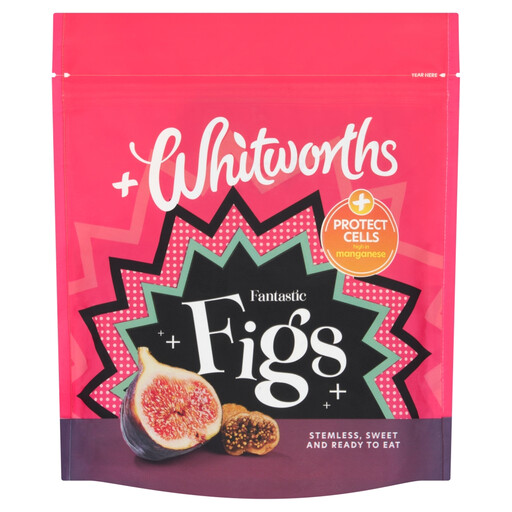
Whitworths Figs 175g
This 175g pack is an option if you are prepared to take out a measured portion rather than eat directly from the bag. Check the current label for energy per serving, ingredients, allergen information and storage instructions.
View on Joybuy
 No image available
J.ZAO Pitted Chilean Prunes 500g
The 500g pack calls for attention to the amount eaten at a time, even if individual prunes are wrapped. Do not rely on the product title’s sugar-free wording when choosing for an added-sugar preference: check the current ingredient list and nutrition panel.
View on Joybuy
 No image available
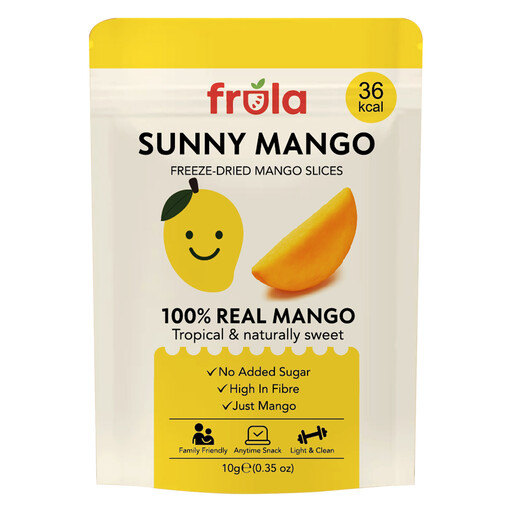
Frula Freeze-Dried Mango 10g
The 10g pack gives you a clearly defined amount to carry, but it is smaller than the NHS 30g dried-fruit portion reference. Compare its labelled energy for the pack you would eat, rather than treating 10g and 30g figures as equivalent.
View on Joybuy
 No image available
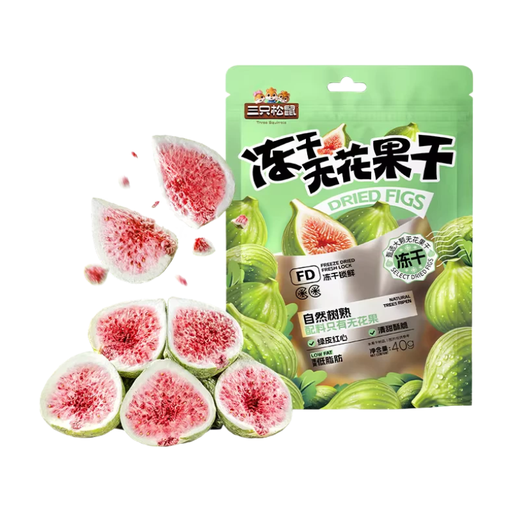
Three Squirrels Freeze-Dried Figs 40g
At 40g, the pack is larger than the NHS 30g dried-fruit portion reference. If you are comparing calories with a 30g serving on another product, use the same weight for both rather than assuming this whole pack is equivalent.
View on Joybuy
Questions about portions and labels
How much dried fruit should I use when comparing calories?
Use the same weight for each product; 30g is the NHS dried-fruit portion reference for 5 A Day. If a label gives only kcal per 100g, multiply that figure by 0.3 to estimate kcal per 30g. For example, Sainsbury’s lists BEAR Fruit Dried Pineapple at 303 kcal per 100g, or about 91 kcal per 30g.
Is dried fruit a between-lectures snack?
The NHS advises eating dried fruit at mealtimes rather than between meals to reduce the risk of tooth decay. If you keep it in your room, set aside the amount for a meal instead of grazing from a bag.
Does no added sugar mean low calorie?
No. A no-added-sugar description does not tell you the product’s calorie or total sugar content. Sainsbury’s lists BEAR Fruit Dried Pineapple as no added sugar, alongside 303 kcal and 57g sugars per 100g; compare the nutrition panel as well as the ingredient claim.
What should I check if I need to avoid an allergen?
Check the current physical pack’s ingredients, allergen information and any precautionary statement before eating. For example, Marks & Spencer Dried Pineapple lists sulphur dioxide (sulphites), while a Whitworths fruit-and-nut mix contains peanuts and carries further allergen information.
Can I choose dried fruit from the retailer page alone?
Use a retailer page to compare candidates, then check the actual pack when buying. That matters particularly when the calorie figure, added ingredients or allergen information affects your choice.


