Families adding dried fruit to meals
If raisins go into breakfast or yoghurt, a larger bag may be practical when you can portion it and follow its storage instructions. The NHS advises giving toddlers dried fruit with meals, not between them.


For toddlers, choose dried fruit for meals rather than routine between-meal snacks: the NHS advises serving it with meals because its sugars can contribute to tooth decay. A larger bag suits a household that can portion and use it; individual packs are useful when a measured portion needs to travel with a meal. Either way, check the current label and prepare the fruit for the child’s age.
If raisins go into breakfast or yoghurt, a larger bag may be practical when you can portion it and follow its storage instructions. The NHS advises giving toddlers dried fruit with meals, not between them.
Small sealed packs can make it easier to bring a measured portion alongside a meal. Their convenience does not change the NHS advice about between-meal snacking.
Preparation and pack warnings matter as much as format. Department for Education guidance says babies under one should not be given whole raisins or dried fruit; cut the fruit into small pieces. Check labels for declared allergens and warnings about stalks or stones.
Decide when the fruit will be served, then choose a pack size your household can use and check the label before serving.
| Priority | What to check | Your needs |
|---|---|---|
| Meal-time use | Plan where dried fruit fits into a meal; do not treat a small pack as a reason to offer it between meals. The NHS gives this advice because dried fruit’s sugars can contribute to tooth decay. | I want fruit that can go with breakfast or a packed meal, rather than something to hand out throughout the day. |
| Pack format | Compare net weight and unit price. Check whether you can portion a larger bag, store it as directed and use it while it remains suitable to eat. | For regular meal use, I can measure portions from a larger bag. For occasional meals away from home, a sealed individual portion may be easier to carry. |
| Preparation | For babies under one, follow Department for Education guidance: do not serve whole raisins or dried fruit; cut them into small pieces. Inspect fruit for stalks, stones or pit fragments, and supervise young children while eating. | I need to prepare the fruit for the child’s age; neither a portion pack nor a product labelled ‘pitted’ replaces that check. |
| Ingredients and warnings | Read the current ingredients, allergen declaration and physical-hazard warnings. The Whitworths Apricot & Mango listing at Tesco declares sulphur dioxide; retailer listings for some raisins and prunes warn that stalks or stones may remain. | If the child needs to avoid an ingredient, I need to check the pack supplied, not rely on a ‘no added sugar’ statement or the fruit name alone. |
The NHS advises giving toddlers dried fruit with meals rather than between them because its sugars can contribute to tooth decay.
Plan a small amount alongside a meal instead of leaving a multipack available for grazing.
Individual portions save measuring and packing, while a larger bag requires you to portion and store the contents after opening. Neither format suits every pattern of use.
Compare the net weights and unit prices, then consider whether you will use a larger bag as directed or benefit from sealed portions for meals away from home.
Retailer listings for Whitworths raisins and several prune products warn that stalks, stones or pit fragments may remain.
Inspect the fruit before serving. Department for Education guidance says babies under one should not have whole raisins or dried fruit; cut it into small pieces, and supervise young children while they eat.
Products sold as dried fruit can have different added ingredients. The Whitworths Apricot & Mango listing at Tesco declares sulphur dioxide.
Check the ingredients and allergen declaration on the pack supplied, particularly if the child must avoid a specific ingredient.
These examples show why pack format and warnings need checking product by product; they do not describe every item made by each brand.
Its listed Sunny Raisin portions and Apricot & Mango mini-packs illustrate two dried-fruit formats for including with meals away from home.
A listed 500g raisin bag provides a larger-pack example for households that portion dried fruit for meals.
Sunsweet Amazin Prunes provide a prune example for shoppers considering dried fruit other than raisins.
These options include larger raisin and sultana bags, portioned raisins and a smaller raisin pack. For toddlers, consider them for use with meals rather than as routine between-meal snacks.
 No image available
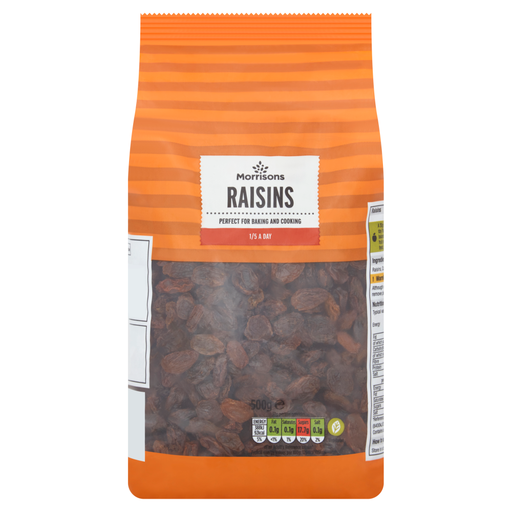
This 500g raisin bag is an option if you can measure portions for meals and use the larger pack. Check the pack’s storage instructions and prepare raisins for the child’s age.
 No image available
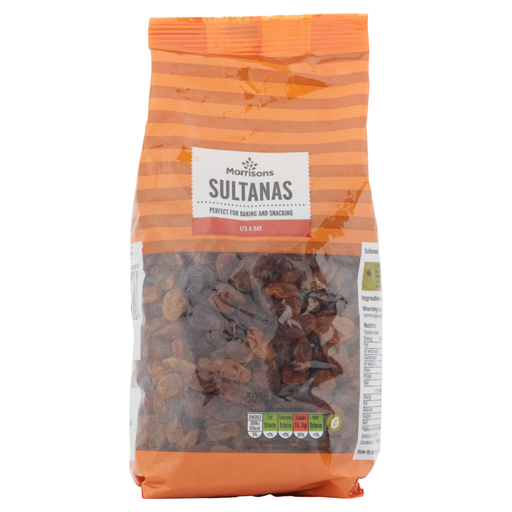
This 500g sultana bag also requires you to measure portions yourself. It suits meal-time use when your household can store and use a larger pack; check the current label before serving.
 No image available
Twelve 14g portions are convenient to pack with a meal away from home. The 12+ months label does not change the NHS advice to give toddlers dried fruit with meals rather than between them; supervise eating.
 No image available
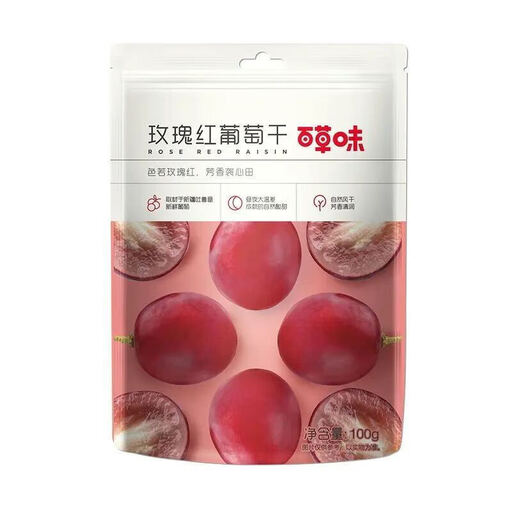
This is a single 100g pack rather than a bulk bag or multipack of portions. If considering it for a toddler’s meal, check the current ingredients and warnings, portion it yourself and prepare it for the child’s age.
The NHS advises giving toddlers dried fruit, including raisins, with meals rather than as a snack between meals because its sugars can contribute to tooth decay. A value pack does not change when to serve it.
No. A larger bag makes sense if you can portion, store and use it as directed. Individual packs may be more practical when you occasionally need a measured portion to take with a meal; compare net weight and unit price before choosing.
No. Department for Education early-years guidance says not to give babies under one whole raisins or dried fruit; cut them into small pieces. Inspect dried fruit for physical hazards and supervise young children while they eat.
No. The NHS advice to serve toddlers dried fruit with meals rather than between them concerns the sugars dried fruit contains. ‘No added sugar’ does not mean sugar-free.
Check the current ingredients, allergen declaration, portion format, storage directions and warnings about physical hazards. For example, the Whitworths Apricot & Mango listing at Tesco declares sulphur dioxide, while listings for some raisin and prune products warn that stalks or stones may remain.