Families using dried fruit with meals
A larger bag may suit households that regularly add raisins, sultanas or mixed fruit to breakfast, desserts or baking. Choose a size you can use while following its storage instructions.


For a routine after-school snack eaten between meals, choose fresh fruit: the NHS advises having dried fruit with meals because its sugars can contribute to tooth decay. A larger dried-fruit pack makes more sense when your household will use it at breakfast, with other meals or in baking; individual packs offer a measured amount for planned meal-time use. Whichever format you choose, check the exact ingredients and storage instructions, and consider whether you will finish an opened pack.
A larger bag may suit households that regularly add raisins, sultanas or mixed fruit to breakfast, desserts or baking. Choose a size you can use while following its storage instructions.
If the child will eat between meals, the NHS advises swapping dried fruit for fresh fruit. A portable dried-fruit pack does not change that meal-time guidance.
Exact products differ: some mixed fruits list sulphites or precautionary nut warnings, and pips, seeds or stalks may remain. For younger children, consider the food’s size and texture and supervise eating, as the NHS advises.
Decide when the fruit will be eaten before choosing between a large bag and individual portions. Pack size then matters alongside ingredients, storage and how the food will be served.
Choose when: the usual after-school snack will be eaten before the next meal.
Consider: fresh fruit needs different storage and preparation from a cupboard pack, but the NHS advises this swap between meals.
Choose when: the household will use it regularly at meals or in recipes.
Consider: an opened bag needs suitable storage, and having more dried fruit on hand does not make it a routine between-meal snack.
Choose when: a measured amount is useful with a packed meal or meal-time dessert.
Consider: separate packs are convenient for planning portions, but the NHS meal-time advice still applies.
| Priority | What to check | Your needs |
|---|---|---|
| Time of eating | Will the child eat between meals or with a meal? The NHS advises fresh fruit between meals and dried fruit with meals. | For the usual snack after school, I want something suitable to eat before dinner. |
| Pack size | Check the total weight, whether the bag reseals and its instructions after opening. For individual packs, check both the pack count and weight per pack. | We use dried fruit in breakfasts or baking, so I want a pack size we can finish and store as directed. |
| Planned portions | Check the amount in each packet rather than assuming all snack packs are the same size. The NHS describes around 30g of dried fruit as an adult 5 A Day portion, not a fixed portion for every child. | A measured packet would be useful with a packed meal, without leaving a large bag open for repeated nibbling. |
| Ingredients and serving | Read the exact ingredient and allergen label; mixed products can differ. Check for hard pieces and consider size, shape and texture when serving younger children, as the NHS advises. | I need to check what is in this particular pack and how to serve it to the child eating it. |
Repeatedly eating dried fruit between meals conflicts with NHS advice to have it with meals because its sugars can contribute to tooth decay.
For the usual between-meal snack, choose fresh fruit. Plan dried fruit for breakfast, a meal or dessert instead.
A 1kg mixed-fruit bag and a 500g raisin bag differ in both contents and the amount your household needs to finish.
Check the fruit mix, pack weight and storage directions, then choose an amount that fits your meal or baking plans.
An opened pack that goes unused can mean wasted food.
Product ingredients differ. For example, an ASDA three-raisin mix lists sulphites and a precautionary warning for nuts and peanuts, while a Sainsbury’s-listed Whitworths baking mix lists syrups and sulphur dioxide.
Read the ingredient and allergen information on the exact pack, particularly when choosing for someone with an allergy or intolerance.
Retailer listings for some raisins warn that pips, seeds or stalks may remain. The NHS advises considering food size, shape and texture for young children.
Check the food before serving, remove hard pieces you find and supervise younger children while they eat.
These examples show why the exact format and label matter; a brand name alone does not establish the ingredients or storage directions of every product in its range.
Whitworths lists dried-fruit multipacks alongside raisins, sultanas, apricots, prunes and mixed fruit.
Sunsweet is represented here by a Tesco listing for 500g pitted prunes, a different use and format from small raisin packets.
Tesco lists 500g and 1kg dried mixed fruit, as well as 1kg raisins and sultanas.
A Sainsbury’s listing for Whitworths baking mixed fruit illustrates an ingredient check, rather than a claim about every dried-fruit product the retailer carries.
Asda lists a 500g seedless-raisin bag and a separate Whitworths eight-pack of 14g raisin portions.
M&S lists dried-fruit bags and smaller fruit-snack formats, including 500g raisins and 1kg Turkish sultanas.
These options cover larger raisin and sultana bags and separately packed dried-fruit portions for planned use with meals. For a routine after-school snack between meals, the NHS advises choosing fresh fruit instead.
 No image available
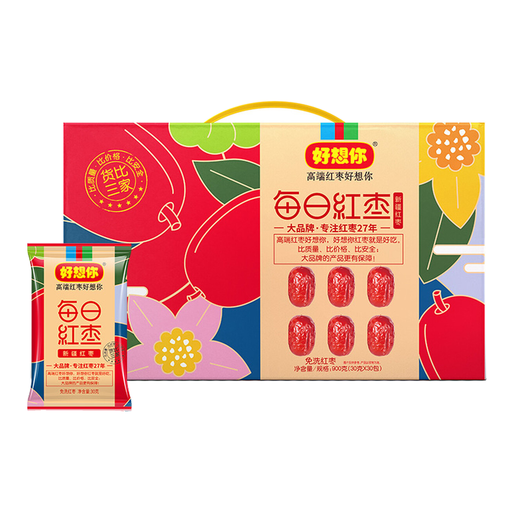
Thirty separate sachets provide measured amounts for planned meal-time use. These red dates contain pits: check and remove them before serving, particularly to young children.
 No image available
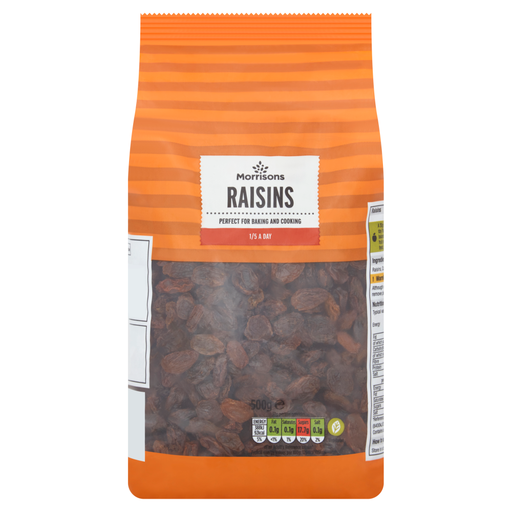
A 500g bag for households planning to use raisins with meals or in baking, rather than relying on a large open bag for between-meal snacking. Check the pack’s ingredients, storage directions and any warning about pips or stalks before serving to children.
 No image available
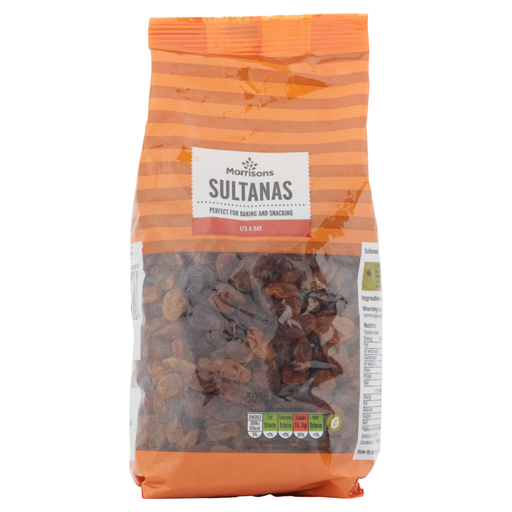
This 500g bag suits planned use of sultanas at meals or in recipes; it does not provide individually measured portions. Read the current label and storage instructions, and check for hard pieces when serving to children.
 No image available
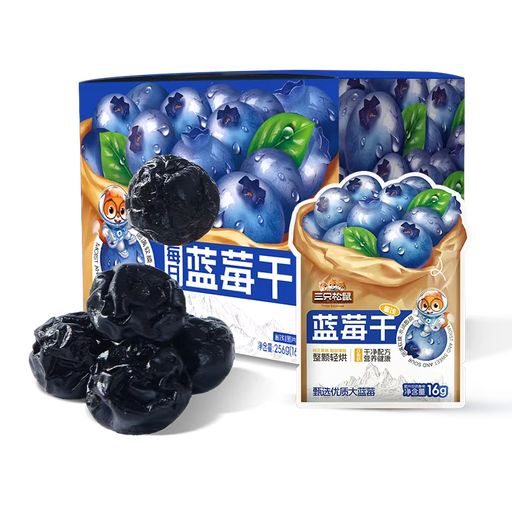
Sixteen 16g packs offer separate amounts for planned use with a meal. Check the exact ingredient list for added sugar rather than assuming that a blueberry snack contains only fruit; separate packets do not change NHS advice about dried fruit between meals.
If it will be eaten between meals, the NHS advises choosing fresh fruit instead. It recommends giving dried fruit, including raisins, with meals because its sugars can contribute to tooth decay.
Not necessarily. The NHS describes around 30g as an adult 5 A Day portion of dried fruit; that figure is not a fixed serving amount for every child. Check the weight of individual packets and plan when they will be eaten.
Consider one when your household regularly uses dried fruit with meals, at breakfast or in baking and can store the opened pack as directed. Check the exact fruit mix and choose an amount you are likely to use.
Read the ingredient and allergen information on the exact pack. An M&S soft raisin medley lists sulphites, while an ASDA three-raisin mix lists sulphites and says it may contain nuts and peanuts; those statements should not be assumed to apply to other dried fruits.
Consider the child’s chewing ability and the food’s size, shape and texture, and check for hard pieces such as remaining pips. The NHS advises serving food in an appropriate form and supervising babies and young children while they eat.