School-night meal planners
If you use different sauces during the week, start with the dish rather than the brand. Barilla describes its ridged penne as a shape that retains sauce; check the cooking time on the particular pack you choose.


Choose the pasta type for the meals you plan: short penne or fusilli can suit sauced dinners, while Tesco describes its wholewheat fusilli as suitable hot or cold. Spaghetti is an option for a long shape with a coating sauce. If someone must avoid gluten, choose a pasta explicitly labelled gluten free, check the current pack’s ingredients and allergens, and confirm any relevant school arrangements before packing lunch.
If you use different sauces during the week, start with the dish rather than the brand. Barilla describes its ridged penne as a shape that retains sauce; check the cooking time on the particular pack you choose.
A short shape may be easier to portion into a pasta salad than long strands. Tesco specifically describes its wholewheat fusilli as suitable for serving hot or cold; follow the directions and food-storage information for your chosen product.
Conventional wheat pasta is not a substitute for a product labelled gluten free. Check the exact pack’s ingredients and allergens, and ask the school about arrangements relevant to the child before sending a packed lunch.
Decide whether the pasta’s main job is a quick dinner, a cold lunch, a wholewheat meal or meeting a gluten-free requirement. Check the individual pack before cooking or packing it.
| Concern | What to check | Who this matters to |
|---|---|---|
| Flexible dinners | Compare shapes for the sauces you plan and read the pack’s cooking time. | When dinner needs to work with different sauces after school, a short shape can be a practical starting point. About 36% of consumers would put quick, adaptable dinners first. |
| Hot meals and cold lunches | Look for a shape you want to use in both dishes; check the chosen pack’s cooking and storage directions. | If the same cupboard pasta needs to go into dinner and a cold pasta salad, versatility matters more than choosing a long shape. About 29% of consumers would make that hot-and-cold flexibility their primary concern. |
| Wholewheat preference | Check the ingredient list for wholewheat or whole grain, and check that wheat is suitable for the intended eater. | For a household choosing wholewheat pasta, the ingredients matter more than the pasta’s colour. Roughly 21% of consumers would prioritise a wholewheat choice. |
| Gluten-free suitability | Choose a product explicitly labelled gluten free and read its current ingredients and allergen declaration; confirm relevant school arrangements. | When pasta is being packed for someone who must avoid gluten, suitability comes before shape. About 14% of consumers would put gluten-free and allergen suitability first. |
Conventional dried pasta can contain wheat. The Food Standards Agency identifies pasta among foods that may contain cereals containing gluten.
For someone who must avoid gluten, choose a product labelled gluten free and read the ingredients and allergen information on the current pack.
Tesco identifies durum wholewheat semolina in its wholewheat pasta, while Marks & Spencer describes a high-protein fusilli containing durum-wheat semolina. Neither description establishes gluten-free suitability.
Check gluten-free labelling independently of wholewheat or protein wording.
Barilla positions its ridged penne for retaining sauce, while Tesco describes its wholewheat fusilli as suitable hot or cold. Those are different reasons to choose a shape.
Think about whether the pack is mainly for sauced dinners, cold pasta salads or a planned spaghetti dish.
School arrangements matter when a child has an allergy or another medical dietary requirement. Coeliac UK notes that school-support rules can differ across the UK.
Ask the individual school about its current packed-lunch policy and any arrangements for the child before sending food.
A dried-pasta range with conventional and wholewheat shapes.
Own-brand dried pasta including wholewheat fusilli and spaghetti.
A retailer range that includes Free From dried-pasta shapes.
A retailer with a Free From spaghetti product.
Dried pasta including conventional wheat products and Made Without Wheat alternatives.
These packs cover wholewheat and conventional fusilli for school-night meals, spaghetti for sauced dinners, and lasagne sheets for a planned baked dish. Check ingredients and allergens on the exact pack if someone must avoid gluten.
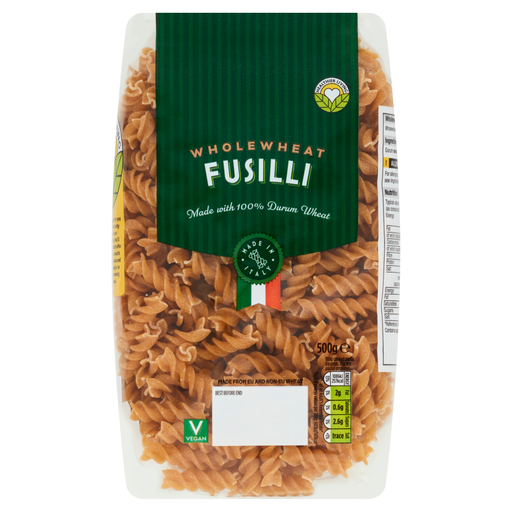 Image unavailable
A short wholewheat shape to consider for a sauced dinner. This 500g pack contains wheat; check its directions before preparing it for a cold lunch.
 Image unavailable
A conventional short shape for a school-night pasta dish. The pack is 500g and contains wheat; follow its cooking directions and check them before planning a cold lunch.
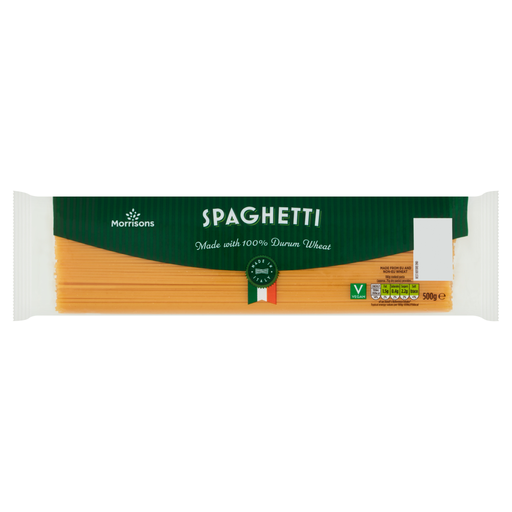 Image unavailable
Choose this 500g pack when you want long strands for a sauced dinner rather than a short pasta shape. It contains wheat and gluten; read the pack’s cooking directions.
 Image unavailable
Another 500g long-shape option for a sauced dinner. It contains wheat; check the pack’s cooking time before fitting it into a school-night meal.
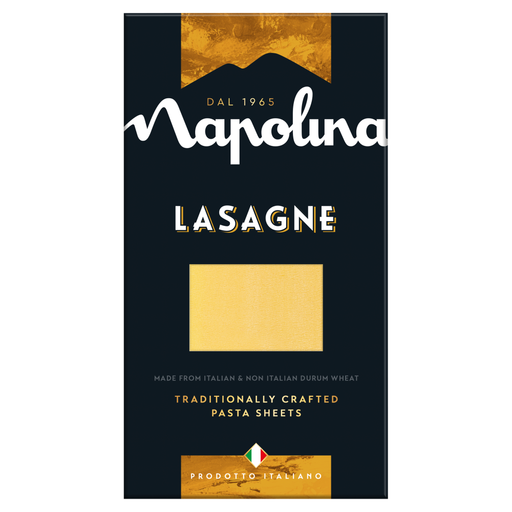 Image unavailable
Lasagne sheets for a planned baked dinner, rather than a short shape for pasta salad. This 375g pack contains wheat; check its preparation directions against your recipe.
Not by default. Conventional pasta can contain wheat: check the current pack’s ingredients and allergen declaration, and choose a product explicitly labelled gluten free where that is required.
The Food Standards Agency’s gluten-free definition sets a limit of no more than 20 mg/kg of gluten in food sold to the final consumer. Check the exact pack for its other ingredients and allergens as well.
Check with the individual school rather than assuming its arrangements match another school’s. The Department for Education provides school-allergy guidance for England, while Coeliac UK notes that school-support rules can differ across the UK; ask about any arrangements relevant to the child.
Start with the serving guidance on the exact pack, then decide how much the planned dish needs. One product’s dry-to-cooked quantity should not be treated as a rule for every pasta shape, meal or eater.