Quick family-tea planners
Parents and carers looking for dried pasta to serve with a simple sauce or use in an oven bake. Asda’s pasta-shapes and spirali listings give examples of the pack-level cooking information worth checking.


For a straightforward tea-time meal, choose a dried pasta shape your child will eat and follow that pack’s cooking instructions. Wholewheat pasta is an option when fibre is a priority and its taste and texture are accepted; if gluten must be avoided, choose a specifically labelled gluten-free product instead. Check the current pack label for ingredients and allergens, especially before packing food for school.
Parents and carers looking for dried pasta to serve with a simple sauce or use in an oven bake. Asda’s pasta-shapes and spirali listings give examples of the pack-level cooking information worth checking.
Shoppers who want a wholewheat option and need to consider whether their child accepts its flavour and texture. Barilla identifies its Whole Wheat Fusilli as made with 100% whole wheat.
Carers choosing pasta for a child who must avoid gluten or wheat, or checking requirements before sending food to an England school. The product label and the individual setting’s arrangements both matter.
Start with any dietary restriction, then consider the shape your child will eat and the cooking and serving directions on the pack.
| Concern | What to check | Who this matters to |
|---|---|---|
| Shape and versatility | Choose a familiar shape for the planned sauce or bake; check its own cooking instructions. | If I want one pasta for several straightforward tea-time dishes, a familiar short shape is my priority. About 33% of consumers put that versatility first. |
| Wholewheat option | Check that the pasta is labelled wholewheat and consider whether your child accepts its flavour and texture. | When I am choosing wholewheat pasta, I need it to be a type my child will eat. For about 25% of consumers, that wholewheat choice is the primary concern. |
| Gluten and wheat suitability | Read the current ingredients and allergen label; select a specifically labelled gluten-free product when required. | If my child must avoid gluten or wheat, the exact product’s suitability comes before its shape. Avoiding those ingredients is the main concern for about 25% of consumers. |
| Cupboard planning | Check pack size, serving guidance, cooking directions and storage instructions. | For routine meals, I need a pack size I can use and directions I can follow without guesswork. Roughly 17% of consumers make that practical cupboard choice their first priority. |
Shape does not establish allergen suitability. Asda’s standard pasta shapes contain wheat, whereas Barilla’s Gluten Free Fusilli uses corn and brown-rice ingredients.
When gluten or wheat must be avoided, choose a product labelled for that need and read the ingredients and allergen declaration on the pack in hand.
Cooking directions vary between products: Asda lists 11–13 minutes for its pasta shapes and 10–12 minutes for its penne.
Follow the selected pack’s directions and check the pasta before serving.
A child may not accept the flavour or texture of a different pasta simply because it meets a household preference.
If there is a suitable smaller pack, try the pasta in a family meal before relying on a larger one.
Asda cautions that ingredients and allergy information can change. A saved listing cannot replace the label on the current pack.
Recheck that label whenever an allergen matters. Before sending food to an England school, also check the individual school’s allergy arrangements.
Barilla lists both Whole Wheat Fusilli and a separate Gluten Free Fusilli, giving shoppers two distinct dietary routes.
Asda’s dried-pasta examples include shapes, spirali and penne for everyday meals.
The M&S pasta range includes standard wheat pasta alongside wholewheat and Made Without alternatives.
Dolmio is relevant here as a pasta-sauce brand, not as a dried-pasta choice.
These selections cover standard wheat fusilli and spaghetti for family meals, plus a wholewheat fusilli option. Check the pack for cooking directions and dietary suitability when choosing between them.
 Image unavailable
A short spiral shape to consider for a family pasta meal. This is a 500g pack of standard wheat pasta; check the current label if wheat or gluten must be avoided.
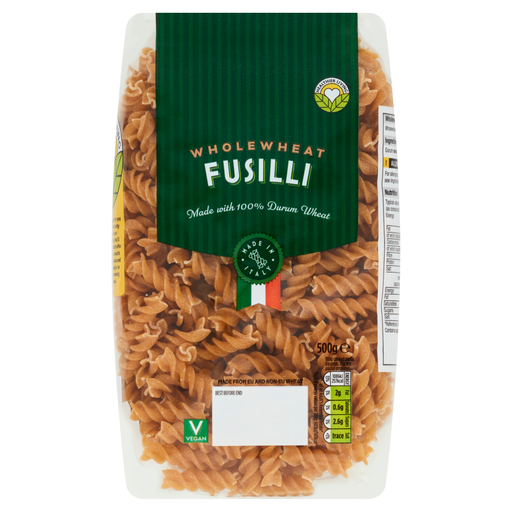 Image unavailable
A wholewheat spiral option if your child accepts its flavour and texture. The pack is 500g; wholewheat contains wheat and is not a gluten-free alternative.
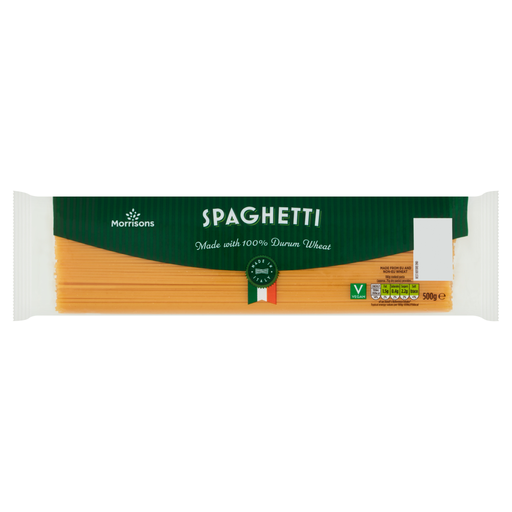 Image unavailable
Choose this 500g spaghetti pack if long strands suit the meal rather than a short shape. It contains wheat; read the current label when avoiding wheat or gluten.
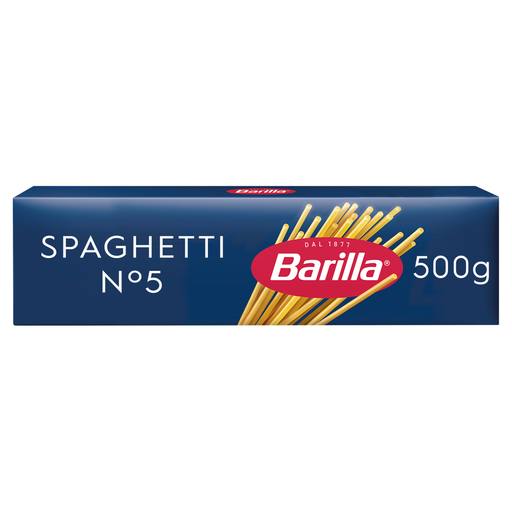 Image unavailable
Another 500g spaghetti option for a family pasta meal. Check the current pack for wheat and any other relevant allergen advice before serving.
 Image unavailable
A 500g spaghetti pack for meals where long strands are preferred. It contains wheat; check the current label for allergens and the pack instructions for cooking and servings.
Do not assume it is: Asda’s standard pasta shapes contain wheat. Choose a specifically labelled gluten-free product and check the current pack; Barilla lists corn and brown-rice ingredients for its Gluten Free Fusilli.
No. Wholewheat is an option when fibre is a priority and the child accepts it. The NHS identifies wholegrain starchy foods as sources of fibre, but wholewheat pasta still contains wheat and cannot replace a gluten-free product when gluten must be avoided.
Start with the guidance on the exact pack and adjust for the meal and appetite rather than treating an adult serving suggestion as a fixed child’s portion. Asda’s penne listing suggests 75g dry pasta per person, while Dolmio’s Bolognese sauce page suggests 100g per person for its meal.
Use it to shortlist products, then read the pack in hand before serving. Asda warns that ingredients and allergy information can change.
Check the child’s dietary requirements, the current product label and the individual school’s allergy arrangements. For schools in England, the Department for Education’s allergy guidance addresses school allergy-safety policies; it does not make every pasta product suitable for every child or setting.