For an older person who can eat ordinary-texture pasta safely, consider protein-enriched dried pasta when protein is the main food-level priority, wholewheat when fibre matters more, or standard pasta when a familiar meal base is the priority. Assess the whole meal, not the pasta alone. If chewing or swallowing is difficult, follow the person’s prescribed texture and clinical advice rather than choosing by a nutrition label.
Who this choice matters to
Older adults needing more protein at meals
When appetite or intake is limited, pasta can be one part of a meal planned around the person’s needs. NHS guidance for carers emphasises good nutrition and hydration; a protein figure on a pasta pack does not describe the entire meal.
Older adults prioritising fibre
Wholewheat dried pasta is a route to consider when ordinary pasta textures are manageable. Compare fibre figures on the same dry or cooked basis: Barilla and M&S publish dry-product figures for their cited wholewheat pastas, while Tesco’s cited figures are for cooked pasta.
Carers managing chewing or swallowing needs
For someone with a known swallowing difficulty or a prescribed texture level, the finished meal must meet their individual instructions. Royal Berkshire NHS Foundation Trust advises that a speech and language therapist should specify safe food and fluid levels.
What to check when choosing pasta
Choose by the person’s main need, then check whether the finished dish and its accompaniments suit them. A dry pasta pack cannot establish the texture of a prepared meal.
| Concern |
What to check |
Who this matters to |
| Protein and meal nourishment |
Compare protein per 100g on the same dry or cooked basis, then consider the sauce and other parts of the meal. |
If appetite is limited, I want the pasta meal to contribute to the person’s protein intake without treating pasta as the whole solution. About 33% of consumers put meal nourishment first. |
| Fibre |
Check the fibre figure and whether it describes dry or cooked pasta; confirm that ordinary pasta texture is suitable. |
When fibre is my main reason for changing pasta, I need a wholewheat option the person can eat and enjoys. Roughly 25% of consumers make fibre their primary concern. |
| Chewing and swallowing |
Follow the person’s prescribed texture and clinical instructions; assess the finished dish, not just the dry product. |
If the person has difficulty swallowing, I need the served meal to meet their individual texture requirements before considering its nutrition label. For about 25% of consumers, texture safety comes first. |
| Cupboard convenience |
Check pack size, ingredients, cooking instructions and the current pack label. |
When ordinary pasta is suitable, I want a straightforward storecupboard base that fits the meals I can prepare. Around 17% of consumers prioritise that practicality. |
Mistakes to avoid
-
Treating pasta as the whole nutrition plan
The pasta’s protein or fibre figure does not account for the rest of the dish, appetite or an individual care plan. NHS advice to carers considers nutrition and hydration across eating and drinking, not one ingredient.
Choose a pasta type, then consider suitable accompaniments and the person’s wider dietary instructions.
-
Comparing dry and cooked figures directly
Tesco reports nutrition for its cited wholewheat spaghetti per 100g cooked; the cited Barilla and M&S wholewheat figures are per 100g dry. Those portions do not provide a like-for-like comparison.
Compare dry with dry or cooked with cooked, using a pack’s serving information where available.
-
Letting a nutrition claim override swallowing instructions
A protein-enriched or wholewheat label cannot show whether cooked pasta meets a prescribed texture. Royal Berkshire NHS Foundation Trust advises seeking specialist guidance on safe food levels for a person with dysphagia.
For known or suspected swallowing difficulty, seek the relevant clinical advice and follow the person’s documented instructions before serving pasta.
-
Using an online description instead of the pack
Ingredients and product information can change, so an earlier online listing may not describe the pack being served.
Read the physical label for ingredients, allergens, nutrition information and cooking instructions.
Brands and ranges to consider
Barilla, Tesco and M&S have relevant dried-pasta examples. Dolmio is relevant here as a sauce or prepared-meal brand, not as a substitute for comparing dried pasta packs.
Barilla
Its Whole Wheat Spaghetti and Protein+ range offer different label-led routes.
- Barilla lists 8g fibre and 13g protein per 100g dry Whole Wheat Spaghetti. It states that Protein+ provides 20g protein per 100g dry pasta.
- These brand-published figures do not establish whether either pasta suits an individual diet or a prescribed swallowing texture.
Tesco
Tesco Whole Wheat Spaghetti is an own-brand dried wholewheat option.
- Tesco publishes fibre and protein information for the pasta as cooked.
- Check the preparation basis before comparing it with dry-product figures, and read the current pack label for any changes.
M&S
Its dried-pasta range includes Wholewheat Penne alongside other formats.
- M&S lists 9.4g fibre and 13.3g protein per 100g dry Wholewheat Penne.
- Check the current product label rather than assuming range descriptions apply to a particular pack.
Dolmio
Dolmio’s UK range is relevant when choosing a sauce or prepared meal to accompany pasta.
- A sauce choice can be considered as part of the complete pasta dish.
- Its sauces and ready meals should not be compared as though they were dried pasta packs.
Wholewheat pasta on Joybuy
These Morrisons wholewheat fusilli listings relate to a fibre-led dried-pasta choice for someone who can eat ordinary pasta textures. Compare their pack details before choosing between the listings.
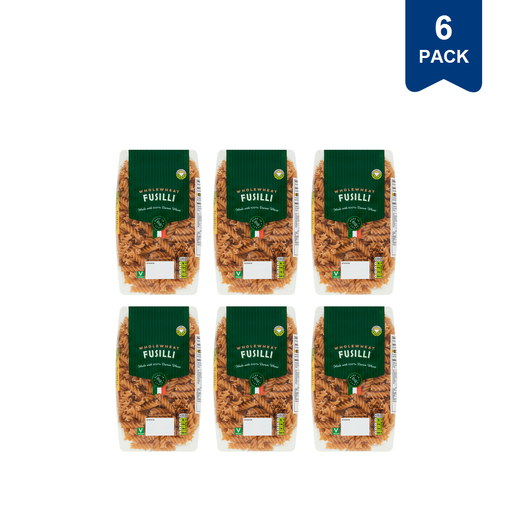 Image unavailable
Morrisons Wholewheat Fusilli 500g (6 Packs listed)
A wholewheat dried-pasta option for a fibre-led choice when ordinary pasta texture is suitable. The listing title says six 500g packs, but another listing detail gives a 500g weight; confirm the bundle contents before ordering. Compare nutrition figures using the preparation basis shown on the pack.
View on Joybuy
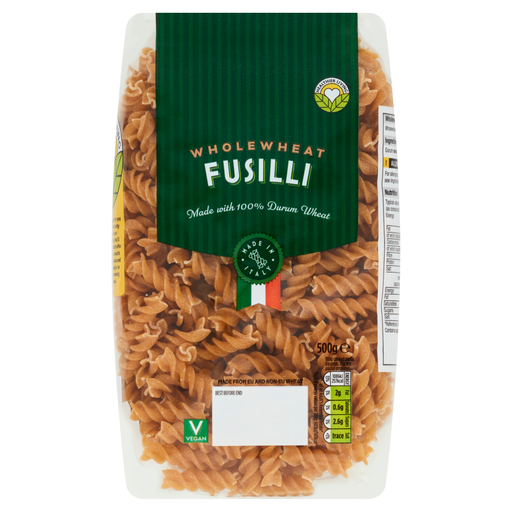 Image unavailable
Morrisons Wholewheat Fusilli 500g
A 500g wholewheat dried-pasta pack for a fibre-led meal where ordinary pasta texture is suitable. Check whether the pack’s nutrition figures describe cooked or dry pasta before comparing them with another product.
View on Joybuy
Questions about dried pasta
Is wholewheat pasta always the right choice for an older person?
No. Wholewheat is a route to consider when fibre is the main priority and ordinary pasta texture is suitable. Appetite, individual dietary instructions and swallowing needs may change the choice; compare nutrition labels on the same cooked or dry basis.
Can I just cook pasta longer for someone with swallowing difficulty?
Do not rely on longer cooking as a general solution. Follow the person’s prescribed food texture and speech and language therapy advice. University Hospitals Birmingham NHS Foundation Trust advises that food for a prescribed Level 6 soft and bite-sized diet should be soft, tender and moist, with a thick sauce or similar accompaniment.
How do I compare fibre and protein between dried-pasta packs?
Use figures measured on the same basis: dry with dry or cooked with cooked. Tesco’s cited Whole Wheat Spaghetti figures are for 100g cooked, whereas the cited Barilla and M&S wholewheat figures are for 100g dry. Read the current pack label before using its values.
Does a care provider need to follow a documented texture-modified diet?
Yes. For a person requiring a texture-modified diet, the Health and Safety Executive says care providers must have robust arrangements to ensure only appropriate food is served. Pasta that merely seems soft is not a substitute for the person’s documented requirements.


