Fibre-focused meal planners
You want to compare wholewheat pasta with your usual dried pasta and check how much fibre the particular product provides. The NHS identifies wholewheat pasta as a higher-fibre starchy-food option.


Start by comparing wholewheat dried pasta if fibre matters to your meal planning, but choose a shape and texture you will use. Standard pasta can also form part of a balanced meal; whichever type you buy, consider the dry portion and what goes into the sauce. Choose gluten-free or higher-protein pasta for a specific requirement or preference, not on the assumption that its label alone makes it more suitable for weight management.
You want to compare wholewheat pasta with your usual dried pasta and check how much fibre the particular product provides. The NHS identifies wholewheat pasta as a higher-fibre starchy-food option.
You want a consistent way to plan the dry pasta amount while accounting for sauce, toppings and added fats. Check whether nutrition figures describe dry pasta or a cooked serving before using them to plan a meal.
You need to check ingredients and allergen information for a gluten-free or wheat-free requirement, or you are considering pasta with a different protein content. A product category alone does not establish what is in the exact pack.
Start with the requirement that determines your choice of pasta, then compare portions and the finished meal on a consistent basis.
| Concern | What to check | Who this matters to |
|---|---|---|
| Fibre from the pasta | Check the ingredients and fibre figure, comparing packs on the same dry or cooked basis. | If I want fibre to be the deciding factor, I need to know what this particular pasta provides rather than rely on its colour or name. About 40% of consumers put fibre first. |
| Portion and complete meal | Check the pack’s serving basis and consider the amount of sauce, toppings and added fats you will use. | When I make pasta regularly, I want a dry amount I can repeat and a clear view of what I add to the plate. Portion planning is the primary need for about 30% of consumers. |
| Diet-specific suitability | Read the exact pack’s ingredients and allergen statement; check for an explicit gluten-free declaration if required. | If I must avoid gluten or wheat, a wholewheat or higher-protein label cannot settle whether the pasta suits me. About 20% of consumers place a specific dietary requirement first. |
| Ease of making it regularly | Choose a suitable shape and pack quantity, and check the cooking instructions. | I want a pasta shape and quantity that fit the meals I actually make, without buying more than I expect to use. For about 10% of consumers, that practical routine is the main concern. |
Pasta absorbs water during cooking, so a figure per 100g dry pasta is not directly comparable with one per 100g cooked pasta.
Check the basis printed beside each nutrition figure. If you plan meals using dry pasta, measure that amount consistently rather than treating a cooked serving weight as the same quantity.
Wholewheat pasta is a way to choose a higher-fibre base, but the portion, sauce and additions still matter. The NHS notes that fats added during cooking or serving increase a dish’s calorie content.
After choosing the pasta, consider the dry amount alongside the vegetables, protein-containing foods, sauce and added fats you intend to serve.
A low-fat description does not tell you everything about a sauce. Dolmio lists 40 kcal, less than 0.5g fat and 0.75g salt per 112g portion of its Low Fat Bolognese sauce.
Read the nutrition panel per portion and account for the amount of sauce you actually use.
Wholewheat pasta contains wheat, and a higher-protein pasta may also contain durum wheat. Neither description establishes that a product is suitable for someone avoiding gluten.
Check the exact pack’s gluten-free declaration, ingredients and allergen statement before buying for a gluten-free requirement.
Barilla’s Whole Wheat Spaghetti is a named wholewheat option for shoppers comparing it with standard dried pasta.
Tesco lists own-label wholewheat dried pasta in several shapes, including spaghetti, fusilli and penne.
Sainsbury's Wholewheat Fusilli is a specific wholewheat shape to consider when comparing pasta for fibre-focused meals.
M&S lists wholewheat, higher-protein and Made Without pasta lines for shoppers comparing different ingredient requirements.
Dolmio is relevant to the sauce portion of a pasta meal, rather than the choice of dried pasta itself.
These Morrisons wholewheat fusilli listings suit shoppers considering a dried wholewheat pasta base. Choose between the stated pack formats according to how much you expect to use, and check the current pack for serving and allergen information.
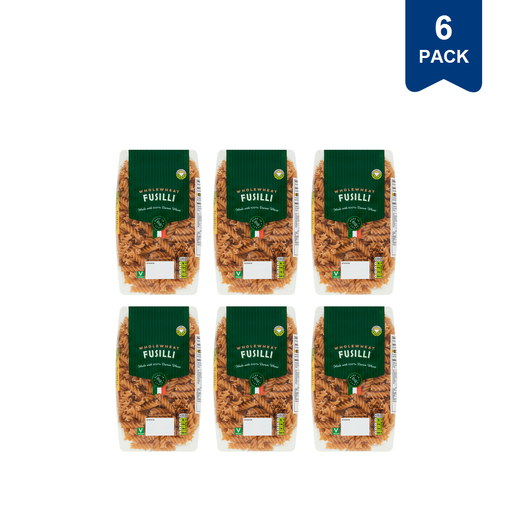 No image available
A wholewheat fusilli option if you expect to use several packs of dried pasta. The listing specifies six 500g packs; check that this quantity fits your storage and meal plans. Wholewheat pasta contains wheat, so check the current pack if you have an allergen requirement.
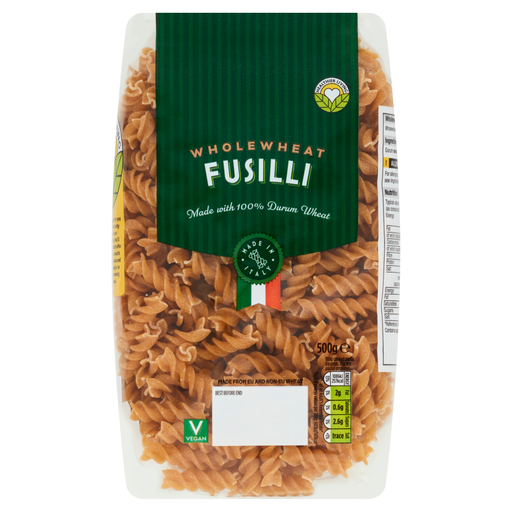 No image available
A wholewheat fusilli listing for shoppers planning pasta meals around a 500g pack size. Confirm the supplied quantity on the product page before ordering, and check the current pack’s ingredients and allergen statement if you need to avoid wheat or gluten.
Yes. The NHS includes pasta among starchy foods in a balanced diet. When planning a meal, consider the dry pasta amount and the sauce, toppings and fats you add, rather than judging the pasta in isolation.
No. Wholewheat pasta is worth comparing when fibre is a priority: the NHS identifies it as a higher-fibre option and notes that fibre can help you feel full. Standard pasta remains an option; check the particular pack and consider how you will serve it.
Use a consistent dry amount if that is how you plan your portions, and read each nutrition figure on the basis stated on its label. Cooking changes pasta’s weight, so do not compare a dry figure directly with a cooked one.
No. A gluten-free declaration addresses gluten content, not whether the pasta has less energy or more fibre than another product. Choose it for a relevant requirement or preference, then check the exact pack’s ingredients, allergen information and nutrition.
Read the sauce’s nutrition per stated portion and consider how much you will use with the pasta. Calories, fat, sugars and salt can each matter to your comparison; a manufacturer’s suggested pasta serving is recipe guidance rather than an individual portion rule.