
24/7 Customer Support

Free returns

Same-day & Next-day Delivery

Quality Guaranteed

Unlock Your Welcome Offers: FREE Delivery | Up to 80% OFF | Free 30-day JoyPlus trial
Download the APP
Dried red dates, also called Chinese red dates, dried jujubes or red jujubes, can work as a snack, tea ingredient or cooking staple. However, products that look similar online may differ considerably in preparation, texture, ingredients and pack value.
Before buying, UK shoppers should look beyond words such as “premium” or “natural”. The most useful details are usually found in the ingredient list, nutrition panel, preparation instructions and net weight.
Some dried red dates can be eaten directly from the pack, while others are intended for washing and cooking. A product may look like a snack but still contain stones or require preparation.
Check whether the label says:
This is particularly important when preparing food for children or anyone who may find whole pits difficult to detect. Even mechanically pitted products can occasionally contain a remaining pit, so read the safety information carefully.
“Premium dried dates” is not a standard guarantee of size, softness or flavour. Compare measurable details instead, including:
A larger pack may offer better value for regular cooking, but only if you will use it before the fruit becomes dry or sticky after opening.
Plain jujubes naturally contain a substantial amount of carbohydrate and sugar. Other products add white sugar, maltose, syrup, oil or flavourings. These are different shopping choices, even if both are described as dates.
For example, honey-flavoured dates contain sugar and maltose, while crispy winter jujubes may contain palm oil. Always compare the ingredients list rather than relying on front-of-pack descriptions.
Choose the format according to how you plan to use the product:
Large red jujubes often provide more flesh per piece and can be suitable for stuffing, simmering or serving as a snack. Smaller or sliced fruit is easier to portion into a mug, saucepan or baking mixture.
Texture descriptions such as soft, chewy or crispy are useful, but storage also affects texture. Once opened, keep the pack sealed in a cool, dry place away from direct sunlight. Follow the label if refrigeration is advised.
For a plain product, look for an ingredient list such as red dates 100% or dried red date slices 100%. Compare the nutrition panel per 100g because pack serving sizes vary.
The supplied products range from approximately 258 to 343 kcal per 100g for plain dried dates, with carbohydrates and sugars naturally accounting for much of the nutritional profile. Candied or oil-containing snacks can be higher in energy. This does not make one format suitable for everyone; it simply helps you match the product to your eating habits.
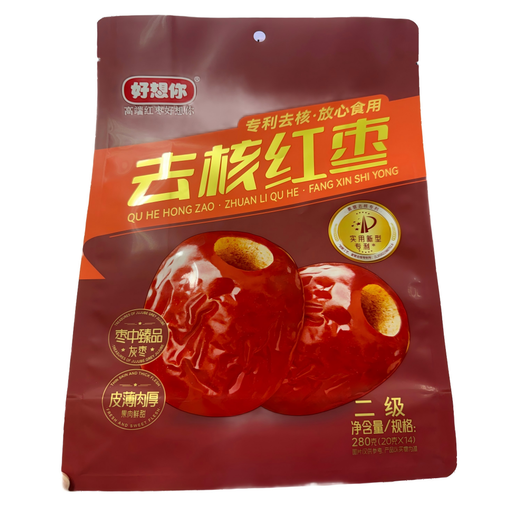
Why This Fits Their Persona: A manageable 280g pack suits first-time buyers who want to try pitted red dates for snacks, tea or simple recipes without committing to a large quantity.
It is labelled ready to eat and pitted, helping reduce preparation compared with whole dates containing stones. The ingredient is jujube only.
280g net weight; pitted format; suitable for direct eating, tea, soups and desserts.
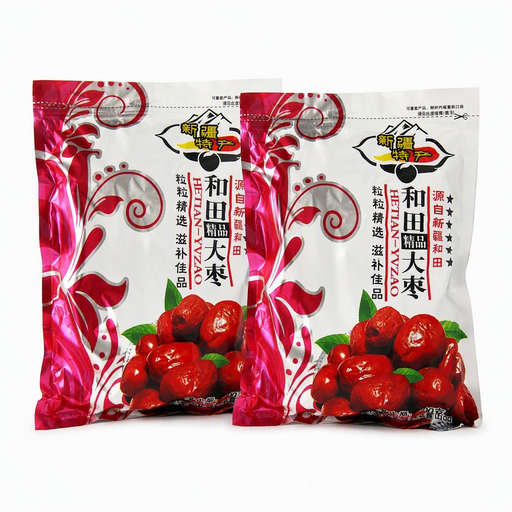
Why This Fits Their Persona: The two 500g packs suit households that regularly prepare Chinese soups, herbal teas, baking recipes or shared snack bowls.
The product is clearly listed as 100% red jujubes, with large size and Chinese origin stated rather than relying only on general premium wording.
1kg total quantity; large whole jujubes; suitable for eating, baking, soups and tea.
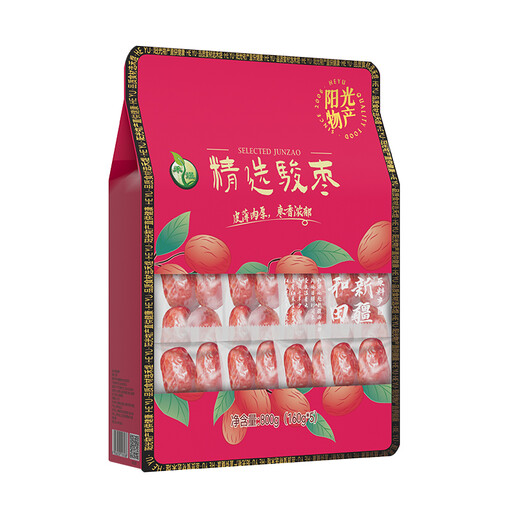
Why This Fits Their Persona: Five separate 160g bags are practical for frequent cooks who want to portion red jujubes for porridge, stew, soup or tea.
The label explicitly states that it must be rinsed and cooked before consumption, avoiding confusion with ready-to-eat dates.
800g total; five individually packaged portions; suitable for cooked recipes.
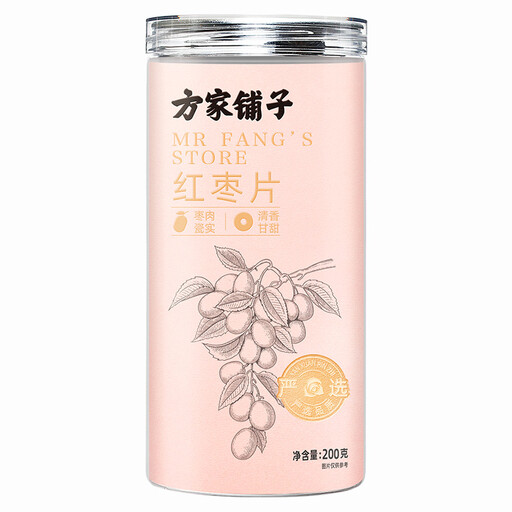
Why This Fits Their Persona: Pre-sliced fruit is convenient for UK kitchens where small quantities are added to mugs, porridge, cakes, soups and desserts.
The sliced format makes the intended use clear and avoids paying for added sugar or flavourings, with dried red date slices listed as the ingredient.
200g pack; pre-sliced pieces; labelled suitable for tea, cooking, baking and direct eating.
We have compiled a complete, real-time list of products that fully satisfy these strict selection criteria and UK safety regulations.
Some are, but not all. Pitted red dates and products labelled “ready to eat” can usually be eaten directly. Whole dates may contain stones, while some cooking products must be washed and cooked. Always follow the instructions on the specific packaging.
Keep unopened packs in a cool, dry place away from direct sunlight. Reseal the pack after opening to reduce moisture exposure. Check the label for any special instructions and use the stated best-before guidance rather than relying only on appearance.
Yes, plain dried red dates can be added to tea, porridge, soups, stews and baked goods. Sliced dates are convenient for brewing, while whole jujubes are suited to simmered recipes. If using a product marked “must be cooked”, do not eat it raw.