Panoramic cockpit builders
You want the centre and side screens to form a coherent driving view. Matching resolution and arranging screen edges matter more to you than choosing each monitor separately.


For a three-screen virtual drift cockpit, start with monitors at the same native resolution and, where practical, the same model. Before choosing a refresh rate, check that your graphics card has enough suitable outputs for the intended mode and that the screens, cables and mounts will work in your rig. iRacing strongly recommends matching resolution for three-monitor setups; the simulator’s display settings also affect how the screens line up.
You want the centre and side screens to form a coherent driving view. Matching resolution and arranging screen edges matter more to you than choosing each monitor separately.
You are comparing refresh rates and variable-refresh support for fast-moving driving visuals. You also need to check whether your graphics card, ports and cables can deliver the selected mode to every screen.
You are adding or replacing screens around an existing cockpit or desk. Monitor dimensions, mounting points and adjustment options could determine whether the planned layout fits.
Check screen matching and graphics-card connections before comparing refresh settings; then confirm that the complete arrangement will fit your cockpit.
| Concern | What to check | Who this matters to |
|---|---|---|
| Screen matching and alignment | Match native resolution across the screens. Compare physical size and bezel shape before planning their positions; iRacing strongly recommends matching resolution for a three-monitor setup. | If I want a continuous cockpit view, I need screens whose edges and images can be lined up. Around 36% of consumers put alignment first. |
| Graphics-card connections | Check the exact graphics card’s supported display count, available outputs and the cables required for the intended mode. AMD says Eyefinity display support depends on the card’s specifications. | When I connect several screens, I need my graphics card to run them together in the mode I plan to use; roughly 29% of consumers put connection compatibility first. |
| Refresh and variable-refresh modes | Compare standard and overclocked refresh modes, input-specific limits and variable-refresh support. LG says the 27GS85Q-B’s optional 200Hz mode requires a DisplayPort 1.4-capable graphics card and cable. | If fast-moving visuals are my priority, I want to know which refresh mode the complete setup can use. About 21% of consumers make motion behaviour their primary concern. |
| Mounting and space | Measure the available width and check each monitor’s mounting pattern, weight and the mount’s per-screen load rating. Stand adjustment matters if you will use the supplied stands. | With a cockpit or desk already in place, I need the screens to fit and sit at workable positions; around 14% of consumers put physical setup first. |
iRacing strongly recommends the same resolution for three monitors used with NVIDIA Surround. Its AMD Eyefinity guidance advises against three different screen sizes because lining them up can be difficult.
For a new set, consider three of the same model. If reusing a screen, check native resolution, physical size, bezels and mounting positions before buying the others.
A monitor’s stated refresh rate does not establish that every port and cable can deliver it. LG, for example, requires a DisplayPort 1.4-capable card and cable for the 27GS85Q-B’s optional 200Hz mode.
List the outputs on your exact graphics card, then check the input and cable needed for the intended mode on each screen.
NVIDIA Surround offers bezel correction, but iRacing also has its own correction in its Surround setup workflow. Applying driver-level correction there can make the image appear incorrectly aligned.
Follow your simulator’s three-screen instructions before changing driver settings, and assess alignment from your driving position.
Monitors of a similar size can offer different adjustments. ASUS lists no stand height adjustment for the VG27AQ3A, while BenQ lists 100 mm for the EX2710Q; both specify 100 × 100 mm VESA mounting.
Measure the cockpit and check monitor weight, mounting pattern and the mount’s per-screen load rating before ordering a set.
The VG27AQ3A is a 27-inch QHD model to consider when planning three matching screens.
The 27GS85Q-B is a 27-inch QHD Nano IPS option with a stated 180Hz standard refresh rate.
Dell specifies the AW2725DM as a 27-inch QHD monitor with a 180Hz mode through DisplayPort 1.4.
The EX2710Q is a 27-inch QHD IPS option for buyers comparing stand adjustment as well as display connections.
These choices include 27-inch QHD and 4K monitors alongside larger curved QHD models. For a three-screen cockpit, consider each as part of a matching set, then check its connections and physical fit against your graphics card and rig.
 No image available
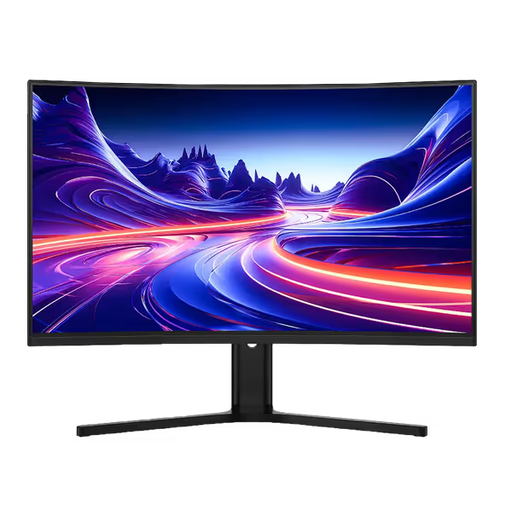
Consider this larger curved format if you have space for matching screens and a mount that suits their dimensions.
Confirm the exact physical dimensions and the connection needed for your intended refresh mode before planning screen positions.
 No image available
The stated size and resolution give you two starting points to match if you are planning a three-screen QHD layout.
Check which input and cable support your intended mode, and confirm mounting compatibility before fitting the screens to a rig.
 No image available
Consider this model if you want to assess a matching 4K set and can check the graphics-card requirements for your chosen display mode.
Check the resolution and connection requirements of each mode, along with mounting compatibility, before planning three screens.
 No image available
Its stated 27-inch QHD format is relevant if you are comparing identical units for a matching screen layout.
Confirm the input and cable needed for your intended mode, plus the mounting details, before committing to a rig layout.
 No image available
This larger curved QHD option calls for a careful check of cockpit width and screen alignment if you plan to use several units.
Check the refresh mode available through each connection and confirm the physical dimensions and mounting requirements for your rig.
No, but matching the model can make a three-screen layout easier to plan. iRacing strongly recommends the same resolution and recommends, without requiring, the same make and model; it also advises against three different screen sizes because alignment can be difficult.
Yes, if your simulator supports a window spanning three displays. iRacing describes a windowed method alongside a full-screen method that uses NVIDIA Surround or AMD Eyefinity. Check your simulator’s supported setup before choosing hardware around either approach.
Measure from your normal driving position before setting the field of view. iRacing asks three-monitor users for eye-to-centre-screen distance, screen width with and without bezels, and the angle between screens for its configuration.
Ask the retailer how to use its take-back arrangement for an old monitor of the same type. GOV.UK states that retailers must offer take-back of waste electrical equipment of the same type as the item purchased, including for online and mail-order purchases; confirm the practical return arrangements before ordering.