
24/7 Customer Support

Free returns

Same-day & Next-day Delivery

Quality Guaranteed

Unlock Your Welcome Offers: FREE Delivery | Up to 80% OFF | Free 30-day JoyPlus trial
Download the APP
Buying drill bits and hammer drills can seem straightforward until a bit slips, a battery runs flat halfway through a job, or a drill intended for masonry struggles with metal. The right combination depends on the material, hole size, working environment and frequency of use—not simply the number of accessories in the box.
For UK homeowners, DIY enthusiasts and tradespeople, three purchasing traps are particularly common:
Different materials require different cutting geometries and construction:
Always check the stated material thickness. For example, the supplied Silverline step drill specifications refer to sheet metals, alloys and plastics up to 4mm thick.
A bit must fit the drill securely. Standard drill chucks commonly accept round shanks, while quick-change accessories often use a 6.35mm (1/4-inch) hex shank. The Silverline Titanium-Coated HSS Step Drill Set 3pce uses a 6.35mm hex shank, making it suitable for many compatible drills and impact drivers.
The larger step drill models listed here use a 12mm shank. Check your drill’s chuck capacity before ordering, particularly if you are using a compact cordless drill.
A cordless hammer drill is convenient for lofts, gardens, kitchens and jobs where no socket is nearby. An 18V hammer drill can offer useful flexibility for screwdriving, timber, metal and occasional masonry work, but runtime depends on battery capacity, material and load.
A corded hammer drill avoids battery charging and can suit longer sessions near a reliable power source. For example, the BLACK+DECKER 710W Corded Hammer Drill provides variable speed from 0–2,800 RPM, hammer action up to 47,600 BPM, a side handle and a lock-on button. These specifications describe operating capability; actual results vary with the bit, material and technique.
Look for a variable-speed trigger, clutch settings and a comfortable secondary handle. A clutch is especially useful when driving screws into timber or assembling furniture, as it helps limit over-tightening.

Why This Fits Their Persona: A practical option for new homeowners who want one cordless drill and a broad selection of accessories for hanging, assembling and repairing items around a UK home.
The accessory list identifies wood, titanium metal and masonry bits separately, rather than presenting a large mixed set without application guidance.
18V battery operation, 11-position clutch, two-speed gearbox, 104-piece accessory set and 19-inch toolbox.
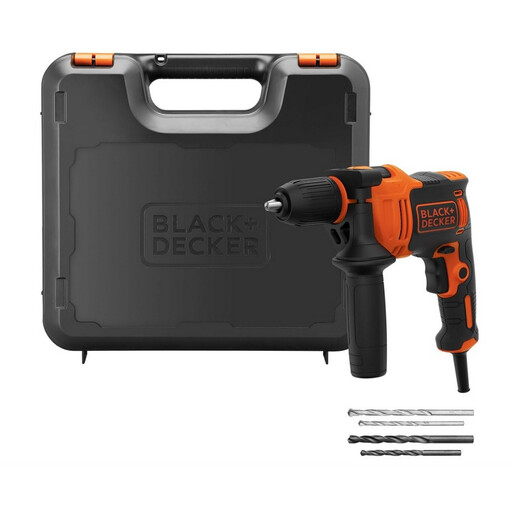
Why This Fits Their Persona: Suitable for users who prefer continuous mains power for renovation, repeated drilling or workshop tasks close to a socket.
Its corded design avoids the need to pause for battery charging, while the variable-speed control gives more adjustment than a single-speed tool.
710W motor, up to 47,600 BPM, 0–2,800 RPM variable speed and included side handle.
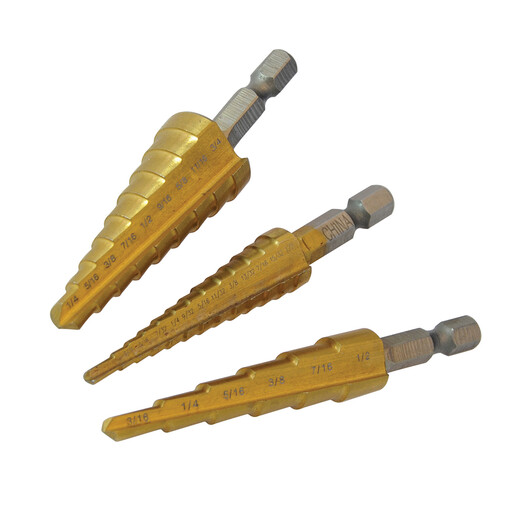
Why This Fits Their Persona: A focused choice for electricians, plumbers, HVAC installers and automotive workers creating different-sized holes in thin sheet metal, alloys or plastic.
The three stated size ranges show what the set is designed to cover, while the 4mm material limit helps prevent unsuitable heavy-metal use.
Titanium-coated HSS construction, 2mm graduations, self-starting design and 6.35mm quick-change hex shanks.
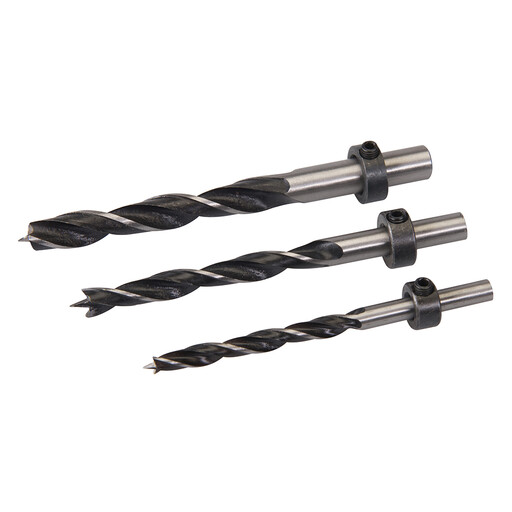
Why This Fits Their Persona: Designed for woodworkers and furniture makers who need controlled dowel holes in timber and man-made boards.
It is purpose-built for dowel work rather than being a general-purpose bit marketed for every material.
6mm, 8mm and 10mm sizes, precision-ground pre-cutting blades and depth collars for repeatable hole depth.
We have compiled a complete, real-time list of products that fully satisfy these strict selection criteria and UK safety regulations.
Before drilling, secure the material with clamps or a vice and mark the hole position. Wear protective eyewear; use hearing protection and a dust mask when drilling masonry. Gloves may be appropriate for handling accessories, but keep loose clothing and hands away from rotating parts.
For metal drilling, use a controlled speed and suitable cutting lubricant where the product instructions permit it. Avoid excessive pressure, which can overheat a bit or deform thin sheet material. Unplug a corded drill, or remove the battery from a cordless model, before changing accessories. Store bits dry and organised to reduce corrosion and loss.
A hammer drill can drill metal when used in standard rotary mode with a suitable metal drill bit. Do not use hammer action on metal, as the impact can damage the bit and workpiece. Step drill bits are useful for thin sheet metal within their stated thickness limit.
Running cost depends on electricity rates, battery charging, battery replacement and usage frequency. A cordless model offers convenience and avoids extension leads, while a corded hammer drill supplies continuous operation without charging pauses. For occasional household jobs, convenience may matter more than small differences in energy use.
There is no single lifespan. Bit life varies with material hardness, drilling speed, pressure, cooling, storage and frequency of use. Keeping the bit aligned, selecting the correct type and avoiding unsuitable materials generally helps maintain cutting performance. Replace a bit when it becomes visibly damaged, overheats repeatedly or no longer cuts cleanly.