Home recording archivists
If completed takes, multitracks and exports make up most of your library, start by sizing a portable or desktop HDD for those files and future projects. Plan a separate local backup for recordings you cannot replace.


Choose a portable HDD for a local archive that travels, a desktop HDD for a large library kept at one workstation, or a portable SSD if you frequently move active sessions between computers. Check the capacity against your own recordings and confirm the cable, ports and file system before buying. Keep a separate local backup: a drive holding your only copy is not a backup.
If completed takes, multitracks and exports make up most of your library, start by sizing a portable or desktop HDD for those files and future projects. Plan a separate local backup for recordings you cannot replace.
If recordings move between laptops, rehearsal rooms and venues, consider carrying size, the cables you need and how you will protect the drive in transit alongside capacity.
If you regularly copy or open current projects, a portable SSD is worth considering for the working files. Check its connection against your computer, and keep another copy of important sessions.
For a cloud-free recording library, choose the drive format around where you work and how often files move; then size the storage and plan a separate backup.
Choose it when: A sizeable archive needs to travel between compatible computers.
Trade-off: If you frequently transfer active sessions, compare its connection and transfer needs with a portable SSD.
Choose it when: The recording archive will usually remain at one workstation.
Trade-off: Desktop models such as the LaCie d2 Professional and the listed Western Digital Elements require external power, making them less convenient to carry.
Choose it when: You regularly carry and transfer current recording sessions.
Trade-off: Size the working library before choosing a capacity; a portable SSD still needs a separate backup.
| Concern | What to check | Who this matters to |
|---|---|---|
| Archive capacity | Add up existing takes, multitracks and exports, then allow for planned projects. Check the capacity of the exact variant. | I want to retain a growing library of completed recordings without routinely clearing projects to make room. Around 31% of consumers put archive capacity first. |
| Backup resilience | Arrange another local copy and somewhere separate to keep it. The National Cyber Security Centre advises disconnecting external backup storage when it is not in use. | If a session cannot be recreated, I need to recover it even if the working drive is lost or affected by malware. For around 31% of consumers, keeping recordings recoverable is the primary concern. |
| Portability and handling | Check the supplied cable against your computers’ ports and review any stated handling limits. | Moving sessions between rehearsal spaces and home means I need a drive I can carry and connect where I work. Portability is the main concern for around 19% of consumers. |
| Transfers and compatibility | Confirm the host port, USB generation, file system and operating-system support. Test a noncritical project before moving the only local copy. | When I copy or open current projects across my computers, I need the connection and file format to fit that workflow. Around 19% of consumers prioritise active-session transfers and compatibility. |
If recordings exist in just one place, losing access to that drive can mean losing the recordings. The National Cyber Security Centre also warns that connected external storage can be affected by malware.
Keep another local copy separately, disconnect backup storage after use and occasionally check that a project can be restored and opened.
Raw takes, multitracks, stems and alternate exports also occupy space, so final mixes alone do not represent the full library.
Measure the folders you intend to retain, allow for new projects and check the capacity of the particular drive variant.
Otherwise, you may need to clear projects sooner than intended.
The connector shape does not establish which cable is supplied, how fast the host port is or whether the drive’s file system suits your computer. Seagate says its One Touch Portable does not include a USB-C-to-USB-A cable for a USB-A computer.
Check the box contents, ports and file format, then make a test copy before moving an important project.
Depending on the chosen drive and computer, you may need a different cable or adapter.
Samsung says the T7 Shield’s IP65 and drop-resistance claims come from controlled testing, that resistance varies with conditions and that liquid or dust damage is not covered by its warranty.
Carry the drive protectively and keep a second copy of recordings rather than relying on the rating to protect your only copy.
Its My Passport USB-C portable HDD line is relevant to a music archive that needs to travel; Western Digital lists capacities from 1TB to 6TB for that line.
The portable One Touch HDD line suits recordings moved between locations, while the One Touch Hub is a desktop option for a fixed workstation.
The portable T7 Shield SSD line is relevant when active sessions travel regularly; Samsung lists 1TB, 2TB and 4TB versions.
The d2 Professional desktop HDD is relevant to a recording archive kept at a workstation.
These portable HDDs, portable SSDs and desktop HDD provide different ways to store recordings locally. Choose between them according to where the recordings will live, how often you move active sessions and the capacity your own library needs.
 No image available
A portable HDD to consider for a Mac-centred archive that needs to move between locations.
The listing describes 5TB of storage, USB-C connectivity and USB-C and USB-A connection options. It describes Windows use as requiring a downloadable HFS+ driver; check this against your computers and backup software.
Confirm the applicable warranty for this exact drive before purchase, and maintain another local copy of important recordings.
 No image available
A portable SSD to consider if you regularly move active recording projects.
The listing describes a USB 3.2 Gen 2 connection and includes USB-C-to-C and USB-C-to-A cables. Its stated sequential speeds are up to 1,050 MB/s read and 1,000 MB/s write; actual transfers depend on the host connection.
Confirm the file system and compatibility with your computer and recording software, and keep a separate local backup.
 No image available
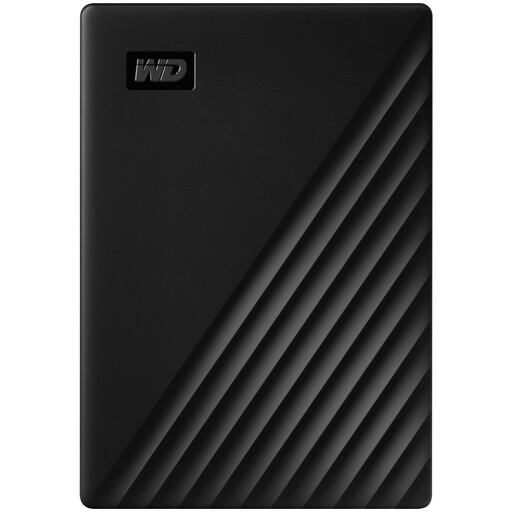
A portable HDD for keeping a recording archive that sometimes travels with you.
The listing describes 4TB of storage, USB 3.2 Gen 1 and an included USB-A-to-Micro-B cable. It describes the drive as NTFS-formatted for Windows and indicates that Mac use needs a driver; check your intended setup before transferring projects.
Check whether your computer needs a cable adapter, and retain a separate backup copy.
 No image available
A portable SSD to consider for moving current sessions when 2 TB fits your working-project library.
The listing describes USB 3.2 Gen 2 and includes USB-C-to-C and USB-C-to-A cables. Its sequential read and write claims are up to 1,050 and 1,000 MB/s respectively; check the host port before relying on those stated rates.
Confirm file-system and recording-software compatibility, and back up important sessions elsewhere.
 No image available
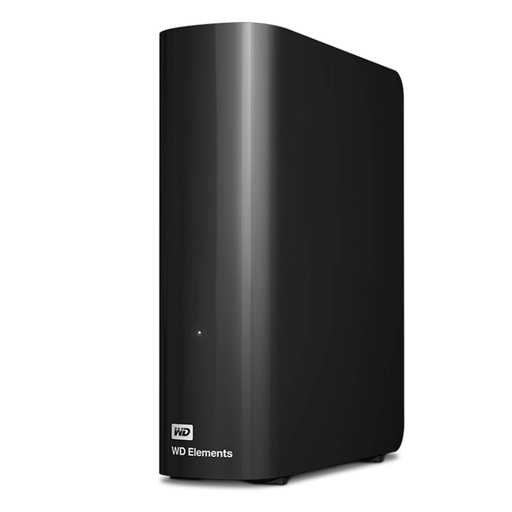
A desktop HDD to consider when a large recording archive usually stays at one workstation.
The listing describes 10TB of storage, USB 3.2 Gen 1, an included USB-A cable and an AC adapter. It describes NTFS formatting for Windows and says macOS use requires reformatting.
Plan for mains power, check the intended file system before copying projects and keep a separate local backup.
It can store the recording, but it is not a separate backup if no other copy exists. The National Cyber Security Centre advises keeping external backup storage secure and disconnected when not in use; make another local copy and check that you can restore a project from it.
No. The National Cyber Security Centre identifies external devices as a way to hold backups. For a cloud-free setup, keep a copy on separate local storage and disconnect and store that backup device separately when you are not updating it.
That depends on the exact drive, its file system and your computers. Western Digital says its My Passport USB-C line is pre-formatted exFAT for Windows 10+ and macOS 11+, with compatibility varying by hardware and operating-system configuration. Check the chosen model and test noncritical files before moving an important project.
Not necessarily. Check the contents for the exact model and the ports on your computer: Seagate’s One Touch Portable manual says a USB-C-to-USB-A cable is not included for connection to a USB-A computer.