Outdoor filmmakers with limited locations
If you want aerial footage on walks or trips but may film near people, buildings or restricted airspace, establish whether you can make the flight before choosing a camera specification.


Choose a camera drone when the elevated viewpoint matters and you can fly at your intended location within the applicable UK rules. If handheld or mounted activity footage will do, an action camera avoids drone flight and registration requirements but cannot produce the same aerial perspective. For a drone, check its take-off weight, the IDs you need, its class mark and Remote ID status, and the restrictions at each filming location; the UK Civil Aviation Authority (CAA) says a Flyer ID is required at 100g or above.
If you want aerial footage on walks or trips but may film near people, buildings or restricted airspace, establish whether you can make the flight before choosing a camera specification.
If quick launches and subject-following matter more than extended flights, a compact self-flying format may appeal. Its size alone does not determine which UK ID requirements apply.
If you need an elevated angle and more control over the shot, compare the exact model’s video modes and stated flight time. You still need a suitable place to fly and time to complete the applicable checks.
Decide whether the shot needs an aircraft, then check the intended flying location and the exact drone configuration before comparing camera features.
| Concern | What to check | Who this matters to |
|---|---|---|
| Legal flight and location | Check take-off weight, camera fitment, applicable IDs and class mark, plus current airspace restrictions. Treat built-in geo-awareness as an additional warning, not permission to fly. | If my planned location rules out the shot, a better camera will not help. Around 36% of consumers would put legal flight and location first. |
| Aerial image and flight time | Compare the video mode you need and the maximum flight time for the exact battery configuration; a stated maximum is not a promise of filming time. | I need control over an elevated shot and enough time to frame it. Aerial image capability would be the primary concern for around 29% of consumers. |
| Ease of use for short clips | Confirm the exact package’s control and tracking options, propeller guards where relevant, and take-off weight. | For brief activity clips, I would rather keep setup simple than carry a more involved filming kit. Around 21% of consumers would prioritise ease of use. |
| Filming without a drone | Decide whether handheld or mounted footage provides the viewpoint you need; then check mounts, recording modes and battery needs. | If an overhead angle is optional, I can record the activity without planning a flight. Avoiding drone-specific requirements would come first for around 14% of consumers. |
The CAA says a Flyer ID is required to fly a drone weighing 100g or above. A camera-equipped drone at or above that weight also requires an Operator ID for the responsible owner or operator.
Check the exact take-off weight and camera fitment; words such as “mini” do not establish an exemption.
According to the CAA, Direct Remote ID requirements have applied to UK1, UK2, UK3, UK5 and UK6 class drones since 1 January 2026. The CAA states that broader mandatory use begins on 1 January 2028, unless exempted.
Confirm the exact aircraft’s UK class mark and Remote ID implementation before relying on a particular operating route.
The CAA warns that manufacturer geo-awareness displays may differ from authoritative airspace restriction information.
Check current UK airspace restrictions and any location-specific permissions before flying, even when the drone’s app shows no warning.
A quoted maximum may be measured under conditions unlike your filming session. Carrying spare lithium batteries on a flight also involves transport rules.
Check the stated flight-time conditions and your airline’s rules for the exact batteries. International Air Transport Association guidance says spare lithium batteries must be protected against short circuits and carried in hand baggage.
Several short sessions may call for additional batteries or charging equipment, adding items to pack and manage.
Compact camera-drone options range from quick self-flying clips to more deliberate aerial filming.
Its self-flying camera range is aimed at short, hands-free activity clips rather than a conventional controller-led workflow.
An action-camera reference when point-of-view, handheld or mounted footage will meet the filming need.
These action cameras suit outdoor filming when handheld or mounted footage is enough. Choose a drone instead if the elevated aerial angle is essential and the intended flight is permitted.
 No image available
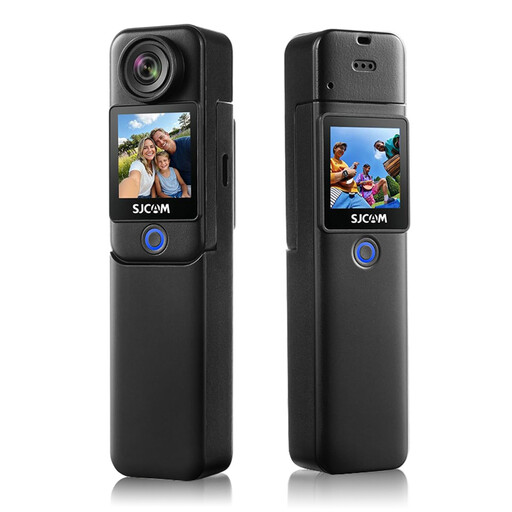
Consider it for handheld or mounted outdoor footage, not an aerial shot.
The title lists 6-axis electronic image stabilisation, a 1.3-inch touchscreen and a waterproof case for use up to 30m.
The stated 460-minute battery figure depends on a handle and auxiliary battery. Confirm the bundle contents and recording conditions if extended use matters.
 No image available
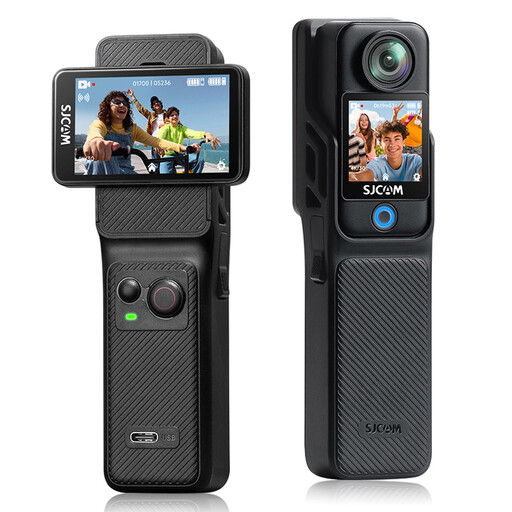
This is another option for recording activities without needing an aerial viewpoint.
The title lists 6-axis electronic image stabilisation, dual touchscreens and waterproof use up to 30m with a case.
The stated 437-minute battery figure depends on a handle and auxiliary battery. Check what this package contains and the conditions behind that figure.
 No image available
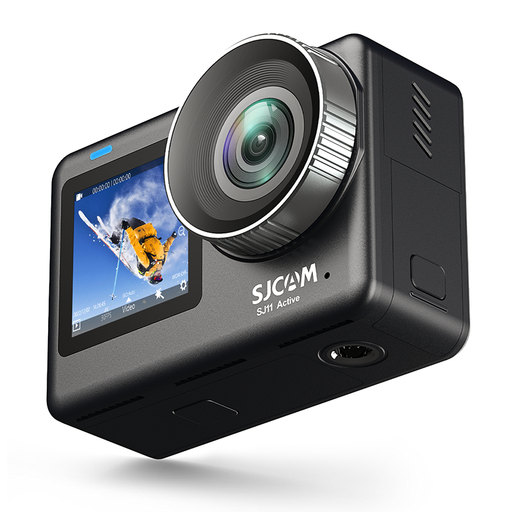
Choose this format for close activity footage rather than elevated filming.
The title specifies 4K at 30fps, 6-axis electronic image stabilisation and two displays. Its stated waterproof limits are 5m without a case and 30m with one; confirm the case is included before planning deeper-water use.
The title states 100 minutes of battery life. Check runtime for your intended recording mode if you need a continuous session.
 No image available
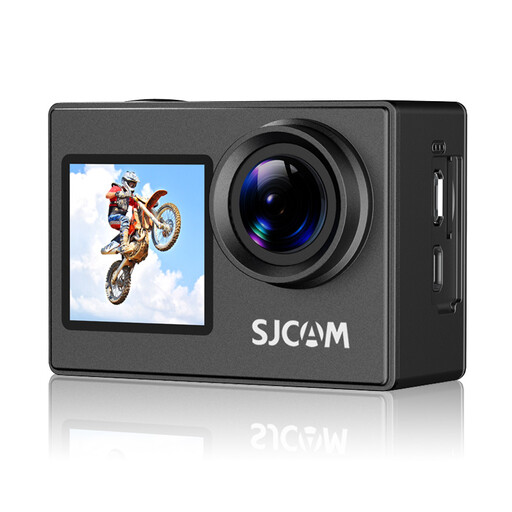
Its handheld or mounted format suits outdoor footage that does not require an aircraft.
The title lists a 170° lens, electronic image stabilisation and waterproof use up to 30m with a case. The listing describes its 4K video as interpolated, so check whether that format suits your output.
The stated recording time is up to 80 minutes at 1080P/60fps; other modes may differ.
Yes. The CAA says a Flyer ID is required to fly a drone or model aircraft weighing 100g or above, including one at exactly 100g. For a camera-equipped drone at or above that weight, the responsible owner or operator also needs an Operator ID.
No. The CAA says Direct Remote ID requirements have applied to UK1, UK2, UK3, UK5 and UK6 class drones since 1 January 2026, while broader mandatory use begins on 1 January 2028 unless exempted. Check the exact aircraft’s class mark and Remote ID functionality.
No; use geo-awareness as a warning, not a final decision. The CAA warns that manufacturer displays can differ from authoritative airspace restriction information, so check current restrictions before each flight.
For Open-category night operations from 1 January 2026, the CAA requires an activated green flashing light on the drone. Check whether the exact aircraft has a suitable light or needs one fitted, alongside the other rules for the planned flight.
Protect spare lithium batteries individually against short circuits and carry them in hand baggage, according to International Air Transport Association guidance. Check each battery’s watt-hour rating and the operating airline’s current restrictions before travelling.