What to check before buying
The UK Civil Aviation Authority says ID requirements depend on an aircraft’s weight and, in some cases, whether it has a camera; airspace restrictions are a separate check. Confirm the rules for the exact aircraft and intended location before choosing a camera or control setup.
| Concern |
What to check when buying |
Who this matters to |
| Usable flying locations |
Check the complete aircraft weight, class mark, relevant flying sub-category, airspace and site rules. |
If I have particular outdoor sites in mind, I need to know whether the aircraft and launch location work for my plans; around 36% of consumers put usable locations and applicable rules first. |
| Footage and framing |
Compare the camera and stabilisation, and decide whether you want deliberate aerial composition or personal clips. |
If I am choosing a drone mainly for the images it can capture, I want its camera and framing style to suit my footage; around 29% of consumers prioritise footage and framing. |
| First-flight controls |
Check how the aircraft launches and lands, which controller is included and what practice the controls require. |
If I am new to flying outdoors, I want controls that feel manageable while still letting me learn to frame a shot; around 21% of consumers put an easier start first. |
| Repeat flying sessions |
Check the exact bundle’s battery and charging equipment, compatible spares and the conditions behind any maximum flight-time figure. |
If I plan to film across repeated flights, I need to know what equipment the bundle supplies and what is compatible; around 14% of consumers prioritise planning repeat sessions. |
Joybuy products for outdoor filming
These Joybuy options include self-flying and controller-led drones for recreational aerial filming. Check each aircraft’s exact weight, class and included equipment against your intended flying locations.
 No image available
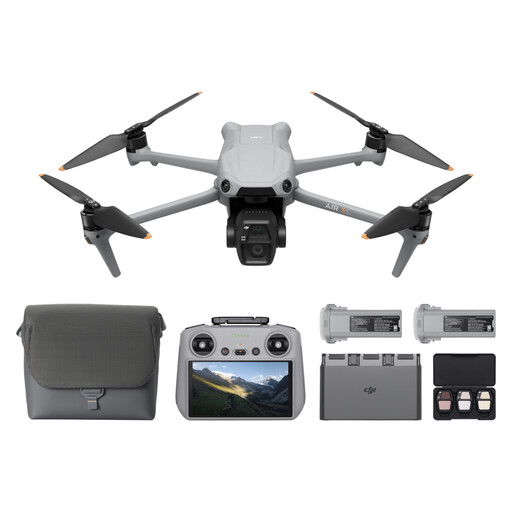
DJI Air 3S Fly More Combo (RC 2 Screen Remote Controller)
Consider it for planned aerial filming with a controller and multiple included batteries; check that its weight and class suit your intended sites.
DJI lists the Air 3S at a 724g take-off weight. The CAA requires a Flyer ID and Operator ID for aircraft from 250g to under 25kg; check the class-dependent route before flying.
The product title specifies a 1-inch CMOS wide-angle camera, a medium tele camera, 4K/60fps video and three batteries.
Joybuy
 No image available
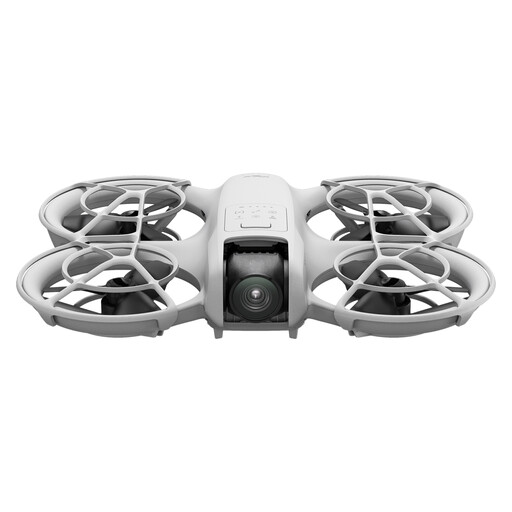
DJI Neo 4K Self-Flying Drone (Controller-Free)
Its palm take-off and self-flying features may suit short personal clips; check whether this control style fits the framing you want.
The product title specifies 135g, a 4K UHD camera, subject tracking and QuickShots. For a camera-equipped aircraft from 100g to under 250g, CAA guidance requires both a Flyer ID and an Operator ID.
Joybuy
 No image available
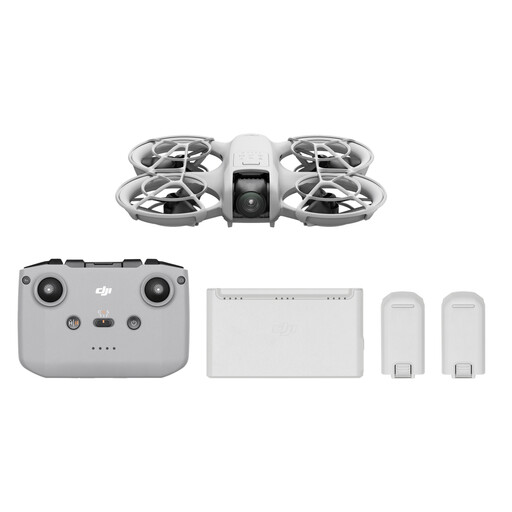
DJI Neo Fly More Combo (RC-N3, 3 Batteries)
Consider this bundle if you want the Neo’s personal-filming features alongside a remote controller and additional batteries.
The product title specifies a 135g aircraft and 4K UHD camera. For a camera-equipped aircraft from 100g to under 250g, CAA guidance requires both a Flyer ID and an Operator ID.
Joybuy
 No image available
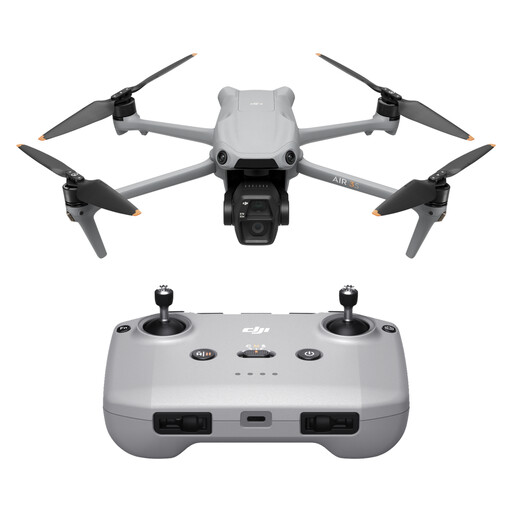
DJI Air 3S Dual-Lens Drone (RC-N3)
Consider it for controller-led aerial filming with the listed dual-lens setup; check the aircraft’s class and your planned sites before purchase.
DJI lists the Air 3S at a 724g take-off weight. The CAA requires a Flyer ID and Operator ID for aircraft from 250g to under 25kg; the eligible flying route depends on the class and operation.
The product title specifies a 1-inch CMOS wide-angle camera, 4K/60fps HDR video and a maximum flight-time claim of 45 minutes. Treat maximum flight time as conditional, not guaranteed filming time.
Joybuy
 No image available
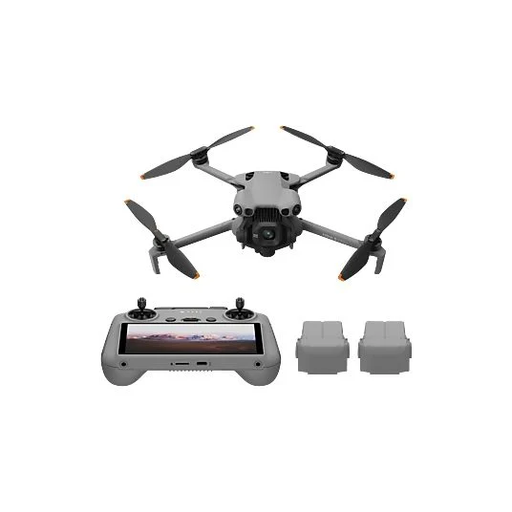
DJI Mini 5 Pro Fly More Combo with DJI RC 2
Consider it if the listed framing and camera features suit your aerial footage; confirm the exact aircraft weight and class before relying on any particular flying route.
The product title specifies a 1-inch CMOS sensor, 4K/60fps HDR video and 225° gimbal rotation. Check the bundle contents and current CAA requirements for the aircraft configuration.
Joybuy
Frequently asked questions
Does an under-250g camera drone avoid UK ID requirements?
No, not if it weighs 100g or more. The UK Civil Aviation Authority requires a Flyer ID from 100g upwards, and a camera-equipped aircraft from 100g to under 250g also requires an Operator ID for the responsible operator. Check the actual aircraft and camera configuration.
Can I fly a heavier camera drone near people?
Weight alone does not determine the answer. The CAA’s A1, A2 and A3 routes have class-dependent conditions, and A2 requires an A2 Certificate of Competency. Check the exact aircraft’s class and intended operation; where A3 applies, its separation conditions may make a site unsuitable.
Can I launch from a park or fly near an airport if my drone is small?
Small size does not remove airspace restrictions, so check current restrictions, including temporary ones, before each flight. Take-off and landing rules are a separate site check; the Peak District National Park Authority, for example, says operators need landowner permission for the land where they take off and land.
How high and how far away can I fly for aerial footage?
Under the ordinary Drone Code route, keep the aircraft within direct sight and below the CAA’s 120m height limit, measured from the closest point of the earth’s surface. An advertised transmission range does not replace these requirements; FPV flying has additional conditions.
Will the advertised battery duration equal my filming time?
No maximum-flight-time figure guarantees the same duration for filming. Compare the test conditions for your chosen aircraft, check what the bundle includes and confirm which batteries and charging equipment are compatible.


