
24/7 Customer Support

Free returns

Same-day & Next-day Delivery

Quality Guaranteed

Unlock Your Welcome Offers: FREE Delivery | Up to 80% OFF | Free 30-day JoyPlus trial
Download the APP
Navigating the aisles to buy cat food online can feel overwhelming. With countless bags all promising a happy, healthy cat, it’s easy to fall for clever marketing. As a cat owner, you want to provide complete nutrition, but how do you separate genuine benefits from over-hyped features? Many UK owners find themselves paying a premium for trends that may not suit their cat, or choosing a food that doesn't meet their pet's specific needs.
At Joybuy, our role is to help you see past the clutter. This guide will highlight a few common pitfalls when choosing a dry cat food and break down the essential factors to check, ensuring you make a confident and suitable choice for your feline companion.
To make an informed decision, focus on these core parameters. They provide a much clearer picture of a food's suitability than the marketing claims on the front of the bag.
Cats are obligate carnivores, meaning their diet requires nutrients found only in animal products. When you look at the ingredients list, the first item listed has the highest weight. Look for a clearly named meat or fish (e.g., "Chicken," "Turkey," "Salmon") as the primary ingredient. This ensures the food is built around a high-quality protein source, which is vital for muscle maintenance and overall health.
A cat's dietary requirements change significantly throughout its life. Always choose a food that is labelled as "complete" for your cat's specific age group:
Many cats have unique requirements based on their lifestyle or health. If your cat has a particular issue, a specialised diet can offer targeted support:
Based on these practical criteria, we've matched a few products from our range to common cat owner profiles. These selections prioritise clear ingredients and targeted nutrition over marketing flair.
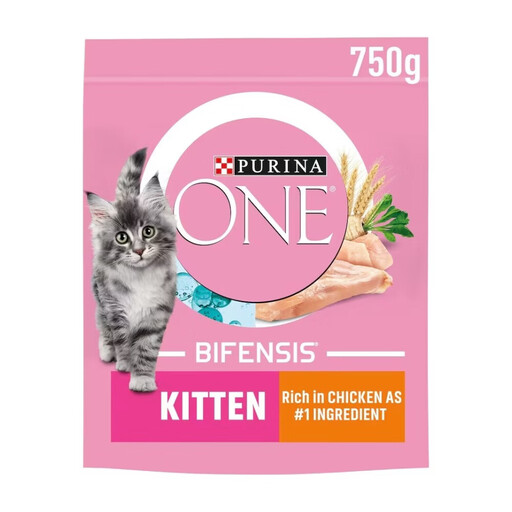
Why This Fits Their Persona: Ideal for owners wanting to give their new kitten a strong start. This formula is specifically designed for the high-energy and developmental needs of cats under 12 months, providing peace of mind that you're meeting their crucial early-life requirements.
It directly counters the "one-size-fits-all" pitfall by being a dedicated kitten food. It also lists Chicken (17%) as the first ingredient, avoiding vague "meat derivatives".
High protein content (41%) supports muscle and bone growth. Contains DHA, an omega-3 fatty acid also found in mother's milk, which contributes to brain and vision development.
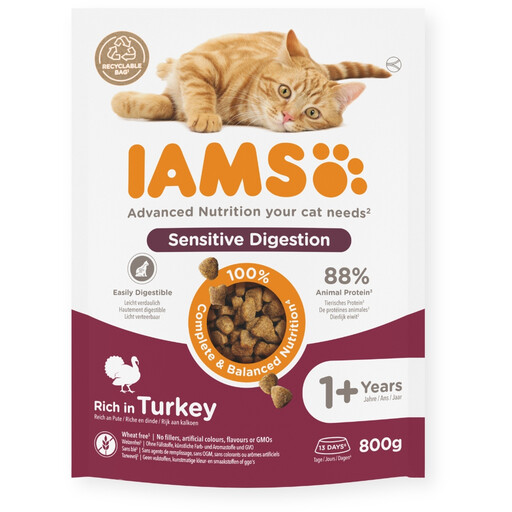
Why This Fits Their Persona: A great choice for owners of adult cats who show signs of digestive upset or have a delicate appetite. This formula is designed to be gentle on the stomach while providing complete nutrition.
This is a targeted sensitive stomach cat food, not a generic adult formula. It uses highly digestible ingredients like turkey and rice, avoiding common triggers for some cats.
Formulated with prebiotics (FOS) and beet pulp to support a healthy gut. Turkey is a lean, easily digestible protein source, making it suitable for sensitive systems.

Why This Fits Their Persona: Perfect for cats living exclusively indoors in the UK. Indoor cats are typically less active and more prone to hairballs from grooming. This food addresses both issues directly.
This indoor cat food avoids feeding excess calories to a sedentary cat. It's specifically formulated for a lower activity level, helping to maintain a lean body condition.
Features an adapted protein-to-fat ratio (36% protein, 13% fat) to support lean muscle. Contains added fibre to help with hairball control by moving ingested hair through the digestive tract.
We have compiled a complete, real-time list of products that fully satisfy these strict selection criteria and UK safety regulations.
Sudden dietary changes can cause digestive upset. It's important to transition your cat to a new food gradually over 7-10 days. Start by mixing a small amount of the new food (around 25%) with their old food (75%). Every couple of days, increase the proportion of the new food while decreasing the old, until you have fully switched over.
The correct portion size depends on the specific food's calorie density, as well as your cat's age, weight and activity level. Always check the feeding guide on the packaging, which provides recommended daily amounts. These are just a starting point, so monitor your cat's body condition and adjust the portion size as needed to maintain a lean, healthy weight.
A "complete" dry cat food is formulated to provide all the nutrients your cat needs to thrive, so technically, it is sufficient on its own. However, many owners choose to "mix-feed" with wet food. Wet food has a high moisture content, which is great for hydration, especially for cats that don't drink much water. Combining both can offer your cat variety in texture and taste while ensuring they get the dental benefits of crunchy kibble. Always ensure fresh, clean drinking water is available, regardless of the diet.