
24/7 Customer Support

Free returns

Same-day & Next-day Delivery

Quality Guaranteed

Unlock Your Welcome Offers: FREE Delivery | Up to 80% OFF | Free 30-day JoyPlus trial
Download the APP
Choosing dry cat food can seem straightforward until you compare life-stage labels, ingredient lists, pack sizes and nutritional claims. A colourful bag or a flavour-led name does not automatically mean the food suits your cat’s age, activity level or daily needs.
For UK cat owners, the most practical approach is to check whether the product is labelled as a complete pet food, whether it matches your cat’s life stage and whether the feeding guidance is realistic for your household.
“Salmon cat food” or “chicken cat food” may contain a relatively small percentage of the named ingredient. Check the composition carefully. For example, some recipes specify the percentage of salmon or chicken in particular kibble pieces rather than throughout the entire product.
A flavour your cat enjoys can help with acceptance, but the full nutritional profile matters more than the front-of-pack wording.
Grain-free cat food can be suitable for some cats, but the absence of wheat, maize or rice does not by itself prove better nutrition or easier digestion. Grain-free recipes may still contain alternative carbohydrate sources such as peas or sweet potato.
If your cat has a diagnosed allergy, recurring digestive symptoms or another health concern, ask your vet for tailored advice rather than changing food based only on marketing claims.
A 2kg or 3kg bag may offer a lower cost per kilogram, but it needs to be stored correctly and used before the kibble loses freshness. Smaller packs, such as 1.5kg cat food or 800g bags, can be more practical for single-cat households, fussy eaters or owners who prefer to open a fresh pack more frequently.
Always reseal the bag and store it in a cool, dry place. Feeding amounts are guidelines, so adjust portions according to body condition, activity and treats.
A kitten needs a different nutrient balance from an adult or senior cat. Look for clear wording such as:
For example, kitten recipes in this selection include calcium and higher protein levels than several adult formulas. A senior recipe may provide adjusted feeding guidance and a different fat profile. Do not use an adult maintenance food as a substitute for kitten food unless your vet advises it.
A complete and balanced cat food is intended to provide the nutrients a cat needs when fed according to the label. A complementary food, treat or topper is not designed to replace the main diet.
Check the statutory product description and feeding instructions on the packaging. Nutritional additives such as taurine, vitamins and minerals are also commonly listed. Cat food with taurine is important because taurine is a required nutrient for cats, but the presence of taurine alone does not make one recipe suitable for every cat.
The analytical section normally lists protein, fat, fibre and ash. These figures help you compare products, but they should be read alongside the ingredient list and feeding guide.
For instance, the listed adult foods here range from around 25% to 34% protein, while kitten recipes include approximately 35% to 37%. Higher numbers are not automatically appropriate for every cat. Consider:
Natural fibres, beet pulp or chicory may be included in cat food for healthy digestion, while omega-3 and omega-6 sources are often highlighted in recipes for cat food for healthy skin and coat. These are nutritional features, not guarantees of a medical outcome.
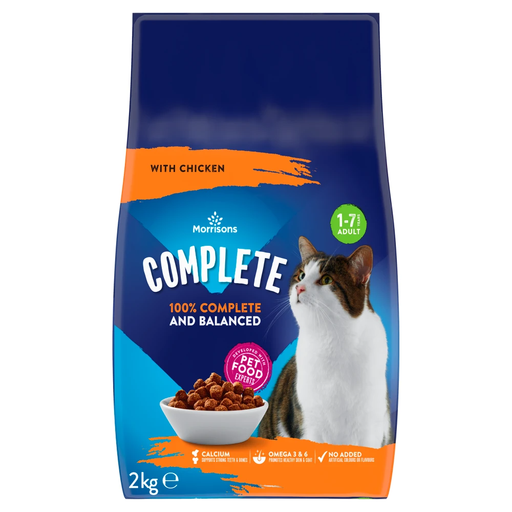
Why This Fits Their Persona: A 2kg pack suits households seeking affordable cat food for an adult cat aged 1–7 years, particularly where regular meals are fed from one bag.
It is identified as 100% complete and balanced for adult cats and provides feeding guidance rather than relying only on flavour-led packaging.
The recipe lists 25% crude protein, calcium and omega-3 and omega-6 fatty acids, with no added artificial colours or flavours.
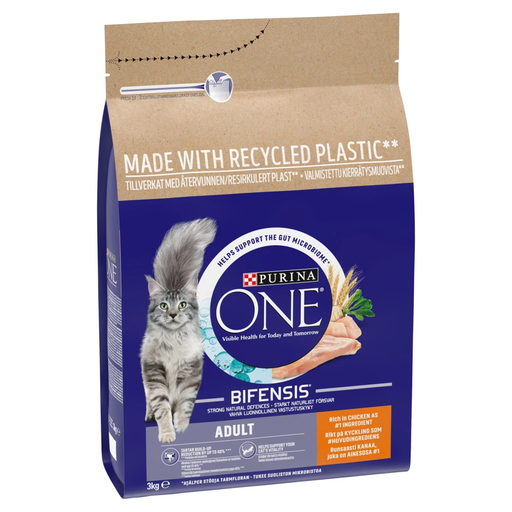
Why This Fits Their Persona: The larger pack is suited to owners with one or more adult cats who want a clearly detailed recipe and a longer-lasting household supply.
The ingredient panel specifies chicken at 17% and provides analytical values, helping shoppers look beyond broad claims about quality.
It lists 34% protein, chicory root at 2% and chicken as the first listed ingredient, alongside whole grains.

Why This Fits Their Persona: A substantial 1.9kg pack is convenient for owners feeding a growing kitten daily and looking for a dedicated kitten formula.
It is specifically formulated for kittens aged 2–12 months, avoiding the common mistake of feeding adult maintenance food during growth.
The recipe lists 35.7% protein, calcium and taurine, and is described as providing 100% of a kitten’s daily nutritional needs.
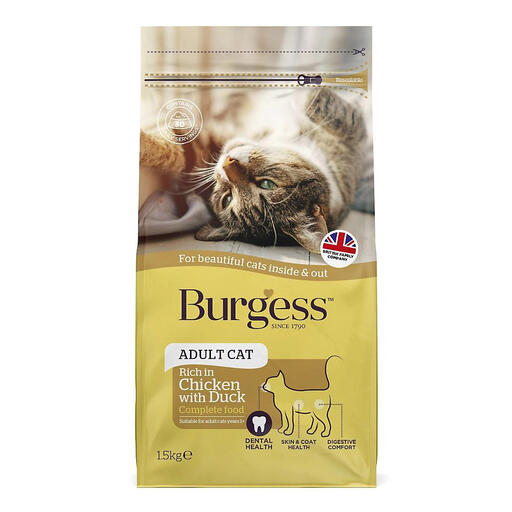
Why This Fits Their Persona: The 1.5kg format is manageable for a single adult cat, especially for owners who prefer not to keep an opened large bag for too long.
The grain-free claim is supported by an ingredient list without wheat, maize or soya, while the adult age range is clearly stated.
It includes chicken meal at 26%, duck meal at 18%, taurine at 0.2% and omega-3 and omega-6 fatty acids.
We have compiled a complete, real-time list of products that fully satisfy these strict selection criteria and UK safety regulations.
A product labelled complete pet food can be fed as the main diet when portions are appropriate. However, dry food contains less moisture than wet food, so your cat must have constant access to fresh water. Some owners combine dry and wet food, but the total daily calories should be adjusted.
Introduce the new food gradually over around seven days. Start with a small amount of the new kibble mixed with the current food, then increase the proportion step by step. Monitor appetite, stool quality and weight. If problems persist, contact your vet.
There is no single lifespan for every product. Follow the best-before information on the packaging and keep the bag tightly sealed in a cool, dry place. Buy a size your cat can consume while the kibble remains palatable; a smaller 1.5kg or 800g pack may be more practical than a large bag for one fussy eater.