
24/7 Customer Support

Free returns

Same-day & Next-day Delivery

Quality Guaranteed

Unlock Your Welcome Offers: FREE Delivery | Up to 80% OFF | Free 30-day JoyPlus trial
Download the APP
By Joybuy Product Recommendation Officer
Choosing dry cat food can look straightforward until you compare age ranges, ingredients, pack sizes and nutritional claims. A colourful bag or a phrase such as “premium” does not necessarily tell you whether the recipe suits your cat’s life stage or daily routine.
The practical approach is to check the statutory product description, feeding guidance, ingredient list and analytical constituents before considering flavour or price. This helps UK cat owners avoid unsuitable purchases and select a complete recipe with sensible storage and portioning requirements.
“Salmon cat food” or “chicken cat food” may contain a relatively small stated percentage of that ingredient. For example, a recipe may include salmon or chicken in particular kibble pieces while also containing cereals, meat and animal derivatives, vegetable protein extracts and oils.
Read the composition rather than relying on the front-of-pack flavour. If your cat prefers fish, a salmon recipe may be useful for palatability, but it should still match the cat’s age and nutritional needs.
Adult dry cat food is generally labelled for a specific age range, such as 1+ years or 1–7 years. It should not automatically be used for kittens. Growing cats need a suitable kitten formula, while older cats may benefit from a senior-specific nutritional profile.
Check the life-stage wording carefully. A product labelled as complete dry pet food for kittens is a different purchase from an adult maintenance recipe, even if both use chicken or similar ingredients.
A cat food 2kg bag can offer fewer packaging changes and may suit a multi-cat household. However, a smaller cat food 750g pack can be more practical for one cat, particularly if your pet eats slowly or you are introducing a new recipe.
Once opened, reseal dry food tightly and store it in a cool, dry place away from sunlight and moisture. Damp kibble can lose its crunch and palatability. Always follow the storage instructions on the label.
For everyday feeding, look for wording such as complete dry pet food or 100% complete and balanced on the packaging. “Complete” indicates that the product is intended to provide the necessary nutrients when fed as directed. A complementary food, treat or topper is not a substitute for a complete daily diet.
Also check the species and life stage. A product for adult cats should not be assumed suitable for kittens, senior cats or cats with specific dietary requirements.
The analytical constituents normally include protein, fat, crude fibre, crude ash and moisture. These figures allow you to compare recipes more practically.
For example, the listed adult recipes vary in protein and fat levels: Morrisons Complete Chicken & Veg provides 25% protein and 10% fat, while Burgess Adult Cat Scottish Salmon lists at least 30% protein and 17% fat. These figures do not make one recipe universally suitable; your cat’s weight, activity level and feeding instructions still matter.
If you are shopping for sensitive digestion cat food, inspect the full ingredient list for ingredients your cat has previously reacted to. A “grain-free cat food” recipe is not automatically better for every cat, and grain-free does not mean free from all potential allergens.
Feeding tables are starting points rather than guarantees. A moderately active 4kg adult cat may have a different requirement from a sedentary indoor cat of the same weight. Count treats and any wet food when considering daily calories.
Smaller packs, such as 750g or 800g, are useful for trialling a recipe and keeping food fresh. Larger options, including cat food 2kg packs, may be convenient for regular buyers or multi-cat homes, provided the food can be stored securely.

Why This Fits Their Persona: The 750g pack provides a manageable starting size for owners comparing adult flavours or feeding one cat in a smaller UK home.
It is labelled as a complete and balanced adult meal, with feeding guidance and stated analytical constituents rather than relying only on flavour-led packaging.
The recipe lists 30% protein, 11% fat, natural-source fibres and no artificial colourants.

Why This Fits Their Persona: A 1.5kg pack suits owners seeking a salmon-led, grain-free recipe for an adult cat while avoiding excessive long-term storage.
The composition states salmon meal at 30% and clearly identifies the intended adult age range, helping shoppers look beyond general premium wording.
The formula is grain-free and lists at least 30% protein, 17% fat and salmon oil as an omega-3 source.
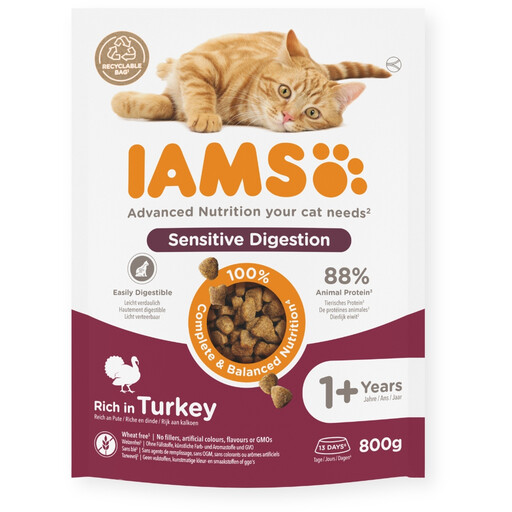
Why This Fits Their Persona: It is aimed at adult cats whose owners are checking digestibility-related ingredients and want a practical 800g trial size.
The ingredient list identifies beet pulp, FOS and MOS, while the product is clearly restricted to adult cats rather than being presented as a universal formula.
It lists 34% protein, 15% fat and 88% animal protein out of total protein according to the product information.
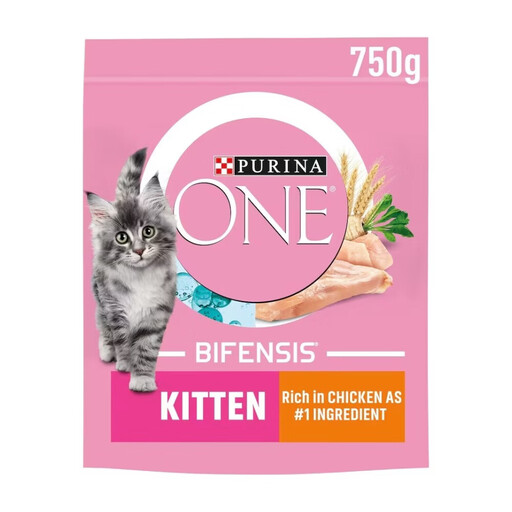
Why This Fits Their Persona: A 750g pack is convenient for new kitten owners who want an age-specific complete food without committing to a large bag.
The label identifies it as complete food for kittens and pregnant or lactating cats, avoiding the mistake of using adult maintenance food during growth.
The recipe lists 41% protein, 20% fat, chicken at 17% and DHA at 0.05%.
We have compiled a complete, real-time list of products that fully satisfy these strict selection criteria and UK safety regulations.
It can be, provided the packaging states that it is complete pet food for cats and it is fed according to the guidance. Fresh water should always be available. Cats with diagnosed conditions or persistent digestive problems may need individual advice from a vet.
Introduce the new recipe gradually over around seven days. Start with a small proportion of the new food mixed with the existing food, then increase it progressively. This can be especially helpful when changing to sensitive digestion cat food or switching flavour.
It depends on your cat’s weight, activity level, feeding amount and whether treats or wet food are also provided. A 750g bag may suit trial purchases or single-cat homes, while a 2kg bag can be more practical for regular or multi-cat feeding. Use the pack’s daily gram guidance to estimate consumption, and keep the bag sealed between meals.