
24/7 Customer Support

Free returns

Same-day & Next-day Delivery

Quality Guaranteed

Unlock Your Welcome Offers: FREE Delivery | Up to 80% OFF | Free 30-day JoyPlus trial
Download the APP
Choosing dry cat food can seem simple until you compare life stages, ingredients, pack sizes and nutritional claims. A colourful packet or a phrase such as “natural” does not automatically mean the food suits your cat. UK owners also need to consider storage, portion control and whether the product is labelled as a complete pet food.
The following guide explains the checks that matter, common buying traps and suitable options for different households.
Salmon cat food or chicken cat food may appeal to your cat, but the flavour name does not tell you how much of that ingredient is included. Check the composition list and analytical constituents rather than relying on front-of-pack imagery. For example, some recipes list cereals or animal derivatives before the named fish or meat.
Words such as “urinary”, “sensitive”, “hairball” and “dental care” describe a product’s intended nutritional focus or texture. They are not substitutes for veterinary treatment. If your cat has recurring urinary symptoms, vomiting, diarrhoea, unexplained weight change or a diagnosed allergy, ask a vet before changing food.
A 2.8kg bag may offer convenience in a multi-cat home, but a smaller 750g cat food pack can help preserve freshness if one cat eats slowly. Dry kibble should be stored sealed in a cool, dry place. Humidity can affect its crunch and palatability, while buying more than your household can use within the recommended period may lead to waste.
Look for a clear statement such as kitten, adult, senior or all life stages.
Do not use an adult recipe for a growing kitten simply because the ingredient list looks appealing. Similarly, an older cat may benefit from a senior formula, but any age-related health concern should be discussed with a vet.
A complete and balanced cat food should be labelled as a complete pet food for the relevant species and life stage. This means it is designed to provide the daily nutrients when fed as directed. Compare the guaranteed analysis, including protein, fat, fibre and ash, but avoid judging a recipe on protein percentage alone.
For instance, listed products range from 25% protein in Morrisons Complete Chicken & Veg to 38% in Purina ONE Bifensis Senior 11+. These figures are useful for comparison, but calorie density, feeding guidance, activity level and your cat’s body condition also matter.
If you are seeking sensitive digestion cat food, inspect the full composition for ingredients your cat has previously reacted to. “No added wheat” is not the same as grain-free, and a grain-free cat food can still contain several plant ingredients.
For skin and coat support, look for declared omega fatty acids, fish oil, salmon oil, zinc and relevant vitamins. For hairball control cat food, a declared fibre blend may be useful. Crunchy kibble can support chewing, but it should not be treated as a replacement for dental care or veterinary checks. Balanced minerals are commonly included in recipes marketed for urinary health, but persistent urinary problems require professional advice.
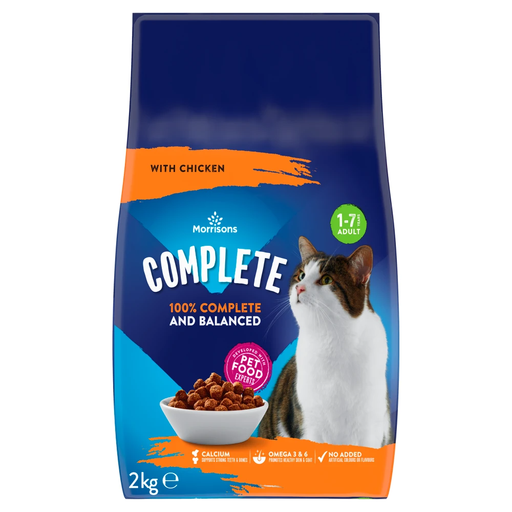
Why This Fits Their Persona: The 2kg pack suits owners seeking a straightforward adult staple for a single cat or a smaller multi-cat household, with fewer repeat purchases than a 750g bag.
It is labelled as 100% complete and balanced for adult cats aged 1–7 years, rather than leaving life-stage suitability unclear.
Contains 25% protein, calcium and declared omega-3 and omega-6 fatty acids; no added artificial colours or flavours.

Why This Fits Their Persona: A 1.5kg pack is practical for a single adult cat owner who prefers a named salmon recipe and manageable storage in a UK kitchen or flat.
The product information states the salmon meal percentage, grain-free composition and adult age range, making key checks easier.
Lists 30% protein, at least 0.8% omega-3 fatty acids and 0.2% taurine; the 1.5kg size is easy to reseal and store.
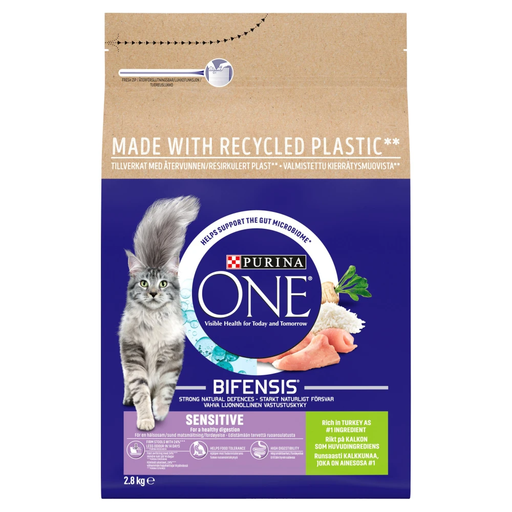
Why This Fits Their Persona: The larger 2.8kg pack is suited to multi-cat households or owners who regularly buy sensitive digestion cat food and can store it securely.
The ingredients identify turkey and rice, state no added wheat and provide feeding guidance, rather than relying only on a vague “gentle” label.
Provides 36% protein, 16% fat, chicory root and declared omega-3 and omega-6 fatty acids; it is labelled as complete dry food.
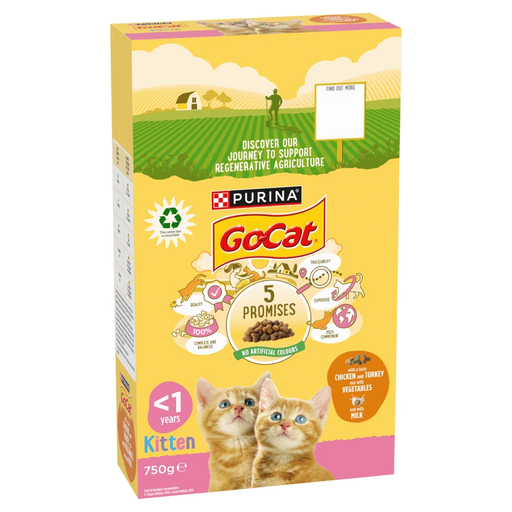
Why This Fits Their Persona: The 750g size is convenient for owners introducing a kitten to dry food and avoids committing to a large bag before confirming acceptance.
It is specifically labelled as complete pet food for kittens up to one year, so it is not confused with adult dry cat food.
Lists 35% protein, 12% fat, taurine and essential vitamins and minerals; it can also suit pregnant or lactating cats where the label permits.
We have compiled a complete, real-time list of products that fully satisfy these strict selection criteria and UK safety regulations.
Yes, provided the product is labelled complete for cats and the correct life stage. Follow the feeding instructions and ensure constant access to fresh water. Some owners combine dry and wet food, but the total daily calories still need monitoring.
It depends on the cat’s weight, activity and the stated daily portion. A 750g bag may suit a small household seeking freshness, while 1.5kg, 1.9kg, 2kg and 2.8kg packs are more practical for regular or multi-cat feeding. Calculate approximate usage from the daily gram allowance before purchasing.
Some recipes include additional fibre, crunchy kibble or balanced minerals intended to support these areas. These features do not diagnose or treat illness. Contact a vet if your cat has repeated hairballs, dental discomfort, straining to urinate or changes in appetite.