
24/7 Customer Support

Free returns

Same-day & Next-day Delivery

Quality Guaranteed

Unlock Your Welcome Offers: FREE Delivery | Up to 80% OFF | Free 30-day JoyPlus trial
Download the APP
Choosing dry cat food can seem straightforward until you compare life-stage formulas, ingredients, pack sizes and nutritional claims. A colourful bag or a phrase such as “natural” does not necessarily tell you whether the food suits your cat’s age, lifestyle or digestion.
Joybuy Product Recommendation Officer guidance focuses on the details that are easy to overlook, helping UK cat owners compare products with less guesswork.
Salmon cat food and chicken cat food may appeal to a cat’s preferences, but flavour alone should not decide the purchase. Check whether the recipe is intended for kittens, adult cats or senior cats, and whether it is labelled as a complete pet food.
For example, kitten dry food generally has a different nutritional profile from adult dry food. A senior formula may also be designed for cats aged 7+ or 11+, depending on the product. Feeding an adult formula to a growing kitten is not an appropriate substitute for kitten food.
Grain-free cat food can be suitable for some cats, but the absence of wheat, corn or soy does not by itself make a recipe more nutritious. Grain-free formulas often use ingredients such as sweet potato, peas or potato instead.
Read the full composition and analytical constituents rather than relying on front-of-pack wording. If your cat has a diagnosed allergy or recurring digestive symptoms, ask a veterinary professional before making a major dietary change.
A cat food 2kg or 2.8kg bag can offer convenience for multi-cat households, but it may lose aroma and texture if left open for too long. A 750g or 800g pack can be more practical for a single cat, particularly when trying a new recipe.
Keep kibble in its original bag, seal it tightly after every use and store it in a cool, dry place away from sunlight and moisture.
Look for wording such as complete dry pet food for adult cats, complete pet food for kittens up to 1 year, or a senior age range. Suitable examples include:
A product labelled complete and balanced cat food is intended to provide the necessary nutrients when fed according to the packaging guidance. Always check the current label, as formulations and instructions can change.
Ingredients are generally listed in descending order by weight. Compare the named animal ingredients, cereals, fats and plant-based protein sources. For instance, Burgess Adult Cat Scottish Salmon lists salmon meal at 30%, while Purina ONE Bifensis Sensitive lists turkey at 18% and rice at 15%.
The analytical panel provides useful numerical comparisons, including protein, fat, crude fibre, ash and moisture. These figures do not determine suitability on their own, but they help you compare recipes more fairly.
For sensitive digestion cat food, look for a clearly stated intended use and ingredients your cat has previously tolerated. Purina ONE Sensitive Rich Turkey and Rice contains turkey, rice, chicory and no added wheat. Iams Vitality Sensitive Digestion Rich in Turkey includes rice, prebiotics and fish oil, but it is not suitable for cats with known sensitivities to its listed ingredients.
Pack size should match your cat’s consumption and storage space:
Feeding tables are starting points, not fixed prescriptions. Adjust portions according to body condition, activity and treats. Fresh water should always be available, particularly when dry food forms most of the diet.
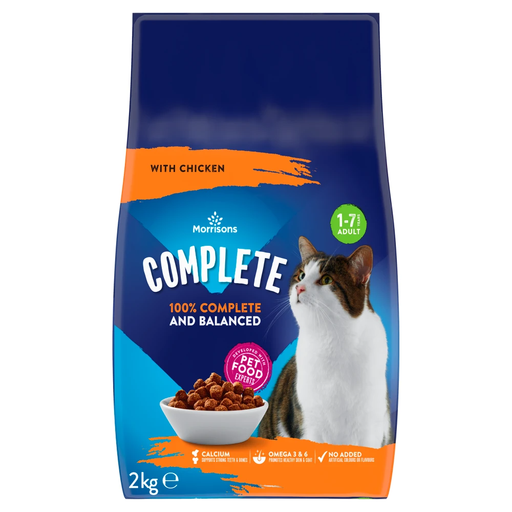
Why This Fits Their Persona: A 2kg pack suits regular feeding for an adult cat, while the product is labelled as 100% complete and balanced for cats aged 1–7 years.
The adult life-stage suitability and feeding guidance are stated clearly, avoiding a flavour-led purchase without age information.
Contains chicken, calcium, omega-3 and omega-6; no added artificial colours or flavours are listed.

Why This Fits Their Persona: A 1.5kg pack offers a manageable quantity for a single adult cat, with salmon meal, salmon oil and a grain-free recipe.
The ingredient list and analytical constituents make the grain-free claim checkable rather than relying only on front-of-pack language.
Lists 30% minimum crude protein, 17% crude fat and omega-3 fatty acids; intended for adult cats aged 1–7 years.
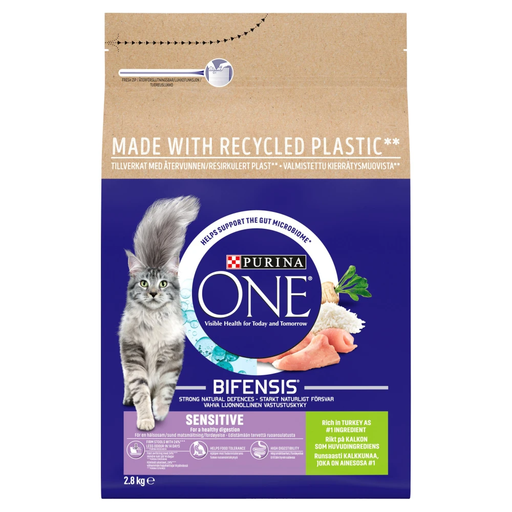
Why This Fits Their Persona: The larger pack is practical for multi-cat households or owners who already know their cat tolerates a turkey-and-rice sensitive recipe.
It identifies turkey, rice, chicory and no added wheat, allowing owners to compare ingredients against known tolerances.
Provides 36% protein, 16% fat and added chicory; the product is labelled for adult cats with sensitive digestion.
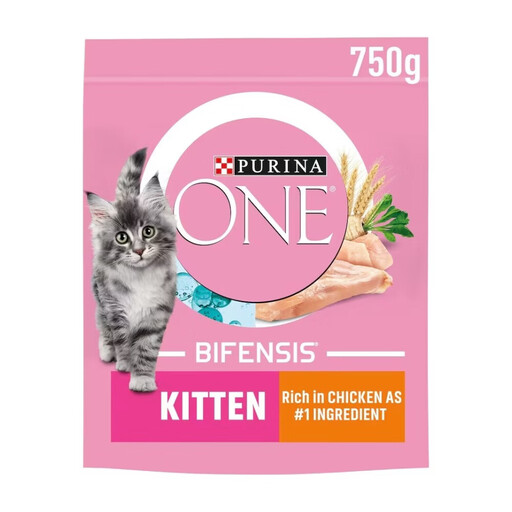
Why This Fits Their Persona: The 750g pack is suitable for owners introducing a kitten to dry food and checking acceptance before buying a larger quantity.
Its kitten-specific label avoids the common mistake of choosing adult food solely because the flavour is familiar.
Lists 41% crude protein, 20% fat and DHA; suitable from weaning to 12 months according to the product information.
We have compiled a complete, real-time list of products that fully satisfy these strict selection criteria and UK safety regulations.
Some products are labelled as complete dry pet food, meaning they are formulated to provide daily nutrition when fed as directed. Check the statutory product description and feeding instructions. Cats with specific medical needs may require different guidance from a veterinary professional.
There is no single lifespan for every recipe. Follow the packaging guidance and use your senses: damp, stale-smelling or mouldy kibble should not be fed. Smaller packs can help single-cat households maintain freshness, while larger bags may suit faster consumption in multi-cat homes.
It may suit a cat that needs to avoid a particular grain, but “grain-free” is not the same as hypoallergenic or medically prescribed. Check all ingredients, introduce the food slowly and seek veterinary advice if your cat has recurring digestive or allergy-like symptoms.