
24/7 Customer Support

Free returns

Same-day & Next-day Delivery

Quality Guaranteed

Unlock Your Welcome Offers: FREE Delivery | Up to 80% OFF | Free 30-day JoyPlus trial
Download the APP
Choosing dry cat food is not simply a case of picking a familiar flavour or the largest bag on the shelf. UK cat owners also need to consider life stage, activity level, ingredients, feeding guidance and whether the food is nutritionally complete.
Marketing can make this more confusing. A recipe may highlight “chicken”, “tuna” or added fibres while the full composition tells a broader story. Use the following checks to avoid paying for claims that do not match your cat’s needs.
“Chicken cat food” or “tuna cat food” may show a named ingredient on the front, but the percentage and position in the composition are more informative. Ingredients are generally listed by weight, so check how much of the named meat or fish is actually included.
For example, Whiskas 1+ Tuna Adult Dry Cat Food lists fish and fish derivatives, including 4% tuna in the brown kibbles. This is different from assuming the whole recipe is made primarily from tuna.
A treat or complementary food cannot replace a properly formulated daily diet. Look for a statement that the product is complete pet food or provides complete and balanced nutrition for the relevant life stage. Go-Cat adult and senior recipes in this selection are described as 100% complete and balanced, while feeding quantities still need to be adjusted to the individual cat.
Adult dry cat food is not automatically suitable for every adult cat. An indoor cat may need a different calorie and fibre profile from a very active outdoor cat. Similarly, senior cat food is formulated for older cats, but a senior cat with a diagnosed condition may require veterinary guidance rather than a standard retail recipe.
Check whether the pack is intended for kittens, adult cats aged 1+, or cats aged 7+. The feeding guide is a starting point, not a fixed prescription. Adjust the daily quantity according to body condition, weight and activity level.
Divide food into two or more meals if that suits your routine. When changing food, introduce it gradually over several days to reduce the chance of digestive upset.
The guaranteed analysis helps you compare recipes objectively. Important figures include:
For weight management, compare the feeding guide and fat content rather than relying only on words such as “light”. Purina ONE Bifensis Light lists 37% protein, 9.5% fat and 6% crude fibre. The lower fat figure may suit some cats needing a lighter formula, but portion control remains essential.
Dry food contains less moisture than wet food, so your cat should always have access to fresh drinking water. This is particularly important if dry food forms the main part of the diet.
Store opened food in a cool, dry place and keep the packaging tightly sealed. Check the use-by information on the label and avoid buying a pack size that will remain open for an extended period. Also check for known allergies and follow any advice from your veterinary practice.

Why This Fits Their Persona: A practical option for households seeking an adult dry cat food with a familiar flavour profile and straightforward feeding guidance.
The listing clearly identifies the 1+ life stage and states that the recipe is complete and balanced, helping shoppers avoid choosing a treat or unsuitable life-stage food.
30% protein, 11% fat, natural-source fibre and added taurine, with no artificial colours, flavourings or preservatives listed.
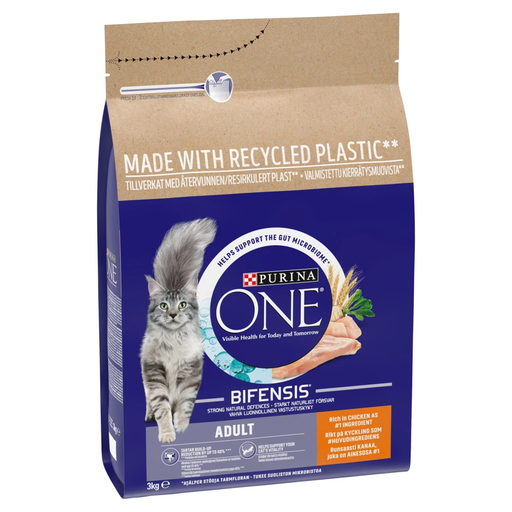
Why This Fits Their Persona: The larger 3kg pack suits owners who prefer fewer repeat purchases for an adult cat that already accepts chicken-flavoured food.
The composition identifies chicken at 17% and provides analytical values, so the buyer can assess the recipe beyond front-of-pack wording.
34% protein, 14% fat, 2.5% crude fibre, chicory root and added heat-treated lactobacillus.

Why This Fits Their Persona: Designed for indoor routines, this smaller pack allows owners to assess acceptance before committing to a larger quantity.
Its stated indoor focus is supported by listed fibre and a protein-to-fat profile, rather than relying only on a lifestyle label.
36% protein, 13% fat, 5.5% crude fibre, turkey as a named ingredient and added chicory.

Why This Fits Their Persona: A targeted choice for owners comparing hairball control cat food with a recipe that also addresses coat and skin nutrition.
The label specifies 6% crude fibre and lists dried vegetable fibre, allowing a more practical comparison than an unsupported hairball slogan.
Chicken listed at 17%, 34% protein, 14% fat, added fish oil, B vitamins, zinc and taurine.
We have compiled a complete, real-time list of products that fully satisfy these strict selection criteria and UK safety regulations.
For older cats, senior cat food labelled for 7+ may provide a more suitable nutrient profile. Whiskas 7+ Chicken Adult Dry Cat Food 1.9kg lists 32% protein and 11.3% fat, while Go-Cat Senior 7+ lists 31% protein and 9% fat. These figures can help compare products, but they do not replace veterinary advice where a cat has a health condition.
If your cat prefers fish flavours, Whiskas 1+ Tuna Adult Dry Cat Food provides 30.8% protein and 12% fat. For a lighter recipe, Purina ONE Bifensis Light lists 9.5% fat. Always compare the feeding guide as well as the percentage figures, since calorie intake depends on the amount served.
Yes, provided the packaging states that it is a complete pet food for your cat’s life stage. Supply fresh water and follow the feeding guide. Some owners combine dry and wet food, but the total daily intake should be managed to avoid overfeeding.
Mix a small amount of the new food with the current recipe, gradually increasing the proportion over around a week. Slower changes may be helpful for cats with sensitive digestion. Monitor appetite, stools and body condition, and contact a veterinary practice if concerns persist.
Some recipes include additional fibre and are marketed for hairball support, while light recipes may contain less fat. These features can support a tailored feeding plan, but results vary between cats. Regular grooming, measured portions and professional advice may also be appropriate, particularly if hairballs are frequent or weight changes are unexpected.