
24/7 Customer Support

Free returns

Same-day & Next-day Delivery

Quality Guaranteed

Unlock Your Welcome Offers: FREE Delivery | Up to 80% OFF | Free 30-day JoyPlus trial
Download the APP
As a dog owner, navigating the aisles of dry dog food can feel overwhelming. With countless bags all promising complete nutrition, it’s difficult to know which one is genuinely right for your companion. Many of us have bought a pricey bag of dog kibble only to find it upsets our dog's stomach or gets ignored in the bowl.
As the Joybuy Product Recommendation Officer, my role is to help you see past the marketing jargon. Let's look at a few common pitfalls that can lead to a poor choice and how to avoid them.
grain free dog food has led many to believe grains are inherently bad for dogs. While some dogs have specific grain allergies, for most, whole grains like wheat and rice are excellent sources of energy and fibre. A well-formulated food containing grains is often a better choice than a poorly formulated grain-free one.puppy food is designed for growth, while a senior dog food is often lower in calories to match a slower metabolism.Before you choose, a quick check of the packaging can tell you almost everything you need to know. Focus on these three areas to ensure you're buying a quality complete dog food.
Ingredients are listed by weight in descending order. For a good quality chicken dog food, you should ideally see "Chicken", "Dehydrated Chicken" or "Chicken Meal" listed as the very first ingredient. This indicates that the primary protein source is meat. Formulations that list a cereal like "Maize" or "Wheat" first are not necessarily bad, but they are more carbohydrate-based. Also, look for natural dog food formulas that are free from artificial colours and flavours.
Your dog's age and size are non-negotiable factors.
complete dog food formulated for growth, typically with higher protein, fat and specific nutrients like DHA for brain development.dog kibble for smaller mouths and is often more nutrient-dense, as small breeds have faster metabolisms.This is a crucial distinction. A complete dog food provides all the nutrients your dog needs in a single, balanced meal. "Complementary" food, on the other hand, is designed to be fed as a treat or alongside a complete meal. For your dog's main daily meals, you should always choose a food labelled "complete."
To help you match a food to your dog's needs, here are a few options that align with different owner profiles and avoid the common pitfalls.
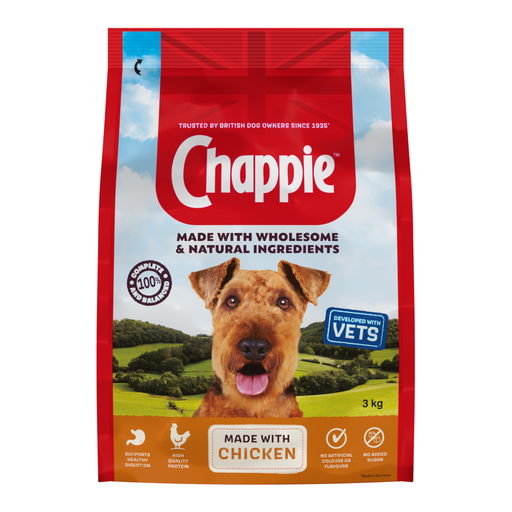
Why This Fits Their Persona: This is a straightforward, no-frills option that provides balanced nutrition without a premium price. It's a trusted choice for UK dog owners looking for a reliable and affordable complete meal.
It's an honest, cereal-based food that doesn't pretend to be something it's not. It is clearly labelled as a complete adult dog food, avoiding the one-size-fits-all trap by being specifically for adults.
Developed with veterinarians and free from artificial colours, flavours, eggs or dairy, making it a gentle option for many dogs.
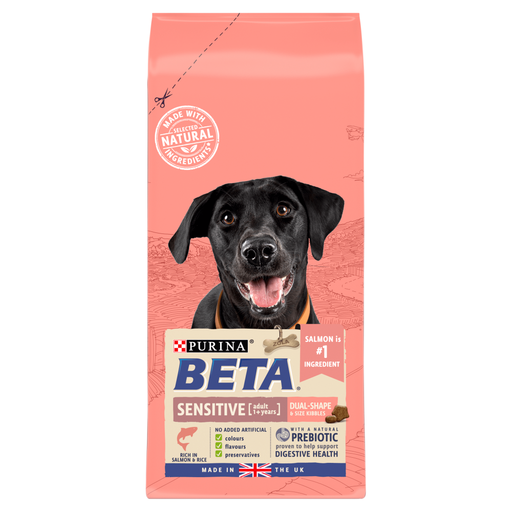
Why This Fits Their Persona: If your dog struggles with itchy skin or a delicate stomach, a targeted formula is essential. This sensitive dog food is designed specifically to address those issues using alternative proteins and digestible ingredients.
It avoids the "one-size-fits-all" approach by targeting a specific need. With Salmon Meal (17%) as the first ingredient, it's clear about its primary protein source, moving beyond the vague "with fish" label.
Formulated with Omega 3 & 6 fatty acids to help manage skin reactions and natural prebiotics to support digestive health.
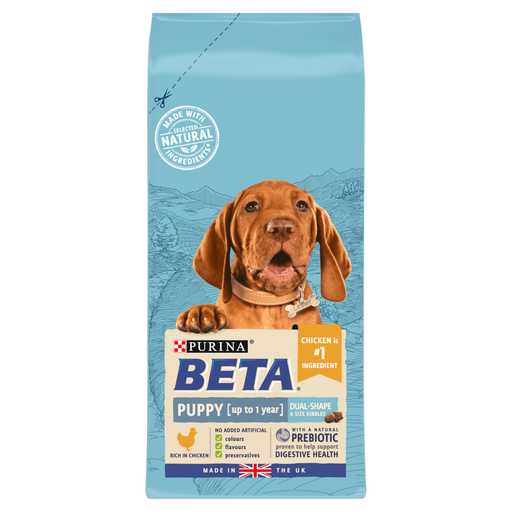
Why This Fits Their Persona: Bringing a puppy home comes with the responsibility of providing the right foundation for a healthy life. This puppy food is specifically designed to support their rapid growth and development.
This is a dedicated life-stage food, not a generic formula. It also avoids the "with chicken" trap by clearly stating Chicken Meal (27%) is the number one ingredient, ensuring a high-protein base for growth.
Enriched with DHA, an omega-3 fatty acid also found in mother's milk, which is important for brain and vision development in puppies.
We have compiled a complete, real-time list of products that fully satisfy these strict selection criteria and UK safety regulations.
The key is to transition slowly over 7-10 days. Start by mixing a small amount of the new food (around 25%) with their old food (75%). Gradually increase the proportion of the new food every couple of days until you have fully switched over. This gives your dog's digestive system time to adjust and reduces the risk of an upset stomach.
All complete dog food bags have a feeding guide on the packaging. This is your starting point. The guide will provide a recommended daily amount based on your dog's weight. Remember to adjust this based on their age, activity level and whether they are neutered. If your dog is very active, they may need more; if they are a couch potato, they may need less to maintain a healthy weight.
This can be confusing. 'Chicken' refers to fresh chicken, which contains a high percentage of water (around 70%). 'Chicken meal' is fresh chicken that has been rendered—a process that removes the water and fat. The result is a highly concentrated protein powder. A food with 25% chicken meal contains significantly more actual chicken protein than a food with 25% fresh chicken. Both are good quality ingredients, but 'meal' is a more concentrated source.