
24/7 Customer Support

Free returns

Same-day & Next-day Delivery

Quality Guaranteed

Unlock Your Welcome Offers: FREE Delivery | Up to 80% OFF | Free 30-day JoyPlus trial
Download the APP
Bringing a new puppy home is an exciting time, but the sheer number of food choices can be overwhelming. You want to give them a great start in life, and that begins with their diet. The right dry puppy food provides the essential nutrients for healthy growth, energy and development.
This guide is designed to help you navigate the options. We will break down what to look for in a quality puppy kibble and highlight some solid choices available in the UK, helping you make an informed decision for your new family member.
Before choosing a specific brand, it helps to understand a few key features. Focusing on these will ensure you are providing a balanced and appropriate diet for your growing dog.
When a product is labelled as a complete puppy food, it means it is legally required to contain all the nutrients your puppy needs to thrive, in the correct proportions. A growing puppy has different needs than an adult dog. Look for formulas specifically designed for puppies, which will have higher levels of protein for muscle development, fats for energy and a carefully balanced ratio of calcium and phosphorus for strong bones and teeth.
Ingredients are listed by weight, so the first few items make up the bulk of the food. A high-quality chicken puppy food, for example, should list chicken as one of the primary ingredients, rather than vague terms like "meat and animal derivatives." This indicates a better quality protein source. Also, keep an eye out for beneficial additions like omega-3 and -6 fatty acids (often from fish or linseed oil) for skin and coat health and prebiotics to support digestion.
Not all puppies thrive on the same diet. If you notice your puppy has digestive upset or itchy skin, they may have a sensitive stomach. In these cases, a hypoallergenic puppy food or a grain free puppy food might be a suitable option. These formulas are made without common allergens like wheat, soya or dairy, making them gentler on a puppy food for sensitive stomachs.
Here are a few recommendations that meet the criteria for a balanced, high-quality puppy diet. We have selected them based on their ingredient transparency, nutritional formulation and suitability for different puppy needs.
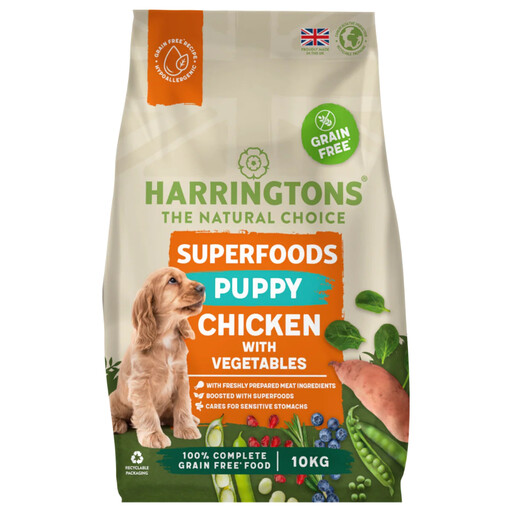
Why It Stands Out This formula from Harringtons puts meat first, with 35% chicken content providing a high-quality protein base. It is a grain free puppy food, making it a strong candidate for puppies with digestive sensitivities. The inclusion of a "superfood" blend with ingredients like spinach, pomegranate and blueberries provides natural antioxidants to support your puppy's developing immune system.
Pros
Who is it for? This is an excellent choice for owners looking for a premium, hypoallergenic puppy food that is gentle on the digestive system while providing a rich source of natural nutrients.
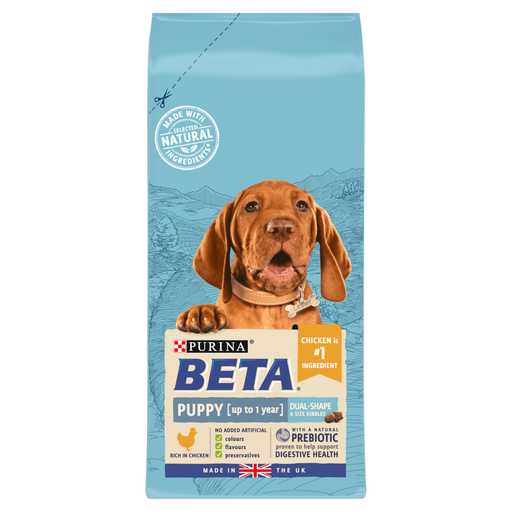
Why It Stands Out BETA's puppy formula is designed for all-round development. With chicken meal as the number one ingredient, it provides the high-quality protein puppies need. It is also enriched with DHA, an omega-3 fatty acid essential for brain and vision development. The inclusion of natural prebiotics from chicory root aids digestive health and the dual-sized puppy kibble encourages chewing.
Pros
Who is it for? This is a solid, reliable option for new puppy owners who want a complete puppy food that covers all the essential bases for healthy growth, with a particular focus on cognitive and visual development.
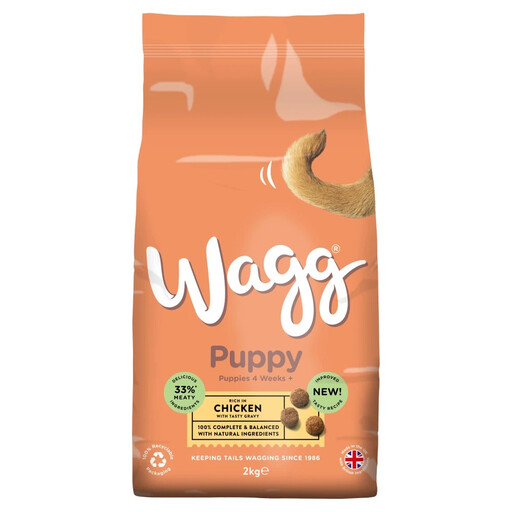
Why It Stands Out Formulated for puppies from just four weeks old, this food from Wagg is ideal for the weaning period. It contains 33% meaty ingredients, with a protein level of 28% to fuel growth. It also includes balanced calcium and vitamin D for strong bones and teeth and yucca extract, which can help to reduce stool odour.
Pros
Who is it for? This food is a practical choice for owners of very young puppies who are transitioning to solid food. It provides complete and balanced nutrition at an accessible price point.
While the right food fuels your puppy's growth from the inside, keeping them comfortable on the outside is just as important, especially during those chilly UK walks. If you are also looking for practical outerwear to keep them warm and dry, explore our selection of puppy coats to find the perfect fit for your new companion.
Explore Our Range of Puppy Coats
The correct amount depends on your puppy's age, breed (and expected adult weight) and activity level. Always refer to the feeding guide on the product packaging as a starting point. It is a good practice to divide the daily amount into 3-4 smaller meals for young puppies. If you have any concerns about your puppy's weight or condition, consult your vet.
Most puppies can begin weaning onto solid food from around 3 to 4 weeks of age. Initially, it is best to soften the puppy kibble with a little warm water to create a porridge-like consistency. You can gradually reduce the amount of water as the puppy gets used to chewing.
A grain free puppy food is an excellent choice for puppies that have a diagnosed grain allergy or a particularly sensitive stomach. However, many puppies digest grains like rice and corn perfectly well, and these can be good sources of energy. Unless your puppy shows signs of intolerance, a food containing grains can still be a high-quality, healthy option.