Bulk-buying flatshare organisers
If several people share a cupboard, labelled portions can help distinguish supplies and reduce repeated handling of the main bag. Allow space and time to portion and seal the rice.


For dry rice in a shared house, choose a washable, pest-proof lidded container if the rice is opened often; a vacuum sealer is more useful when you want to divide a bulk purchase into sealed portions. A countertop machine suits bag-making, while a handheld pump suits smaller kitchens and compatible containers that can be reopened. Whichever route you choose, check that anything touching the rice is intended for food contact.
If several people share a cupboard, labelled portions can help distinguish supplies and reduce repeated handling of the main bag. Allow space and time to portion and seal the rice.
If rice is taken out often and storage space is tight, a container that is easy to reopen may be more practical than repeatedly cutting open sealed bags.
If you expect to use a sealing system regularly, check its compatible bags, rolls or containers and their food-contact suitability before committing to it.
Decide how often the rice will be opened before choosing a storage format. Coventry City Council advises washable, pest-proof containers with lids for uncooked rice; portioning and available kitchen space may make a sealing system worth considering instead.
Consider it when: Several housemates want to divide a bulk bag into labelled portions.
Trade-off: The machine needs storage space and compatible bags or rolls; check for a seal-only function if you want to make bags without vacuuming them.
Consider it when: Worktop space is limited and you want compatible bags or containers that can be reopened.
Trade-off: The pump depends on matching valve bags, lids or containers rather than ordinary heat-sealer bags.
Consider it when: Housemates take rice out frequently and want a straightforward container to wash and refill.
Trade-off: It does not make sealed individual portions; choose one intended for food contact with a secure, pest-proof lid.
| Concern | What to check | Who this matters to |
|---|---|---|
| Separate portions | Check for custom-length bag making or reusable bags, and choose a portion size your cupboard can accommodate. | If I share a bulk purchase, I want labelled portions so supplies do not get mixed up. Around 33% of consumers would put portion organisation first. |
| Space and access | Check where the appliance will be stored and whether its compatible bags or containers can be reopened. | When I use rice regularly in a small kitchen, I need storage I can close again without a lengthy routine; around 25% of consumers would make compact, frequent access their priority. |
| Bulk-supply storage | Check that the rice is dry and that its food-contact container has an intact, pest-proof lid, or its compatible bag has a sound seal. | If most of my rice stays in reserve, I want to keep that supply contained between uses. For around 25% of consumers, protecting the bulk supply would be the primary concern. |
| Refill compatibility | Identify the exact compatible bag, roll or valve format and confirm that materials touching rice are intended for food contact. | I do not want to commit to a pump or sealer before knowing which replacement storage products it takes; around 17% of consumers would put refill suitability first. |
Vacuum packaging does not replace time and temperature controls for cooked rice.
The Food Standards Agency advises chilling cooked rice as quickly as possible, keeping it in the fridge for no more than one day before reheating, and reheating until steaming hot.
A bag designed to compress clothing should not be assumed suitable for contact with food.
Choose bags, rolls and containers intended for food contact. Bromley Council advises checking appropriate food-contact marking or confirmation from the supplier.
Handheld pumps need matching valve storage, while bag sealers need bags or rolls they can seal.
Identify the exact compatible format before choosing a machine, particularly if you plan to reopen and reseal rice regularly.
Continued use may require compatible replacement bags, rolls or lids.
Cutting open portions repeatedly adds a step that may not suit a shared supply used every day.
Compare a washable, pest-proof lidded container with a compatible vacuum-container system before choosing a countertop bag sealer.
A bag-sealer system to consider if you want to make portions and can accommodate a countertop appliance.
A handheld pump system for households considering compatible valve bags and re-openable containers.
A conventional bag-sealer option for buyers comparing sealing functions.
These choices cover a bag-sealing machine for portioning and lidded containers for accessible cupboard storage. Check food-contact suitability and the exact contents before using any of them for rice.
 No image available
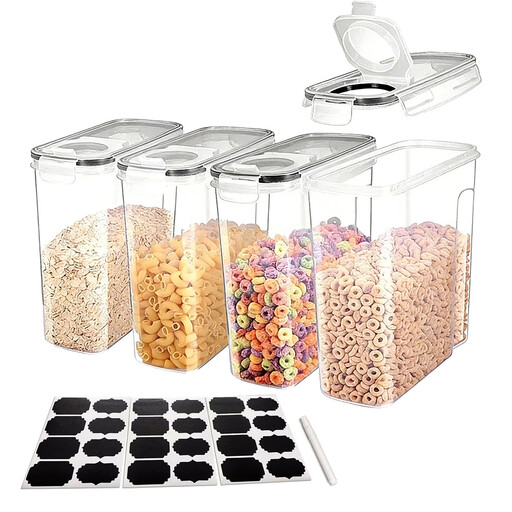
Consider these for keeping a shared dry-rice supply in separate lidded containers rather than making sealed bags. The title identifies a four-piece set as 4pcs4L; confirm each container's capacity and food-contact suitability before filling it with rice.
 No image available
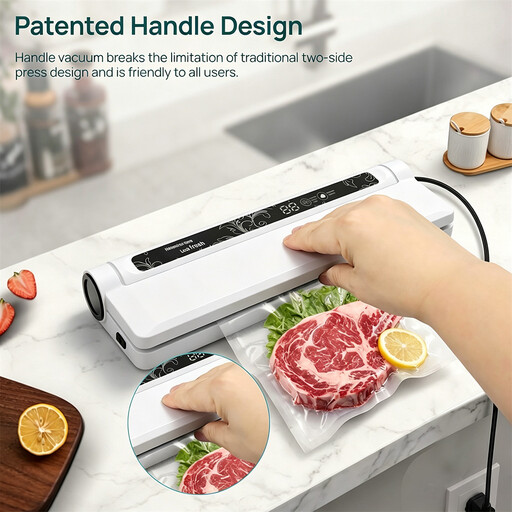
Consider this bag-based machine if you want to prepare rice portions in advance. Its title specifies a built-in storage pocket and 20 bags measuring 17×25 cm each; confirm that the bags are intended for food contact and check compatible refills and sealing functions before buying.
 No image available
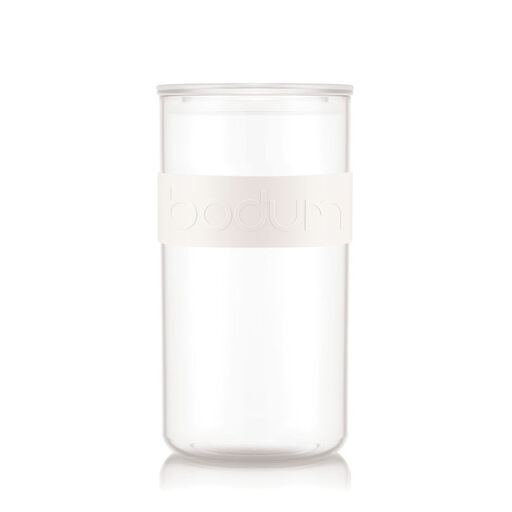
Consider lidded containers if housemates need to reopen the rice supply often without making new bags. The title states 2 x 2L, but the set descriptions differ; confirm the actual contents and food-contact suitability before use.
No. Coventry City Council advises storing uncooked rice in washable, pest-proof containers with lids. A sealer is worth considering if making separate portions suits the way your household uses its rice.
No. Vacuum packaging does not replace cooked-rice handling precautions. The Food Standards Agency advises chilling cooked rice as quickly as possible, refrigerating it for no more than one day before reheating, and reheating until steaming hot.
Choose storage products intended for food contact, rather than assuming any vacuum bag will do. Bromley Council advises looking for appropriate food-contact marking or checking with the supplier where suitability is unclear.
Check the exact bags, containers and lids it works with, how it charges, and whether compatible replacements suit your intended use. Lakeland describes the StayFresh handheld sealer for its matching bags and containers; ZWILLING UK likewise describes its FRESH & SAVE pump for compatible storage.