For a student house drying cotton regularly through winter, start by comparing heat-pump dryers if the household can accommodate the higher purchase cost: Which? says they generally cost more to buy but are the cheapest dryer type to run. A conventional condenser dryer may suit a tighter initial budget, while a vented dryer needs a suitable route to discharge air outside and agreement for any alteration. Whichever type you consider, check the space, cotton programme, energy information and cleaning requirements for the exact model.
Who needs which features?
Housemates sharing electricity costs
If cotton loads will go through the dryer regularly in winter, compare running costs alongside the purchase cost. Which? identifies heat-pump dryers as generally cheaper to run than other dryer types, but you still need the exact model’s energy and programme information.
Renters with limited space
Measure the available space and the route the appliance must take into the house. Check how a condenser or heat-pump model collects water, or whether a vented model has a workable outside exhaust route; agree any alteration with the landlord before arranging it.
Households using a cold utility area
If the intended location is an unheated garage or outbuilding, check the exact dryer’s permitted operating temperature and relevant programmes. A cold-space claim for one model does not apply to every heat-pump dryer.
What matters when choosing?
For repeated winter cotton loads, compare the three dryer types by running costs, purchase cost and installation requirements before narrowing the choice to individual models.
Heat-pump dryer
Consider it: For regular winter use when reducing ongoing electricity use matters to the household.
Trade-off: Which? says heat-pump dryers generally cost more to buy; cotton-cycle duration and suitability for an unheated space depend on the model.
Conventional condenser dryer
Consider it: When the initial purchase cost takes priority over minimising electricity use across repeated loads.
Trade-off: Which? identifies heat-pump dryers as generally cheaper to run, so compare like-for-like energy information before choosing a conventional condenser model.
Vented dryer
Consider it: Only where the exhaust hose can discharge outside through a suitable route and any required alteration has been agreed.
Trade-off: The outside vent route is an installation constraint; West Yorkshire Fire and Rescue Service advises keeping the vent pipe free of kinks, crushing and obstructions.
| Concern |
What to check |
Who this matters to |
| Running costs |
Compare energy information for suitable models and the cotton or eco programmes you expect to use. |
When we dry cotton frequently through winter, electricity use affects the bills we share. Around 36% of consumers put running costs first. |
| Space and installation |
Measure the appliance space and access route; confirm water collection, drainage or an outside vent route as applicable. |
With a tight laundry area and a rented property, I need a dryer that fits without an unapproved alteration. Roughly 29% of consumers prioritise space and installation fit. |
| Cotton loads in winter |
Match capacity to usual loads, check the cotton programme and verify any cold-space claim for the exact model. |
If several housemates need towels or bedding dried, I care about the programme and load size behind a cycle claim. About 21% of consumers make winter laundry capacity and turnaround their primary concern. |
| Shared upkeep |
Check filter access and cleaning instructions, ventilation needs and the available electrical socket. |
When several of us use the machine, I want a cleaning routine everyone can follow without leaving lint behind. Around 14% of consumers put safe shared operation and upkeep first. |
What should you avoid?
-
Choosing on purchase cost alone
For frequent winter loads, the initial cost does not tell you what the dryer will cost to run. Which? says heat-pump dryers generally cost more to buy but are the cheapest type to run.
Compare the models’ energy information and the programmes you expect to use, as well as their purchase costs.
-
Assuming every 8 kg dryer fits
Capacity does not determine a dryer’s outside dimensions. A vented model also needs a usable route for its exhaust hose.
Measure the space, doorway and delivery route; confirm the drainage or venting arrangement and agree any alteration with the landlord.
-
Reading a quick-cycle claim as a full-load result
Beko says its B5T48231R can dry a 5 kg load in one hour; that claim does not establish the time for a full 8 kg cotton load.
Check the stated load size, fabric and programme behind any speed claim, then look at the cotton-cycle information for your usual loads.
-
Leaving filter cleaning to another housemate
Lint and obstructed ventilation matter in a shared house where responsibility can be unclear. West Yorkshire Fire and Rescue Service advises cleaning lint after each use and not running a dryer while out of the house or asleep.
Agree who cleans the filter after each load, keep ventilation clear and stop using the dryer if you notice damaged wiring, scorch marks or an unusual fault.
Brands to consider
Bosch
Bosch’s WTH85226GB is an 8 kg heat-pump model to compare if space, declared noise and smaller-load programmes matter.
- Bosch lists dimensions of 842 × 598 × 613 mm, a 62 dB(A) sound level, AutoDry and Super Quick 40 for this model.
- Check whether the smaller-load programme and the model’s operating-location requirements suit your usual cotton loads and intended space.
Beko
Beko has model-specific options worth checking for a restricted-depth space or an intended cold-weather location.
- Beko lists a 54.5 cm depth for the 8 kg BM3T3822NN and says its DryGuard feature works in room temperatures as low as 0°C on specified everyday programmes.
- Beko’s one-hour drying claim for the separate B5T48231R applies to a 5 kg load, not a full 8 kg cotton load.
Hotpoint
Hotpoint’s C HSD 82M WW UK is an 8 kg heat-pump model to examine if the planned location may be cold or direct drainage would be useful.
- Hotpoint lists Direct Drain compatibility and says its ColdGuard programme is designed for temperatures as low as 0°C.
- Check the applicable programme conditions, the exact installation arrangement and the product’s energy label rather than applying a range-wide claim to every load.
AEG
AEG’s TR818P4B is an 8 kg heat-pump model to compare if cotton and wool programmes and sensor-based adjustment are relevant.
- AEG lists cotton and wool programmes, humidity sensors, 66 dB noise and dimensions of 850 × 596 × 663 mm at maximum depth for this model.
- Use the exact model’s dimensions and energy label when comparing it with another dryer; range-wide care claims do not establish a result for your laundry.
Heat-pump dryers on Joybuy
These heat-pump models offer 8 kg, 9 kg or 10 kg capacities for households considering this route for winter laundry. Match the drum size to your usual cotton loads, then check each model’s cotton programme, energy label and intended installation location before choosing.
 No image available
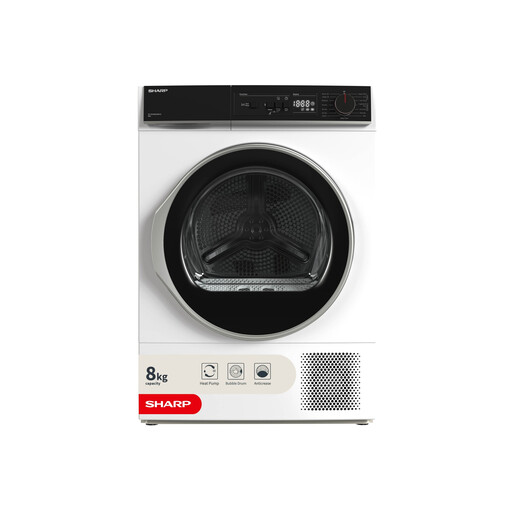
Sharp KD-NHA8S6GW1D-EN 8 kg heat-pump tumble dryer, white
Consider this 8 kg heat-pump model if that capacity matches the house’s regular cotton loads. Check its cotton-cycle duration, current energy label and permitted operating temperature for the intended location.
View on Joybuy
 No image available
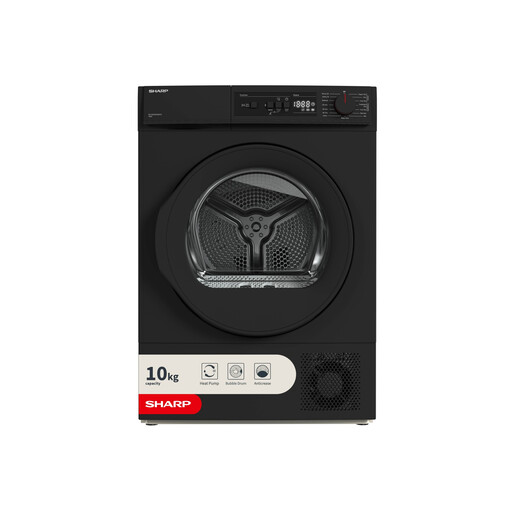
Sharp KD-NHA0S6GM1D-EN 10 kg heat-pump tumble dryer, matte black
Consider the 10 kg capacity if it matches the household’s usual larger loads. Confirm the cotton programme, space requirements, current energy label and permitted operating temperature before buying.
View on Joybuy
 No image available
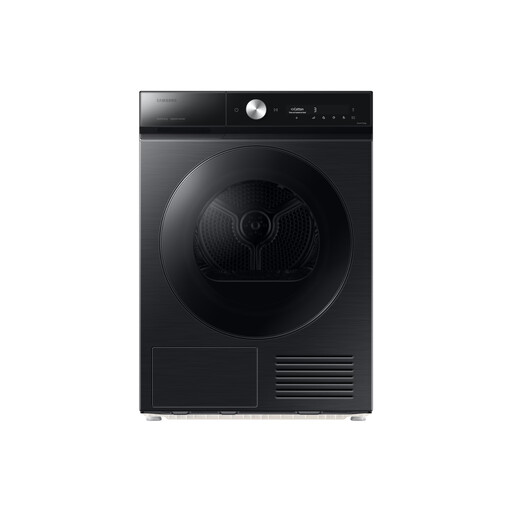
Samsung Series 8 AI Energy DV90BB9545GBS1 9 kg smart heat-pump tumble dryer, black
This 9 kg heat-pump model is worth comparing if the household’s loads call for that capacity. Check the full-load cotton programme separately from any smaller-load quick-cycle claim, along with the current energy label and permitted operating temperature.
View on Joybuy
 No image available
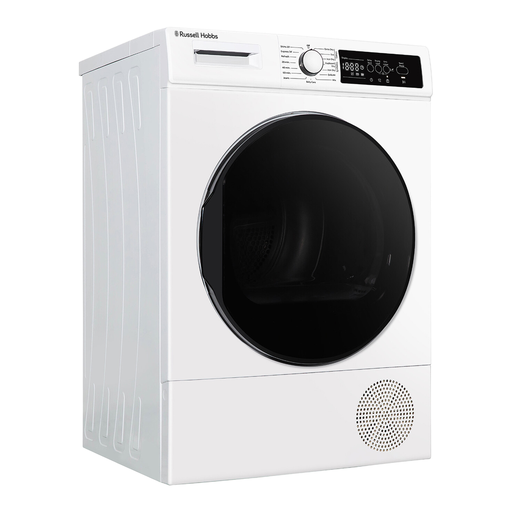
Russell Hobbs RH8HPTD1E12W 8 kg heat-pump dryer, white
Consider this 8 kg model for shared loads if its capacity suits the household. Plan who will empty the condensation tank and clean the door filter after each cycle, and check the cotton programme and permitted operating temperature.
View on Joybuy
Common questions
Is a heat-pump dryer worth considering for a student house?
Yes, particularly if the house expects frequent winter loads and can accommodate the higher purchase cost. Which? says heat-pump dryers generally cost more to buy but are the cheapest type to run; compare the exact models’ energy information and cotton programmes before deciding.
Can a heat-pump dryer go in a cold garage?
Only choose one for that location if its model-specific instructions permit the expected temperature. Beko says the BM3T3822NN operates at room temperatures as low as 0°C on specified everyday programmes, while Hotpoint makes a 0°C claim for the ColdGuard programme on its C HSD 82M WW UK; neither claim applies to every heat-pump dryer.
What should housemates do after each dryer load?
Clean the lint filter after each use and follow the model’s instructions for its water tank and other filters. West Yorkshire Fire and Rescue Service also advises keeping ventilation clear, avoiding overloads and not running the dryer while out or asleep.
Can we use an extension lead for a tumble dryer?
Avoid extension leads and adapters for a tumble dryer. Warwickshire County Council warns that they can overheat and advises connecting the appliance securely to an appropriate electrical outlet.
What electrical-safety rules apply in a rented student house?
In England, government guidance says landlords covered by the Electrical Safety Standards regulations must have the property’s electrical installation inspected and tested by a qualified person at least every five years and provide tenants with the report. The guidance excludes student halls of residence and some other arrangements; check your tenancy type and the rules in the nation where you live rather than assuming the England rule applies throughout the UK.


