
24/7 Customer Support

Free returns

Same-day & Next-day Delivery

Quality Guaranteed

Unlock Your Welcome Offers: FREE Delivery | Up to 80% OFF | Free 30-day JoyPlus trial
Download the APP
Road grit, harsh car washes, and changing British weather regularly leave vehicle paintwork looking tired, dull, and covered in fine swirl marks. A dual action polisher is the preferred power tool for home detailers looking to restore gloss without risking permanent paint damage. Unlike a high-heat rotary buffer that spins strictly on a fixed central axis, a dual action machine combines continuous circular rotation with an orbital oscillation pattern. This combined motion disperses friction evenly over the panel, preventing concentrated heat spots and providing a forgiving platform for both beginners and experienced weekend detailers.
Choosing the right polisher comes down to matching the machine layout to the tasks you tackle most often on your driveway. Broad, flat bonnets offer quick coverage when spreading liquid waxes across large bonnets and boot lids, whereas dedicated multi-speed orbital machines with swappable foam pads tackle genuine swirl correction, light compounding, and finishing. Compact cordless units with miniature backing plates resolve awkward areas around door shuts, roof pillars, and wing mirrors. Understanding how pad diameters, speed settings, and drive formats interact ensures you achieve a deep, showroom-level finish safely.
A frequent misstep among newcomers is purchasing a direct-drive rotary buffer expecting gentle swirl removal. Rotary machines spin continuously at high torque on a single axis, generating rapid panel heat that can scorch clear coat on sharp vehicle swage lines within seconds. A dual action polisher oscillates while spinning, creating an eccentric motion that naturally stalls if pressed down with excessive force, providing an essential safeguard against costly paintwork burns.
Purchasing a polisher with a single, oversized backing plate can severely limit your detailing reach. Modern British hatchbacks, saloons, and crossover SUVs feature complex curves, narrow bumper inserts, and sculpted wing mirrors. A wide 240mm bonnet machine glides smoothly over wide bonnets and flat roofs, but cannot safely polish tight curves or recessed badge areas. Knowing whether your primary task is rapid vehicle-wide waxing or precise scratch correction prevents buying an incompatible tool.
Not all orbital machines provide the variable speeds needed for multi-stage paint correction. Applying a fine liquid finishing glaze or carnauba wax demands a gentle, low-vibration speed to spread product without flinging it across trim. Conversely, working an abrasive compound to level clear coat imperfections requires consistent mid-to-high oscillation rates. Machines without stepped speed selectors force users into a single operating tempo that is either too sluggish to cut defects or too fast to spread wax cleanly.
The diameter of the polishing head dictates how quickly you cover panels and how easily the tool navigates complex body lines. Standardising on a format suited to your garage space and car size produces better results with less physical fatigue.
Adjustable operational speeds give you control over paint surface temperature and product spread. Stepped speed settings let you fine-tune the friction required for each detailing stage.
Power source determines runtime, manoeuvrability, and convenience when working outside in standard UK residential settings without nearby garage power points.
Explore our selection of dual action polishers tailored for different vehicle paintwork needs, from wide-panel waxing to intricate scratch repair.
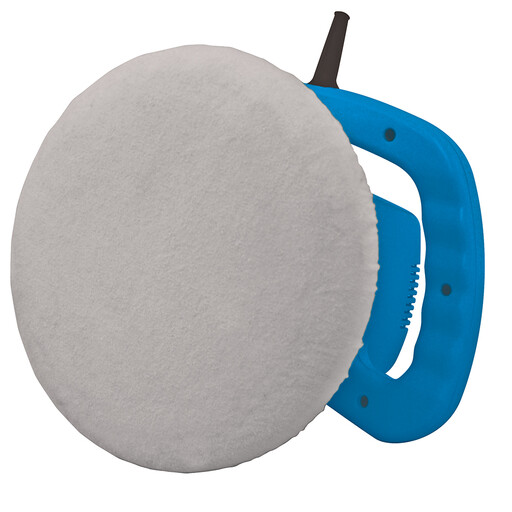
Why This Fits Their Persona: Constructed from lightweight plastic with a balanced dual-handle layout, this 110W machine makes rapid work of broad vehicle panels. Its generous 240mm orbital pad diameter covers substantial surface area on large estates, vans, and family SUVs, allowing you to buff liquid wax or protective sealant over the vehicle quickly. Synthetic and wool-alternative bonnets are supplied in the box, giving you the basic attachments needed for clean application and final residue removal without complex pad changes.
It bypasses the high-heat risk of traditional rotary tools by utilising random orbit action, ensuring even pressure distribution across broad expanses of flat metal without burning the edges. The twin ergonomic side handles give confident steering across panels, preventing hand cramps and helping you maintain light, consistent contact across clear coats.
The expansive 240mm pad footprint combined with 110W orbital action dramatically cuts the time needed to apply and buff protective wax coats over larger vehicles.
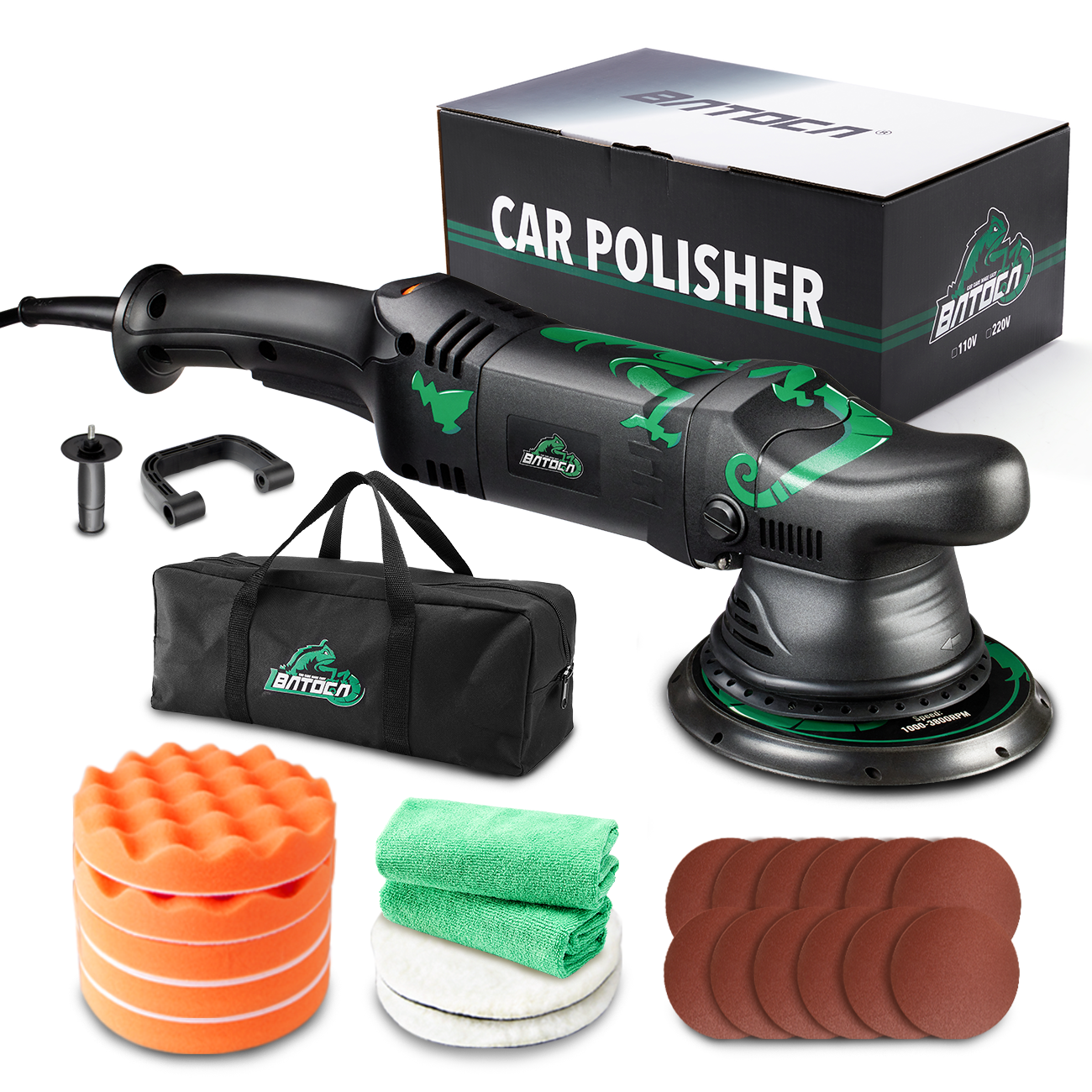
Why This Fits Their Persona: Finished in blue, this versatile BATOCA dual action buffer features a 5-inch working format paired with six variable speeds. The versatile 5-inch backing plate strikes a balanced middle ground, moving comfortably across standard bonnet panels, saloon doors, and curved boot lids. Included foam pads support the entire detailing progression, letting you switch smoothly between abrasive sanding, swirl removal buffing, high-gloss polishing, and delicate wax spreading using a single chassis.
Single-speed buffers often stall when attempting scratch correction or run too violently for liquid wax spreading. This machine avoids that limitation entirely through its 6-speed selector, giving you precise command over how fast the foam pad oscillates to match the abrasive grade of your chosen compound.
A six-tier variable speed control system paired with a 5-inch backing plate delivers balanced versatility for multi-step paint restoration across entire cars.
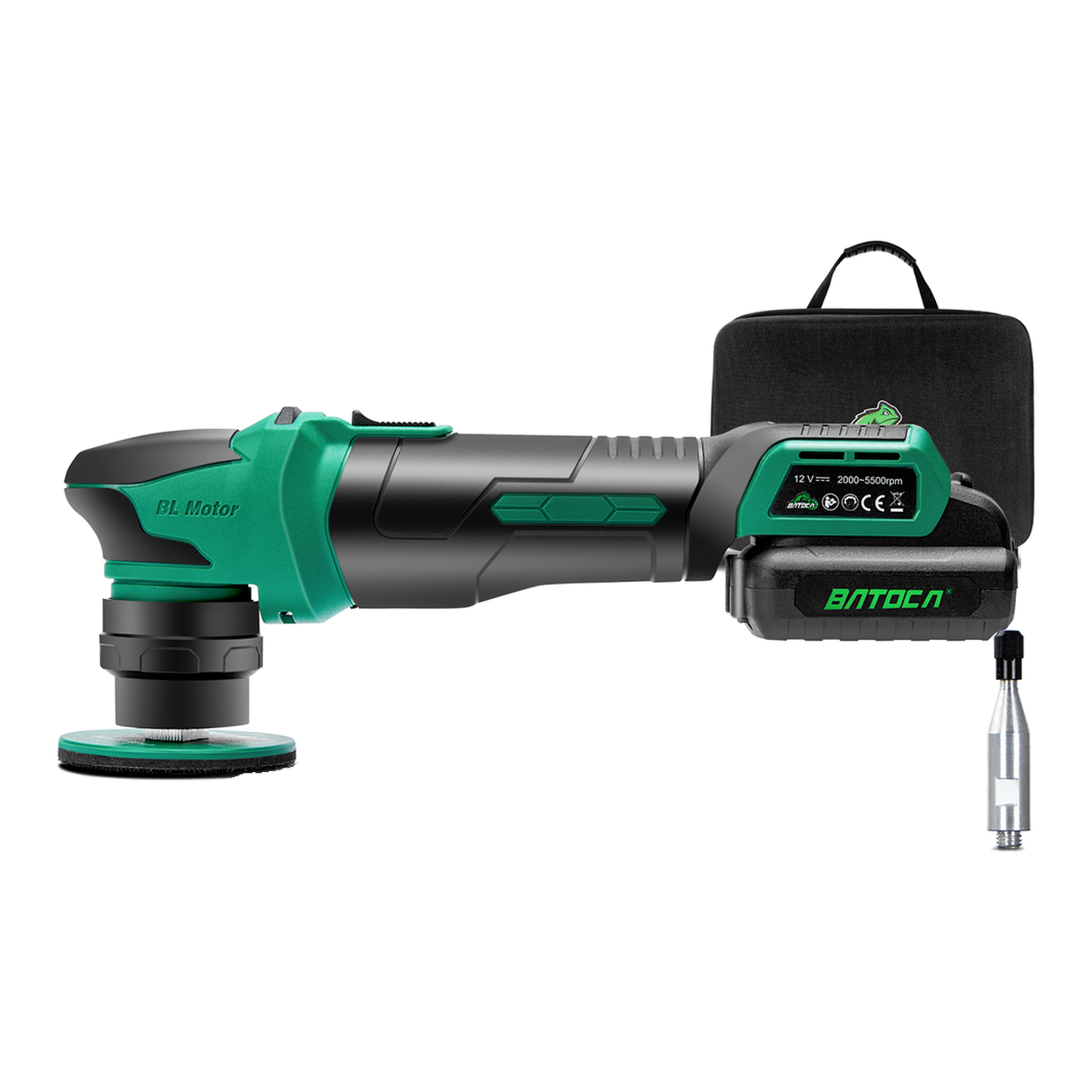
Why This Fits Their Persona: This cordless blue mini polisher features a modern brushless motor and operates in both rotation and orbital polishing modes. It arrives ready for delicate tasks with swappable 25mm and 75mm back plates, an extension rod, four selectable speeds, and two 12V 2.5Ah rechargeable batteries. This compact setup allows you to correct clear coat swirls around door cups, badge recesses, alloy wheel spokes, and delicate front grille louvres where standard polishers simply cannot reach.
Detailing confined areas with a standard-sized polisher often leads to accidental backing plate strikes against adjacent trim, rubber seals, or headlights. By providing 25mm and 75mm mini plates alongside cordless freedom, this kit prevents collateral damage in narrow vehicle recesses.
Swappable 25mm and 75mm backing plates coupled with a dual-mode brushless motor and twin 12V batteries provide unhindered precision for tight spot repairs.
A dual action polisher simultaneously spins and oscillates an abrasive pad to gently level microscopic layers of clear coat. This combined motion rounds off the sharp edges of swirl marks, light scratches, and oxidation, allowing light to reflect evenly and creating a deep, uniform gloss without building excessive surface heat.
Dual action polishers are inherently designed to prevent clear coat burns. Because the pad oscillates in an eccentric pattern rather than rotating under fixed gear-driven torque, it naturally slows down or stops spinning if you apply excessive downward pressure. As long as you keep the machine moving steadily and avoid leaning heavily on sharp body ridges, clear coat damage is exceptionally rare.
Use lower speeds to spread your polish or wax across the panel without slinging product over glass and unpainted plastic trim. Once the product is evenly distributed, increase to moderate or higher speeds to generate the gentle friction required to break down polishing compounds and remove swirls, before dropping back to low speed for a final finishing pass.