
24/7 Customer Support

Free returns

Same-day & Next-day Delivery

Quality Guaranteed

Unlock Your Welcome Offers: FREE Delivery | Up to 80% OFF | Free 30-day JoyPlus trial
Download the APP
A kitchen bin is one of the most frequently used items in any home, yet it's often an afterthought. Choosing the wrong one can lead to daily frustrations, from lingering odours to broken parts. A well-chosen dual compartment kitchen bin can streamline your recycling efforts, keep your space hygienic and even complement your decor.
However, the market is filled with options that promise much but deliver little. Before you invest, it's crucial to understand the common pitfalls that lead to buyer's remorse.
fingerprint proof bin sounds ideal, but low-quality coatings can be a disappointment. They often attract smudges and grease just as easily as standard stainless steel and can be difficult to clean without leaving streaks, defeating the purpose.By understanding what to look for, you can avoid these issues and find a reliable kitchen recycling bin that serves your household for years.
To make an informed choice, focus on these core parameters rather than marketing buzzwords.
The total volume, measured in litres, is the first consideration. A 60L kitchen bin is a popular choice for families, but the configuration is just as important. A 2 compartment bin with a 2 x 30L setup provides ample space for both general waste and recycling. For smaller households or kitchens, a 40L (2 x 20L) double kitchen bin might be more suitable. Consider your local council's recycling schedule and your family's waste output to determine the right balance.
The material dictates a bin's durability and ease of maintenance. A stainless steel pedal bin is often preferred for its modern look and robust nature. However, not all steel is equal. Look for information on the steel's thickness and quality. While no surface is completely immune to marks, a high-quality brushed or coated finish will be far more resistant to fingerprints and easier to wipe clean. For a different aesthetic, powder-coated steel, such as a black kitchen bin, can offer similar durability with a contemporary finish. The inner buckets should be made from durable, easy-to-clean plastic (like PP or ABS) and feature handles for easy removal.
The lid is a critical component for hygiene and convenience. A soft close rubbish bin is a non-negotiable feature for a peaceful kitchen, preventing the loud clang of a closing lid. The mechanism should be buffered and smooth. Also, check for a 'stay-open' function, which allows the lid to be locked at a 90-degree angle. This is incredibly useful when you're peeling vegetables or clearing plates and need continuous access. Finally, ensure the pedal is made from reinforced steel to withstand repeated daily use.
Based on these practical criteria, we've matched several models to different household needs.

Why This Fits Their Persona: A busy family generates a lot of waste and recycling. This bin's large 2 x 30L capacity handles it all, while the dual-pedal design means kids can easily use the correct side without confusion. It's built for high-traffic kitchens.
It directly counters the flimsy pedal trap with high-density stainless steel pedals designed for durability. The soft-close lids also provide a good seal to contain odours from food waste.
Generous 60L total capacity with two independent 30L buckets and pedals for true waste separation. The fingerprint-resistant stainless steel finish is practical for a family home.
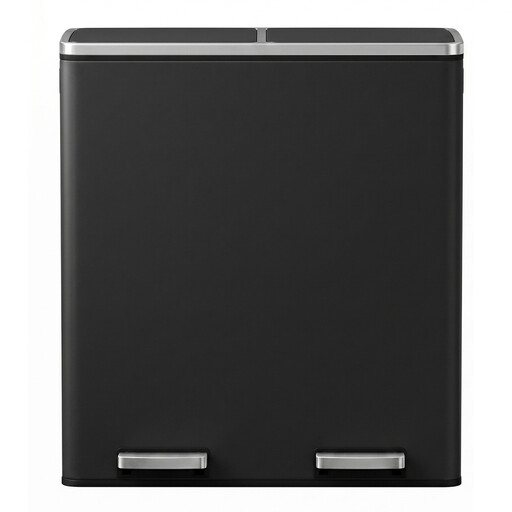
Why This Fits Their Persona: For those who see the kitchen as the heart of the home, aesthetics matter. This bin's sleek, minimalist black steel finish integrates seamlessly into modern kitchen designs with dark fixtures or monochrome palettes, without compromising on capacity.
It tackles the odour problem with hinged, soft-close lids designed to be airtight. The powder-coated steel exterior avoids the streaky cleaning issues associated with lower-quality 'smudge-proof' finishes.
The elegant black steel design offers a stylish alternative to standard stainless steel. It features two removable inner buckets with handles for easy emptying and cleaning.
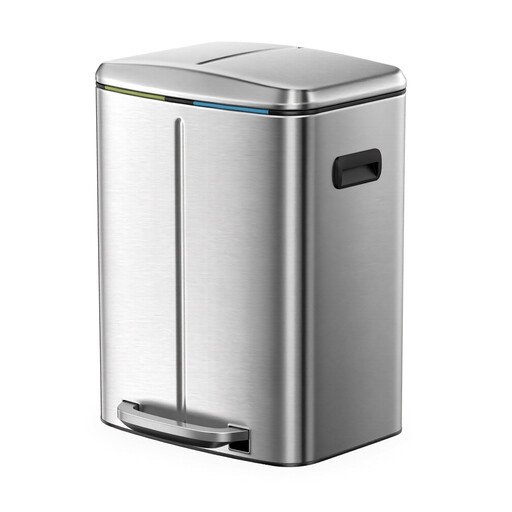
Why This Fits Their Persona: Living in a flat or a home with a smaller kitchen requires smart use of space. This bin's 40L (2 x 20L) capacity and slightly smaller footprint provide effective waste separation without dominating the floor area.
The quiet, soft-close lid is a significant benefit in smaller living spaces where noise travels easily. Its durable steel construction and reliable pedal ensure it withstands daily use, avoiding the flimsy pedal trap.
A space-efficient design with a practical 40L total capacity. It includes a rear bag hole to keep liners tidy and a 90° stay-open function for easier cleaning tasks.
We have compiled a complete, real-time list of products that fully satisfy these strict selection criteria and UK safety regulations.
The key is a combination of a good bin and good habits. Choose a model with a well-fitting, airtight lid. Empty the general waste and food scrap sections frequently, especially in warmer weather. Wiping the removable inner buckets with a disinfectant or a solution of vinegar and water each time you change the liner will also help prevent odour build-up. Some bins also have compartments for activated carbon filters, which can help absorb smells.
No finish is entirely immune to marks, especially from greasy or wet hands. However, a quality fingerprint-resistant coating makes a significant difference. It reduces the visibility of everyday smudges and allows them to be wiped away easily with a soft, damp cloth without leaving streaks. Avoid using abrasive cleaners or scouring pads, as these can damage the protective coating.
For a family of three to four, a total capacity of 50-60 litres is generally a good starting point. A 60l kitchen bin configured as two 30-litre compartments provides a balanced solution for managing a week's worth of recycling and general waste, aligning well with most council collection schedules. For smaller households of one or two people, a 30-40 litre bin is often sufficient.