
24/7 Customer Support

Free returns

Same-day & Next-day Delivery

Quality Guaranteed

Unlock Your Welcome Offers: FREE Delivery | Up to 80% OFF | Free 30-day JoyPlus trial
Download the APP
Juggling multiple bins for general waste and recycling can quickly turn a tidy kitchen into a cluttered obstacle course. If you are tired of overflowing containers, lingering odours and the general inconvenience of separating your rubbish, a single, integrated solution might be the answer. A dual compartment recycling bin is designed to streamline this process, but not all are created equal.
Many households invest in a new double kitchen bin only to find it fails within months. Before you buy, it is crucial to understand the common design flaws that are often overlooked.
To find a reliable kitchen waste separation bin that will last, focus on a few core parameters rather than marketing hype. Analysing these details will help you select a model that fits your home and lifestyle.
The most common and practical configuration for a family home is a 60-litre recycling bin, typically split into two 30-litre sections. This provides ample space for a week's worth of general waste and mixed recyclables without requiring constant emptying.
Before purchasing, measure your intended space carefully. Pay close attention to the total height of the bin with the lid fully open, ensuring it will not hit overhanging kitchen cabinets or shelves. A bin that fits perfectly when closed but cannot open properly is a frequent and frustrating oversight.
The material of your bin affects its durability, ease of cleaning and appearance.
The small details often make the biggest difference in daily use.
We have identified several models that address the common pitfalls and align with different household needs.

Why This Fits Their Persona: This large-capacity rubbish and recycling bin combo is ideal for a family. The dual 30L compartments handle a high volume of waste, while the separate pedals for each side offer hygienic access during busy meal preparations.
It features high-density stainless steel pedals designed for durability and two separate inner buckets with handles, solving the 'fragile pedal' and 'awkward bucket' problems.
The fingerprint-resistant stainless steel finish is easy to clean and the soft-close lids prevent noise. A stay-open function is useful for longer tasks.
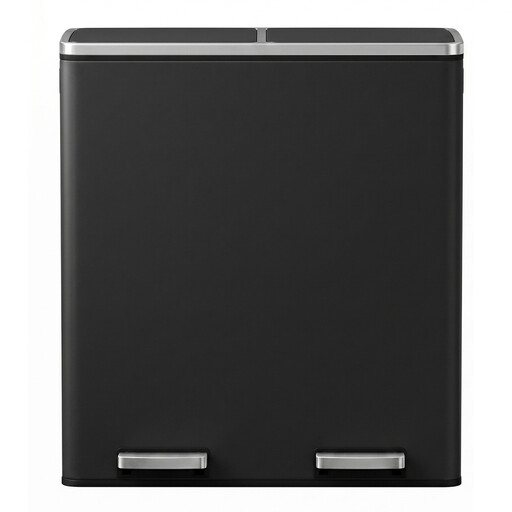
Why This Fits Their Persona: For those who value aesthetics as much as function, this bin's sleek black steel exterior and minimalist design integrate seamlessly into modern kitchens. It offers a generous 60L capacity without appearing bulky.
The airtight, soft-close lids effectively contain odours, addressing the 'gappy lid' issue. The removable PP plastic inner buckets have their own handles for easy emptying.
Its key advantage is the combination of a stylish, powder-coated steel finish with practical features like pedal operation and quiet-closing lids, making it a functional statement piece.
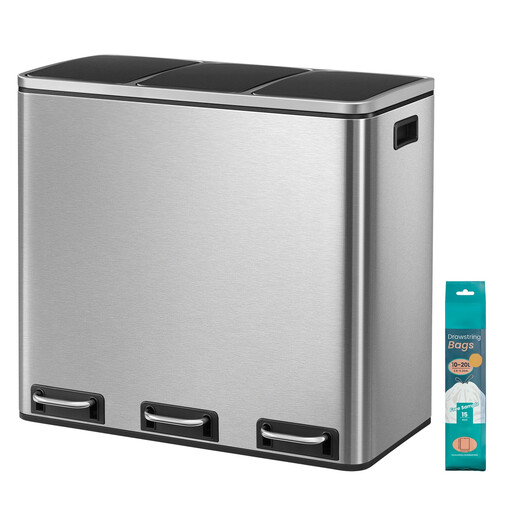
Why This Fits Their Persona: For households that diligently separate food scraps, glass and mixed recycling, a standard **2 compartment bin** is not enough. This model offers three 18L sections, allowing for meticulous sorting in one compact unit.
Each of the three compartments has its own pedal and soft-close lid, built into a durable steel frame. All three inner buckets are fully removable for easy, separate emptying.
Its primary advantage is providing a dedicated solution for advanced waste sorting (e.g., general, recycling and food) within a single, space-efficient footprint.
We have compiled a complete, real-time list of products that fully satisfy these strict selection criteria and UK safety regulations.
For a typical family of four in the UK, a total capacity of 50-60 litres is generally sufficient. A 60-litre recycling bin split into two 30-litre compartments (one for general waste, one for recyclables) is a popular and practical choice that balances capacity with a manageable footprint in the kitchen.
The most effective method is to rinse food and drink containers (like tins, jars and plastic bottles) before placing them in the recycling compartment. Also, ensure your bin has a well-fitting lid. For persistent odours, you can periodically wash the inner buckets with warm, soapy water and ensure they are completely dry before replacing them. Some bins are also compatible with carbon odour filters.
They can be, but many modern stainless steel recycling bins now come with a fingerprint-resistant or smudge-proof coating. This special finish repels oils and marks, meaning the exterior can be kept looking pristine with a simple wipe from a soft, damp cloth. Avoid using abrasive scourers or harsh chemical cleaners, as these can damage the protective coating.