Dense-data comparison workers
If you keep technical tables, PDFs, product pages or documentation open together, usable screen space and window arrangement matter more than screen size alone.


For comparing technical specifications on two physical screens, start by checking that your computer or dock can run two independent extended displays at the resolution you want. Two matching QHD monitors let you place a source on each panel; an integrated dual-monitor stand addresses alignment and desk fit, while one tall display suits vertical documents but does not give you two separate screens. Check native resolution, stand movement and connection compatibility before choosing.
If you keep technical tables, PDFs, product pages or documentation open together, usable screen space and window arrangement matter more than screen size alone.
If your laptop anchors the workstation, check its external-display limits before choosing monitors, a dock or a display chain. USB-C charging and Ethernet may also affect how you connect at your desk.
If two screens must fit a restricted desk area, panel alignment, mounting clearance and adjustment range deserve as much attention as the display specifications.
Decide whether you need two independent panels or a single continuous workspace, then check your computer’s display support and the space available on your desk.
Choose when: You want a specification sheet or application on each independently positioned screen.
Trade-off: You need room for two panels and a computer or dock that supports both as extended displays.
Choose when: Keeping two physical screens aligned and adjustable is central to your desk arrangement; LG’s 27QP88DP-BS is an example with a clamp-and-grommet stand.
Trade-off: The mounting method must suit your desk, and any intended display chain needs device-specific compatibility checks.
Choose when: Long tables and documents make vertical space more useful to you than two separate panels; LG’s 16:18 DualUp illustrates this layout.
Trade-off: It remains one physical screen, and LG’s UK listing marks the cited 28MQ780-B model as discontinued.
| Concern | What to check | Who this matters to |
|---|---|---|
| Workspace for two sources | Compare native resolution and aspect ratio with the way you place your documents: side by side or vertically. | If I need two dense specification sheets visible together, I want enough room to read both without continually rearranging windows. Around 33% of consumers put workspace first. |
| Display compatibility | Check the exact computer or dock’s external-display count, supported resolution and video connections. | A laptop-led setup only works for me if it can extend the desktop across the screens I intend to use. For around 27% of consumers, connection compatibility is the primary concern. |
| Positioning and desk fit | Measure desk space and mounting clearance; compare the stand’s adjustment and mounting requirements. | With limited desk room, I need the panels aligned where I can use them, not merely able to fit side by side. Desk fit comes first for around 20% of consumers. |
| Colour and viewing comfort | For colour-coded material, compare model-specific colour specifications; assess stand adjustment and comfort-related claims separately. | If diagrams and colour-coded charts are part of my comparisons, I need to assess how the displays present them during longer sessions. Around 20% of consumers prioritise colour and viewing comfort. |
A USB-C connection or a DisplayPort output alone does not establish that a particular computer, dock and cable arrangement can drive two independent displays.
Check the exact computer’s external-display limit and supported resolutions against the dock and monitor documentation. Microsoft Support, Apple Support and DisplayPort describe different parts of extended-display setup and display chaining.
Your setup may require a compatible dock, adapter or additional cable.
A clamp or grommet mount only helps with panel placement if your desk has a suitable mounting point and enough clearance for the screens to move.
Measure width, depth and rear clearance, then check the mounting and adjustment requirements for the exact stand.
If the desk cannot take the intended mount, you may need a different stand or arm arrangement.
A larger diagonal does not tell you how many native pixels are available. A tall single panel also changes window layout without becoming two independent screens.
Compare resolution, aspect ratio and physical size together, using the dimensions of the documents you expect to keep open.
UK guidance from the Department for Energy Security and Net Zero and the Office for Product Safety and Standards includes electronic displays in its energy-information scope.
Compare the energy label and product information sheet for the exact monitors you are considering, rather than relying on screen size or a retailer title.
Dell’s Pro 24 Plus P2425HE is a laptop-oriented example: Dell UK describes it as a 23.8-inch FHD USB-C hub monitor with up to 90 W power delivery.
Lenovo UK lists the ThinkVision P27h-30 as a 27-inch, 2560 × 1440 IPS monitor with USB-C, DisplayPort output, Ethernet and a USB hub.
LG’s cited monitors illustrate two different layouts: the 27QP88DP-BS puts two QHD panels on an Ergo Dual stand, while the 28MQ780-B DualUp uses one tall 16:18 panel.
These choices include individual WQHD and 4K monitors that could form part of a multi-screen desk, plus ultrawide panels for arranging comparison windows on one screen. Check package contents, desk fit and your computer’s display support for the arrangement you plan to use.
 No image available
Consider this single wide panel if you want to arrange comparison material across one screen rather than use two physical monitors.
The named variant has a 32:9 QD-OLED display, 1800R curve, 240 Hz refresh rate and HDMI, DisplayPort and USB-C connections.
If you intend to connect two sources at once, confirm the supported picture-by-picture layout and input combinations before ordering.
 No image available
Consider this individual WQHD monitor if you plan to put a separate document on each of two displays.
Its product name identifies an IPS panel and WQHD resolution. Confirm the contents if you need a matching pair, and check that your computer or dock can drive two extended screens.
 No image available
This is another individual WQHD option for a proposed pair of separate comparison screens.
The product name specifies an IPS panel. Before building a laptop-led pair, check the number of displays your computer supports, the package contents and whether the monitor’s charging connection meets your laptop’s requirements.
 No image available
Consider this individual display if a 4K screen fits your document layout, either on its own or as part of a planned multi-screen desk.
The named variant specifies an IPS panel and USB-C. Check desk space, comfortable text scaling and your computer’s supported resolution; confirm laptop charging compatibility if you plan to use USB-C for power.
 No image available
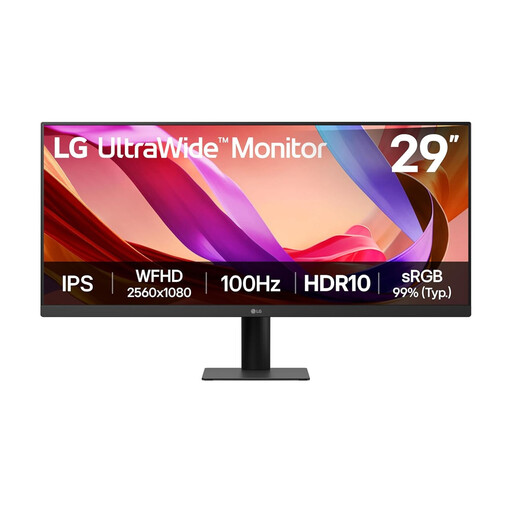
This single ultrawide screen is an option if you would rather arrange comparison windows horizontally than set up two physical panels.
Its named specifications include UWFHD 1080p resolution, an IPS panel, 100 Hz refresh rate, HDMI and DisplayPort. Check whether that workspace and the available positioning suit your documents and desk.
No: the supported number of external displays depends on the exact laptop and connection setup. Windows and macOS provide extended-desktop settings, but check your computer’s display specifications, dock, ports and cables before buying two monitors.
No. A display chain passes video through an intermediate monitor, so the source, connections and displays must support the intended configuration. DisplayPort guidance describes this arrangement; check device support and bandwidth for the resolutions you plan to use rather than relying on the presence of an output socket alone.
Choose two QHD monitors when you need separate physical workspaces that you can position independently. A tall 16:18 panel makes more sense when your comparison is mainly vertical and one continuous screen suits your workflow; it does not provide two separate panels.
Compare the energy label and product information sheet for each exact model you are considering. UK energy-information guidance from the Department for Energy Security and Net Zero and the Office for Product Safety and Standards includes electronic displays; use model-specific information rather than assuming similarly sized screens have the same rating.