Audio-first dual-screen editors
Keep the editing timeline and waveforms on one screen while using the other for clip lists, metadata, plug-ins or notes. Matching screen size and resolution can make moving windows between them more straightforward.


For field-recording edits across two screens, start with a matching pair and confirm that your computer supports two extended external displays. Choose QHD if your work is mainly audio and 4K detail is not a priority; consider 4K for detailed timelines or accompanying visual work. Plan for readable interface scaling at 4K, and check the host’s video and charging support before relying on USB-C or Thunderbolt.
Keep the editing timeline and waveforms on one screen while using the other for clip lists, metadata, plug-ins or notes. Matching screen size and resolution can make moving windows between them more straightforward.
If you edit on a laptop after recording on location, check its supported external-display count before choosing monitors for a USB-C or Thunderbolt desk. Apple Support advises checking the exact Mac model’s ports, display support and cables.
When the same desk is used for video, artwork or other visual deliverables, 4K resolution and the exact model’s stated colour features become relevant alongside the audio-editing workspace.
Check the computer’s two-display capability first, then decide how much screen detail and visual-work support your edits require.
| Concern | What to check | Who this matters to |
|---|---|---|
| Two extended displays | Check the exact computer’s external-display limit and map both screens to supported video ports or dock outputs. | If I edit from a laptop, I need both monitors to show independent workspaces, not the same picture twice. Around 37% of consumers put that connection requirement first. |
| Timeline and waveform space | Compare matching QHD and 4K screen sizes and native resolutions; consider whether 4K interface scaling keeps controls readable. | With a long timeline on one screen and supporting applications on the other, I want enough usable space without making controls awkward to read. Roughly 36% of consumers prioritise that workspace need. |
| Visual work and positioning | Match the exact model’s colour specifications to your deliverables, and check stand adjustment or mounting for side-by-side alignment. | When picture or artwork accompanies my audio edits, I need suitable colour features and screens I can position comfortably. About 27% of consumers place this visual-work and positioning need first. |
A monitor’s USB-C connection or charging capability does not increase the computer’s supported number of external displays. Apple Support advises checking the computer’s display support, ports and cables.
Identify your exact computer model and trace a supported video connection to each monitor before ordering a pair.
Depending on that connection path, you may also need a compatible dock, adapters or different cables.
4K can provide greater pixel density than QHD at the same screen size, but scaling may be needed to keep editing controls readable. The computer must also support the intended resolution and refresh-rate combination on both outputs.
Decide whether timeline detail or visual work warrants 4K for you, then check the host’s display modes and your preferred interface scaling.
Colour-space specifications matter when picture, graphics or colour-sensitive deliverables are part of the job; they do not establish an improvement to sound editing.
Match colour features to the visual work you actually deliver. For audio-only edits, settle display compatibility, workspace and screen positioning first.
Dell’s UltraSharp U2724D and U2725QE illustrate different 27-inch routes for a matching editing pair.
The PD2705U is a 27-inch 4K option to consider when audio editing shares the desk with standard-colour-space visual work.
LG’s 27UP850K-W is a 27-inch 4K IPS example for a desk that also handles visual references.
The ProArt PA279CRV is a 27-inch 4K option for editors whose recordings accompany picture or graphics work.
These monitors offer QHD and 4K options for the two-screen editing desk. If you want a matching pair, check that you can obtain two units of the chosen model and that your computer can drive both at the intended settings.
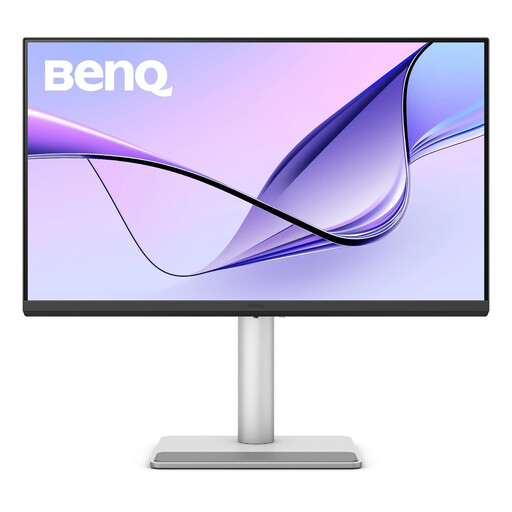 No image available
Consider this model when a 4K editing screen will also be used for visual references.
The name specifies a Nano Glossy IPS panel, USB-C, HDR, P3 and a height-adjustable stand. Check the laptop’s video and charging requirements before planning a USB-C connection to two screens.
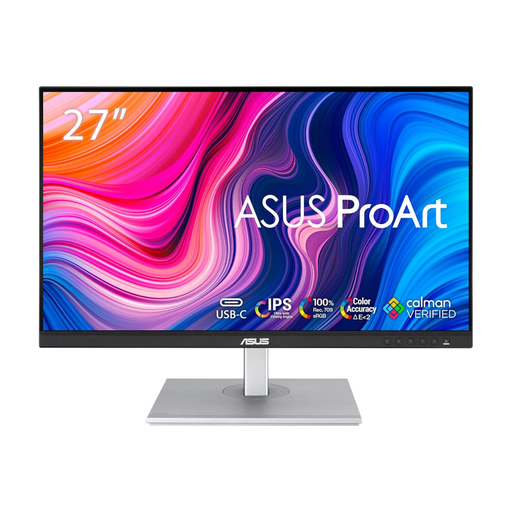 No image available
For mainly audio-focused edits, this WQHD model provides a resolution choice to compare with a 4K pair.
Check the stand and connection requirements against your desk and computer before choosing two matching units.
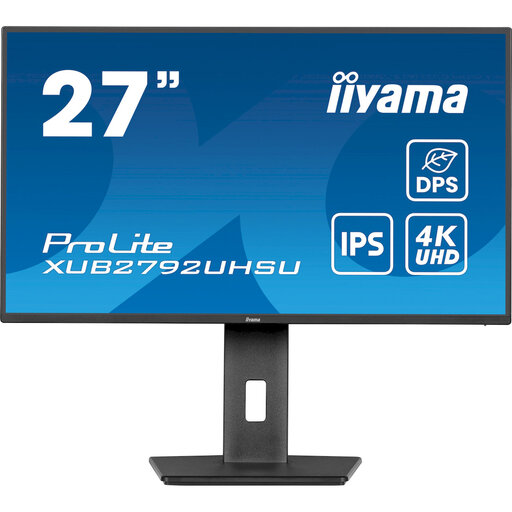 No image available
This is a 4K option to consider when the editing timeline shares space with detailed visual material.
The name specifies a 16:9 LED monitor with a matte-black finish. Confirm the inputs and stand arrangement needed for your two-screen desk.
 No image available
Consider the 27UP650K if you want a 4K screen for editing alongside visual references.
Its name specifies 60 Hz, 95% DCI-P3, HDMI, DisplayPort and built-in speakers. Confirm the refresh mode you intend to use with your computer before buying a pair.
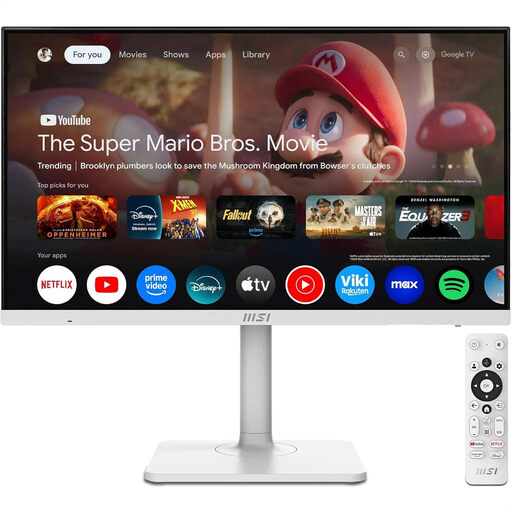 No image available
This model offers a 4K resolution choice for a timeline and supporting applications.
The name specifies USB-C with 65 W power delivery. Confirm the exact model identifier and USB-C video mode, as well as whether your computer can run two extended screens, before relying on it for a laptop desk.
No. A USB-C connector alone does not establish video support or the number of extended displays a laptop can run. Check the exact computer’s display-support specification, then the required cables, adapters or dock; Apple Support recommends checking those details for each Mac model.
Not necessarily, but matching size and native resolution is a practical starting point if you want similar scaling and physical alignment across the desk. For a mixed pair, compare each model’s resolution, screen finish, stand adjustment and colour settings before deciding how you will divide the work between them.
After connecting them, use Settings, System, then Display to identify the screens and arrange their on-screen positions to match the desk. Microsoft Support explains that Windows lets you adjust each connected display’s settings; also check that you have selected an extended layout if you need separate workspaces.