What matters when choosing
Decide whether the second screen needs to travel as part of the laptop or remain a separate piece of equipment. Then check the input method and how the complete setup will fit your study space.
Integrated dual-screen laptop
Choose it when: You regularly change study locations and want two built-in displays without connecting a separate monitor.
Trade-off: The screens, keyboard arrangement and stand belong to one device, so their working positions need to suit your desks and typing habits.
Laptop plus portable monitor
Choose it when: You want to position the second screen separately or use it with another compatible laptop.
Trade-off: You have another item to carry and set up, and the laptop, monitor and power arrangement must work together.
| Concern |
What to check |
Who this matters to |
| Two screens on the move |
Check the usable display areas and how the keyboard and stand work in two-screen mode. |
If I move between lectures and the library, I want my reading visible while I write notes without unpacking another display. Around 33% of consumers put that built-in mobility first. |
| A separate second screen |
Match the laptop’s video output to the monitor’s input; check its power needs and stand. |
When I mostly study at a desk, I would rather keep the monitor if I change laptops, provided the next laptop is compatible. That flexibility comes first for around 27% of consumers. |
| Touch and pen input |
Check touch support on the intended screen and whether a compatible pen is included or optional. |
For diagrams and annotations, I need to write on a display while source material stays open. Around 20% of consumers make that note-capture method their primary concern. |
| Long-session positioning |
Check screen tilt, glare, keyboard position and the space available on your desk. |
If I spend long stretches reading and writing, I need room to place both screens and the keyboard sensibly. Comfortable positioning is the first concern for around 20% of consumers. |
Joybuy products for these setups
The dual-screen laptop below suits a single-device approach; the portable monitors are separate displays to pair with a compatible laptop. For any monitor, check the intended laptop’s video output and the complete power arrangement before buying.
 No image available
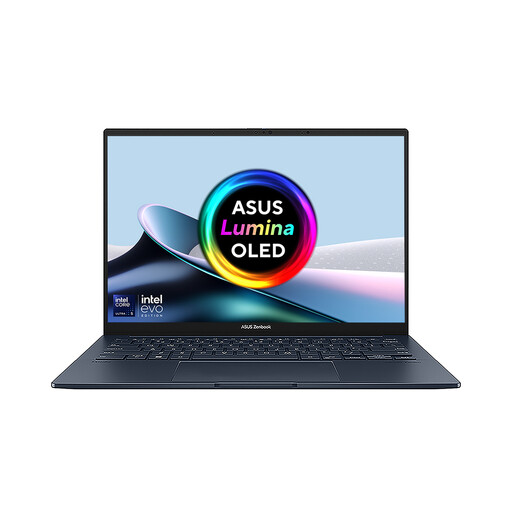
ASUS Zenbook DUO UX8406CA-QL135W dual OLED laptop
Consider this integrated model if you want two screens in the laptop you carry between study locations.
The product name specifies 14-inch dual OLED touch displays, an Intel Core Ultra 7 255H, 16 GB LPDDR5X RAM and a 1 TB SSD.
Confirm the screen resolution for this exact configuration before buying, and check whether its keyboard and stand positions suit your study surface.
View on Joybuy
 No image available
ASUS ZenScreen MB166CR FHD portable monitor
This is a separate display to consider if you want to keep study material open beside your laptop screen.
The product name identifies the MB166CR FHD variant. Check your laptop’s video connection and the stand and cable supplied with the monitor before planning the setup.
View on Joybuy
 No image available
UPERFECT 14-inch 60 Hz touchscreen portable monitor
Consider a separate touchscreen if you want touch input alongside the display built into your laptop.
The product name specifies a 14-inch screen, 60 Hz refresh rate, VESA compatibility and a stand adjustable through 180°. Check the video connection, touch compatibility and power requirements against the laptop you intend to use.
View on Joybuy
 No image available
UPERFECT 18.4-inch 4K QLED portable monitor
This separate display is worth considering if your study desk has room for an 18.4-inch monitor beside the laptop.
The product name specifies 3840 × 2160 resolution, USB-C and Mini HDMI connections, an integrated mount and VESA compatibility. Check which input works with your laptop, how the monitor is powered and whether its size suits the places you study.
View on Joybuy
Frequently asked questions
Will any USB-C laptop work with a portable monitor?
No. USB-C describes the connector, not a guarantee of video output. Lenovo specifies DisplayPort Alt Mode for the ThinkVision M14d, while ASUS ROG Support also describes driver-dependent DisplayLink arrangements; compare the exact laptop port with the monitor’s connection and power requirements.
Can a portable monitor use my laptop’s battery?
Yes, depending on the monitor and how it is powered. LG says its +view 16MR70 draws from the connected laptop battery unless a suitable USB-C charger is used, so check the power arrangement if you expect to study away from a socket.
Could I organise readings and notes on one laptop screen instead?
Yes. Microsoft describes Snap Layouts, Snap Groups and Desktops in Windows 11 for arranging windows on one display. Try that arrangement if carrying another screen is inconvenient; it does not add the physical display area of a second monitor.
Is screen size enough to judge comfort during long study sessions?
No. Consider where the screens, keyboard and notes will sit, as well as glare and desk space. The Health and Safety Executive’s workstation guidance considers equipment, furniture and working conditions together; its worker-focused rules are not a general purchasing requirement for students.


