
24/7 Customer Support

Free returns

Same-day & Next-day Delivery

Quality Guaranteed

Unlock Your Welcome Offers: FREE Delivery | Up to 80% OFF | Free 30-day JoyPlus trial
Download the APP
As our digital lives become spread across laptops, tablets and smartphones, the simple act of moving a file can feel unnecessarily complicated. A dual USB flash drive, with both the classic USB-A and modern USB-C connectors, promises a simple solution. Yet, the market is filled with options that often over-promise and under-deliver. Many buyers find themselves with a drive that is frustratingly slow or breaks after a few months of use.
Before you make a purchase, it's crucial to understand the common pitfalls that lead to disappointment. We've identified two key issues that UK consumers frequently encounter:
By paying attention to a few core specifications, you can easily sidestep these issues and find a reliable drive that meets your needs.
Navigating the technical jargon is simpler than it looks. Focus on these three areas to ensure you get a high-performing and durable dual USB flash drive.
The USB standard is the most important factor for performance. You will mainly see two types:
Remember, to achieve these speeds, both your device's port and the flash drive must support the same standard. A high-speed USB stick will be limited by the speed of the port you plug it into.
The physical construction of a flash drive is critical for its longevity. A metal USB drive, typically made from zinc or aluminium alloy, offers superior durability and protection against drops and knocks compared to plastic.
Equally important is how the connectors are protected:
A robust metal body also helps with heat dissipation, which is important for maintaining stable performance during long file transfers on a high-speed USB stick.
How much storage you need depends entirely on your use case.
Based on these practical criteria, we've identified several models that align with the needs of different UK users.
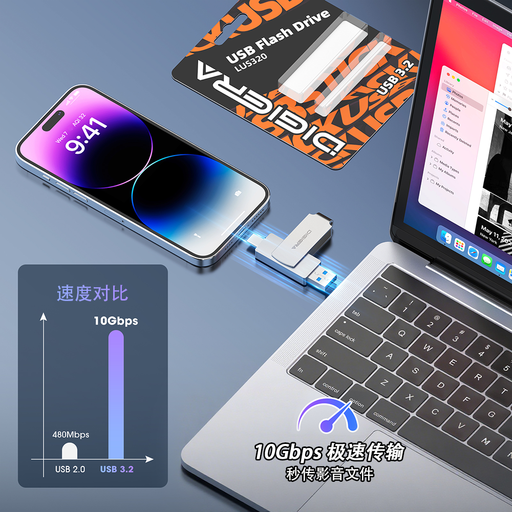
Why This Fits Their Persona: An excellent choice for students and office professionals who need to move files between a work laptop (USB-A) and a personal tablet or smartphone (USB-C). It offers a great balance of speed, capacity and durability for daily use without a premium price tag.
The 360° metal swivel casing is far more robust than cheap plastic alternatives, protecting the connectors from damage inside a bag or pocket.
Features a solid aluminium alloy body and respectable USB 3.2 Gen 1 speeds (up to 500MB/s read) for quick file transfers.
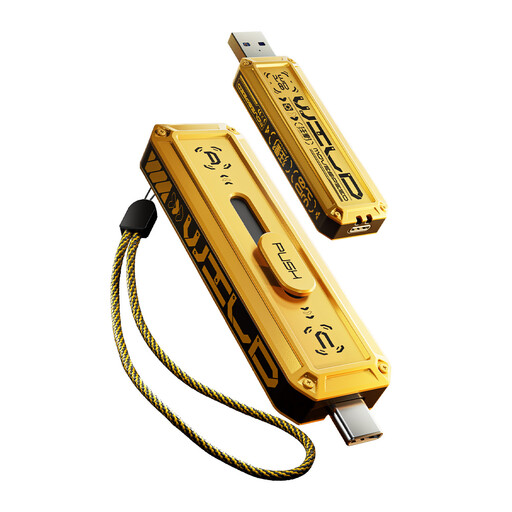
Why This Fits Their Persona: Built for videographers, designers and gamers who cannot afford to wait. The massive 1TB capacity and extreme speed are perfect for transferring 4K video projects, large game files, or entire photo catalogues in seconds, not minutes.
It sidesteps the "up to" speed trap by using a USB 3.2 Gen 2 interface and 3D NAND flash, delivering genuine SSD-level performance (up to 1090MB/s) that holds up under heavy use.
Blistering transfer speeds capable of moving a 1GB file in about one second. The durable zinc alloy body also effectively dissipates heat during sustained transfers.
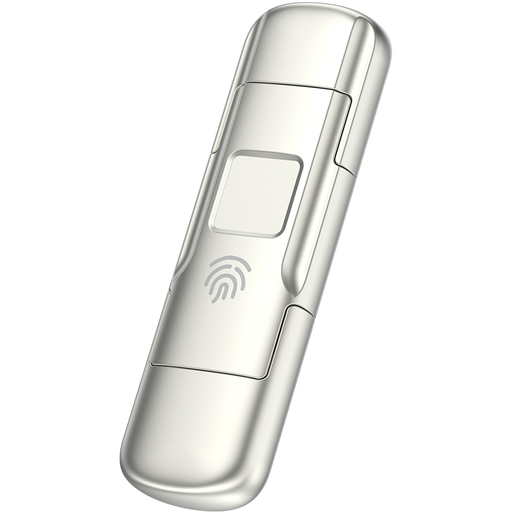
Why This Fits Their Persona: For anyone handling sensitive client information, financial records or private personal data. This drive makes security the priority, offering peace of mind that your files are protected even if the drive is lost or stolen.
This is a true encrypted flash drive that goes beyond basic software. The combination of AES-256 hardware encryption and biometric access provides a level of security that cannot be easily bypassed.
Advanced fingerprint recognition supports up to 10 different users, making it suitable for secure sharing within a team, while still offering fast SSD-level performance.
We have compiled a complete, real-time list of products that fully satisfy these strict selection criteria and UK safety regulations.
There are two common reasons for this. Firstly, the advertised speed is a theoretical maximum, usually for reading large, single files. Performance will be slower when writing data or transferring many small files. Secondly, you might be plugging a fast USB 3.2 drive into an older, slower USB 2.0 port on your computer, which will limit the speed to that of the port.
Yes, this is one of their most useful features. For Android phones and modern iPhones with a USB-C port, you can plug the drive in directly. Your phone will recognise it as external storage, allowing you to copy photos, videos and other files to the drive to free up internal memory. This is a quick way to back up your device without needing a computer or cloud subscription.
For most users, yes. A metal casing provides significantly better protection against the daily wear and tear of being carried in a pocket or bag. It also helps dissipate heat generated during high-speed file transfers, which can protect the internal components and ensure more stable performance over the long term. Given the small price difference, the added durability is a worthwhile investment.