
24/7 Customer Support

Free returns

Same-day & Next-day Delivery

Quality Guaranteed

Unlock Your Welcome Offers: FREE Delivery | Up to 80% OFF | Free 30-day JoyPlus trial
Download the APP
Buying duck products online in the UK can be convenient, particularly when you are looking for Chinese duck delicacies or specialist Asian ingredients UK supermarkets may not regularly stock. However, product descriptions can make very different items sound similar. Raw duck, frozen duck, duck offal and cooked snacks all require different checks before you buy.
This guide explains the main buying pitfalls, the specifications worth checking and which product types may suit different households.
A product labelled “duck snack” may be fully cooked, while raw duck wings, duck feet, duck neck or duck tongue require thorough cooking. Check the wording carefully:
For example, raw duck gizzards and raw duck tongue are preparation ingredients, whereas braised duck feet and marinated duck tongue are convenient snacks.
Frozen duck should remain frozen during storage. Several raw products in this range specify keeping them at -18°C or colder and advise against refreezing if the food has thawed. Make sure you have enough freezer space before ordering.
Ready-to-eat duck snacks often have different requirements. Some are suitable for a cool, dry cupboard until opened, while others should be refrigerated after opening. Always follow the product label rather than relying on assumptions based on the product name.
Terms such as “spicy”, “traditional” or “authentic” describe style rather than measurable performance. Look for practical information including:
This matters when comparing spicy duck snacks with plain raw ingredients for home cooking.
Choose the product based on the meal you intend to make:
Pre-washed and pre-cut products can reduce preparation work, but they do not remove the need for thorough cooking.
A larger pack is not automatically more economical if part of it will remain unused. Compare the price per 100g, then consider edible yield. Duck feet, necks and wings contain bones, while a boneless roasted duck product provides more immediately usable meat.
For occasional cooking, a 300g to 400g pack may be easier to manage. A whole duck weighing approximately 1.92kg to 2.02kg is more suitable for family meals or batch cooking.
Products with 100% duck ingredients offer a straightforward base for your own seasoning. Marinated and cooked options may contain soy sauce, wheat, sugar, salt, spices or flavour enhancers.
For example, Yu Ru braised duck feet contain soybeans and wheat, while Yu Ru marinated duck tongue also contains those allergens. Bestore sweet and spicy duck neck lists soybeans and wheat as ingredients. Check the label if you have an allergy or are preparing food for someone else.
Salt levels can vary substantially between plain raw duck and seasoned snacks. As an example, the listed nutrition for Yu Ru marinated duck tongue is 3.75g salt per 100g, whereas XF raw duck gizzards list 0.18g salt per 100g. These figures are useful when comparing products objectively.
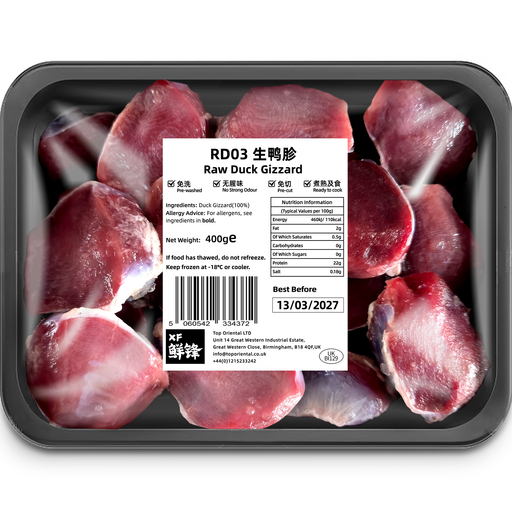
Why This Fits Their Persona: A practical starting point for home cooks trying raw duck ingredients in stir-fries or marinades without buying a whole bird.
It is clearly listed as raw and ready to cook, with a 400g net quantity and frozen storage guidance.
100% duck gizzard; pre-washed and pre-cut; listed for stir-frying or marinating.
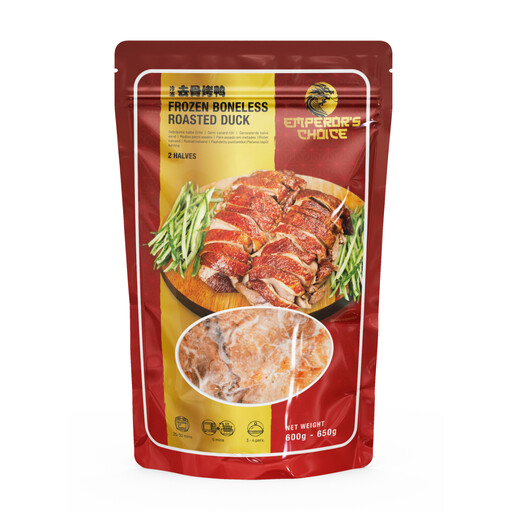
Why This Fits Their Persona: Suits shoppers seeking a convenient roasted duck centrepiece for wraps, stir-fries or entertaining at home.
The listing states that it is a pre-cooked boneless half duck, while also providing oven and microwave heating instructions.
600g pack; duck listed at 98%; suitable for heating and serving or using in other dishes.
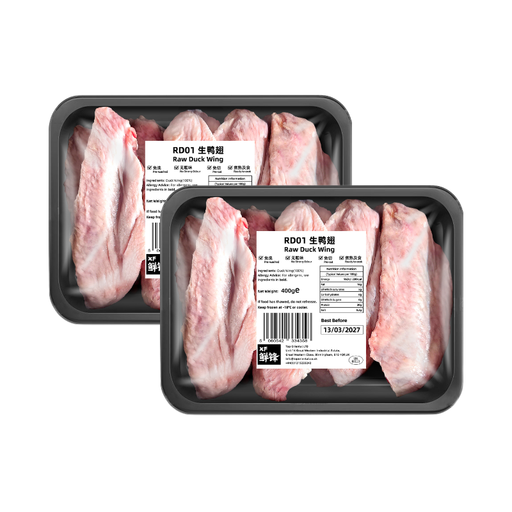
Why This Fits Their Persona: A useful format for regular braising, roasting or preparing spicy duck wings for several meals.
The product is identified as raw, pre-washed and pre-cut, with clear frozen storage and cooking guidance.
Pack format marked 400g x 2; 100% duck wing; suitable for braising, roasting and stir-frying.
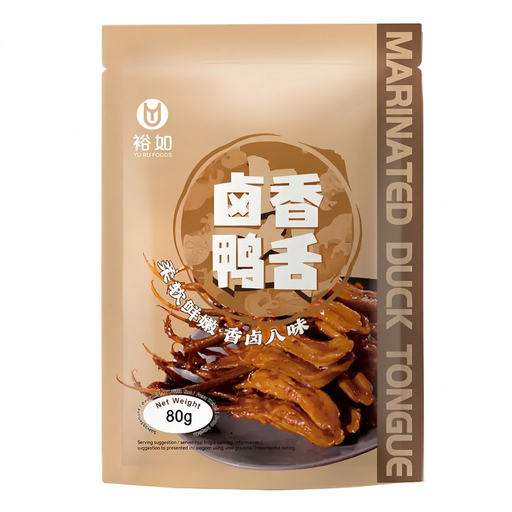
Why This Fits Their Persona: Designed for shoppers who want a small, ready-to-eat Chinese-style snack without cooking a raw ingredient.
It is listed as ready to eat, with an 80g net quantity and clearly declared soy and wheat allergens.
Ready-to-eat format; individually packaged; marinated with soy sauce and spices.
We have compiled a complete, real-time list of products that fully satisfy these strict selection criteria and UK safety regulations.
Place raw frozen duck in a freezer at -18°C or colder as soon as possible. Keep it sealed to reduce freezer burn and follow the label’s use-by or best-before guidance. If the product has thawed, do not refreeze it unless the packaging specifically permits this.
Yes. Raw duck products must be cooked thoroughly before eating. Thaw them safely according to the packaging instructions, then use a suitable cooking method such as boiling, braising, roasting or stir-frying. Ready-to-eat cooked snacks have different instructions and should be checked separately.
A cooked snack needs no preparation beyond opening, while boneless roasted duck can be heated and served with wraps, rice or vegetables. Raw duck gizzards, wings and necks offer more flexibility for Chinese-style recipes but require additional preparation and cooking time.