
24/7 Customer Support

Free returns

Same-day & Next-day Delivery

Quality Guaranteed

Unlock Your Welcome Offers: FREE Delivery | Up to 80% OFF | Free 30-day JoyPlus trial
Download the APP
Buying dumbbell sets for home workouts can seem straightforward until you compare handle materials, weight systems and storage requirements. A pair that looks suitable online may feel uncomfortable during longer sessions, roll across the floor between exercises or offer too little progression for your routine.
For UK homes where space is often limited, the right choice should balance weight, grip, stability, adjustability and storage. The following guide highlights common buying traps and explains which types of dumbbells may suit different home fitness users.
A compact dumbbell can still feel demanding, particularly during shoulder raises, Pilates movements or higher-repetition cardio circuits. On the other hand, a very light pair may become limiting once your strength improves.
Check whether the listed weight applies to one dumbbell or the complete pair. For example, a product described as 2 x 4 kg dumbbells means each hand weight is 4 kg, giving a combined set weight of 8 kg. This distinction is important when comparing 4 kg dumbbells with adjustable alternatives.
A textured surface does not automatically provide a secure grip. Hard plastic or rough metal may become uncomfortable when your hands are warm, while a very smooth finish can feel less stable during fast movements.
Look for the stated coating and grip dimensions. Neoprene-coated dumbbells generally offer a softer contact surface, while anti-slip coatings on cast iron adjustable dumbbell sets may provide a firmer, more utilitarian feel. Grip comfort remains personal, so consider handle diameter as well as the outer material.
Round dumbbells can roll under furniture or towards other equipment after being put down. This is inconvenient in a small flat and can create a trip hazard.
Hexagonal dumbbells are designed with flat sides that help prevent rolling. However, they should still be placed gently on a stable, level surface. Avoid storing a dumbbell set on a high shelf, particularly where it could fall during retrieval.
For beginners, a 2.7 kg dumbbell set can be practical for light resistance work, Pilates, arm exercises and full-body conditioning. A pair of 4 kg weights may suit users who want more resistance for squats, lunges, rows and general strength training.
A 4.5 kg dumbbell set may be more suitable for users who already have some training experience or want a heavier option for lower-body exercises. If you are unsure, choose a weight that allows controlled movement through the complete range without compromising posture.
An adjustable dumbbell set can reduce the need to purchase several pairs. Check the adjustment mechanism carefully, including how plates are secured and whether both sides must be tightened separately.
For home workouts, a non-slip dumbbell should offer a secure hold without causing unnecessary hand discomfort. Neoprene is soft to touch and can be more comfortable for repeated circuits, while cast iron with an anti-slip coating is typically selected for a more traditional strength-training feel.
Also check the product dimensions. A handle around 11.5 cm long and approximately 3.9 cm in diameter, as listed for several products below, may feel different depending on hand size and exercise type.
Compact dumbbells are easier to store in a cupboard, under a sofa or beside a home gym bench. Flat-sided designs are useful where equipment needs to remain in place between sets.
The surface underneath also matters. Place weights on a mat or another suitable surface where possible, and do not drop them after a set. This helps protect flooring and reduces unnecessary impact on the dumbbells.
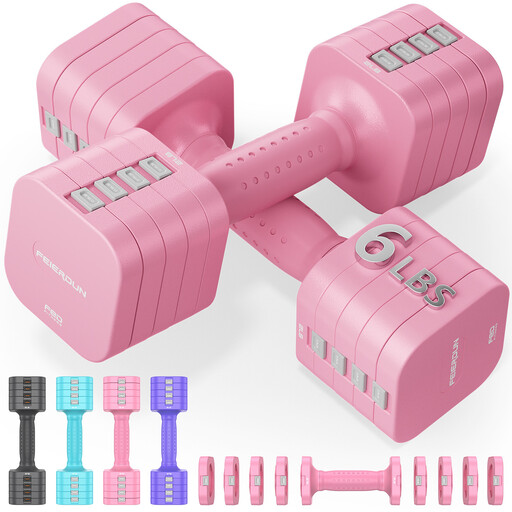
Why This Fits Their Persona: The 2 x 2.7 kg configuration is suited to beginners, light resistance sessions and users working out in a smaller UK home. Its compact format is easier to store than several fixed-weight pairs.
The double-locking protection is designed to keep plates secured, while the stated quick-adjustment format avoids buying multiple sets at the outset.
Cast-iron construction, anti-slip coating, compact storage and a stated 1-second weight adjustment.
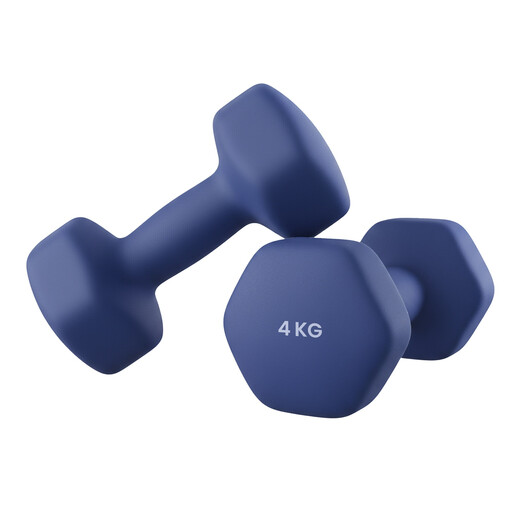
Why This Fits Their Persona: This fixed pair suits users wanting a straightforward option for strength training, cardio circuits and regular home workouts without adjustment parts.
The hexagonal shape helps prevent rolling, while the neoprene coating provides a softer contact surface than bare metal.
Each dumbbell is listed at 4 kg, with cast iron construction, a 20.5 x 9.5 cm body and an ergonomic 11.5 cm grip.
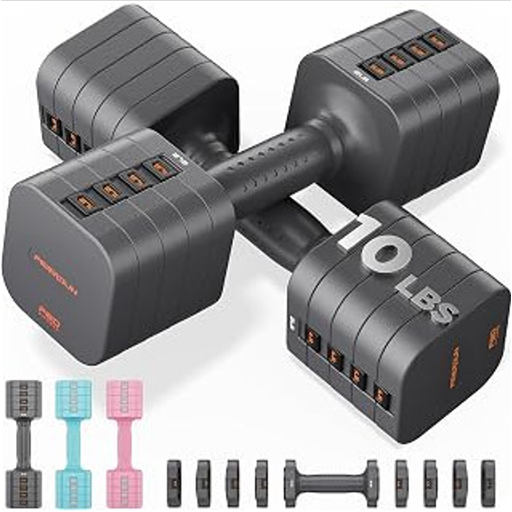
Why This Fits Their Persona: The 4.5 kg per-dumbbell format provides a heavier option for users progressing beyond light resistance work and combining upper- and lower-body exercises.
The adjustable design allows weight changes without purchasing separate fixed pairs, and the double-locking system is intended to retain the plates during movement.
Cast iron with an anti-slip coating, compact storage and a stated 1-second quick-adjustment format.
We have compiled a complete, real-time list of products that fully satisfy these strict selection criteria and UK safety regulations.
They can suit a range of exercises, including squats, rows, chest presses and moderate cardio circuits. Suitability depends on the movement and your current strength. A 4 kg weight may feel demanding for shoulder exercises but relatively light for some lower-body movements.
They can be useful where storage space is limited because one set may cover more than one resistance level. However, adjustable designs have more components to check. Tighten the locking system fully before use and inspect it periodically for wear.
Keep them on a flat, stable surface away from damp areas and walkways. Hexagonal dumbbells are less likely to roll, while all weights should be placed down carefully to reduce noise, floor damage and the risk of injury.