
24/7 Customer Support

Free returns

Same-day & Next-day Delivery

Quality Guaranteed

Unlock Your Welcome Offers: FREE Delivery | Up to 80% OFF | Free 30-day JoyPlus trial
Download the APP
A compact set of dumbbell sets for home workouts can make strength training easier to fit around work, family life and the unpredictable British weather. However, product pages often focus on appearance and broad fitness promises while leaving out the details that affect everyday use.
Before buying, look beyond colour and promotional wording. The right pair or set should match your current strength, available storage and the types of movements you plan to perform.
A very light pair may suit shoulder raises, mobility work and beginner routines, but it may offer limited progression for squats, rows or presses. Conversely, buying heavy hand weights immediately can make good form difficult, especially if you are new to resistance training.
Consider the exercises you intend to perform and whether you need one pair for general movement or several increments for gradual progression. A mixed set of 1 kg, 1.5 kg and 2 kg dumbbells can be more flexible than a single pair for some beginners, while 3 kg or 5 kg pairs may suit users who already have experience with resistance training.
A coating described as non-slip can improve grip, but it does not remove the need for dry hands, controlled movement and suitable storage. Neoprene dumbbells generally feel softer and warmer than bare metal, while the texture and handle shape affect how securely they sit in your hand.
Check the handle diameter, grip length and coating material. These details matter more than a lifestyle photograph showing someone exercising.
Round weights can roll under furniture or across a hard floor between sets. This is inconvenient and may create a trip hazard. Hex dumbbells have flat ends, helping them remain stationary when placed down carefully.
Even with a stable shape, dumbbells should not be stored in elevated locations or left where children can access them. A dedicated stand can also help keep a small home gym organised.
Product listings should state the net weight and whether a small tolerance applies. For example, some listed pairs may have up to a 3% weight discrepancy. This is worth knowing when planning balanced exercises or comparing pairs.
For progressive strength training, think about:
Cast iron provides the core mass, while a neoprene coating can make the surface more comfortable to hold and easier to distinguish by colour. A practical listing should provide dimensions rather than relying only on terms such as “ergonomic”.
Look for:
Dumbbells require very little floor space, but they still need a stable storage point. A stand may be useful in a flat, bedroom or home office where equipment must be put away after each session.
For floor-based exercises, a yoga mat can provide a more defined training area for Pilates fitness equipment, core exercises and stretching. A 3 mm mat is relatively slim, so consider the surface beneath it and whether you need additional cushioning.
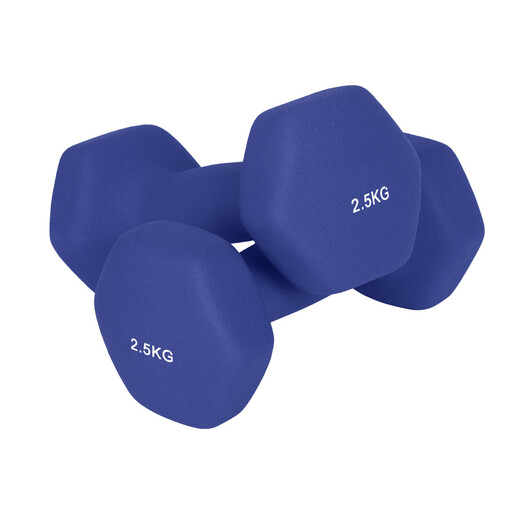
Why This Fits Their Persona: A manageable pair for beginners building a simple routine in a UK flat, bedroom or living room without needing a complete rack.
The hexagonal ends help prevent rolling, while the stated 2 x 2.5 kg weight and dimensions make comparison more transparent than a vague “starter” label.
Cast iron core, neoprene coating, ergonomic grip and a pair format for symmetrical exercises.
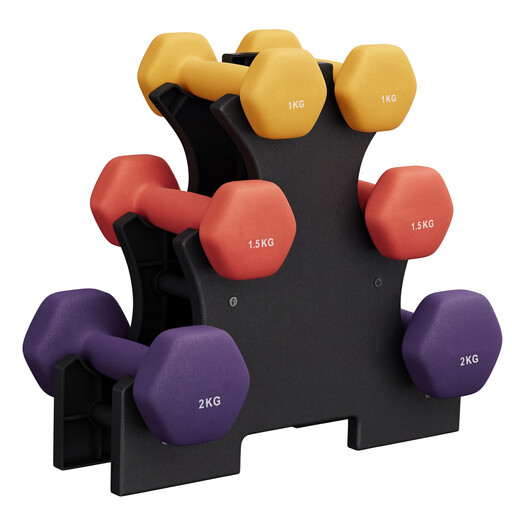
Why This Fits Their Persona: Suitable for users who value an organised setup and want several lighter resistance options ready for short home sessions.
The included stand addresses loose storage, while the hex shape reduces rolling between sets. The three stated pairs make the available progression clear.
Includes 1 kg, 1.5 kg and 2 kg pairs, plus a PP plastic stand and neoprene-coated handles.
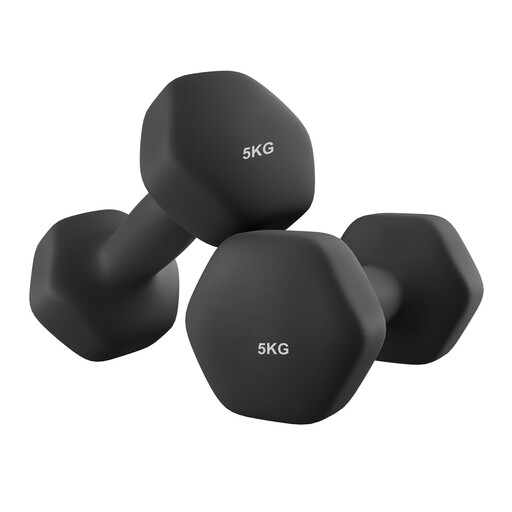
Why This Fits Their Persona: A practical choice for experienced home users who need more resistance for movements such as rows, squats and loaded carries.
The listing specifies the 2 x 5 kg net weight, handle dimensions and cast iron construction instead of relying solely on performance language.
Neoprene-coated cast iron, hexagonal ends and a 5 kg pair format for higher-resistance training.
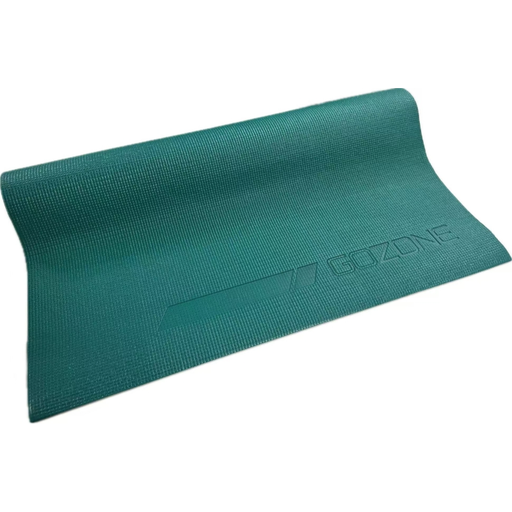
Why This Fits Their Persona: Useful for people combining dumbbell routines with Pilates, yoga, stretching, balance work or floor-based conditioning at home.
The stated 68 x 24 inch size and 3 mm thickness let you judge floor coverage and cushioning before purchase, rather than guessing from photographs.
PVC construction, embossed surface and wipe-clean finish for yoga, Pilates and floor workouts.
Start with movements that match your ability: supported rows, goblet squats, deadlift patterns, presses and controlled curls. Keep the dumbbells on a level surface, lift with a stable stance and place them down gently after each set.
If you are short on space, select one pair that matches your main exercises, then add lighter hand weights for shoulder and mobility work. If several people use the equipment, a stand or a range of weights can make shared storage simpler. A yoga mat can define your exercise area, but it should be placed on a clear, level floor.
Do not treat a coating, colour or storage rack as a substitute for safe technique. Inspect handles and coatings periodically, keep equipment dry and follow the supplier’s care and safety instructions.
We have compiled a complete, real-time list of products that fully satisfy these strict selection criteria and UK safety regulations.
Yes, provided the weight allows controlled movement without compromising form. Beginners may prefer lighter pairs or a set with several modest increments. Begin with manageable repetitions and increase resistance gradually.
A pair needs only a small storage area, but you also need enough clear floor space to move safely. Measure your chosen workout area and check the product dimensions, especially if adding a stand or mat.
Lifespan depends on construction, frequency of use, storage and how the weights are placed down. Cast iron with a maintained coating can remain usable for a long time, but inspect the handles, coating and ends regularly. Avoid dropping dumbbells, storing them in damp areas or leaving them where they can cause trips.