
24/7 Customer Support

Free returns

Same-day & Next-day Delivery

Quality Guaranteed

Unlock Your Welcome Offers: FREE Delivery | Up to 80% OFF | Free 30-day JoyPlus trial
Download the APP
Buying dumbbell sets for a home gym can seem straightforward until you compare handle coatings, weight systems and storage requirements. A low price may not reveal whether the grip becomes uncomfortable during longer sessions, whether plates stay secure or whether the set suits your actual training plan.
For UK shoppers, three common buying traps deserve attention:
First, identify whether the listed weight applies to one dumbbell or the complete pair. This distinction matters when comparing a 10 kg dumbbell set with fixed 10 lb dumbbells or an adjustable dumbbell set.
For beginners, Pilates users and lighter resistance routines, 6 lb dumbbells may offer a manageable starting point. Those progressing towards upper-body strength work may prefer 10 lb dumbbells or a set with adjustable plates. An adjustable design can reduce the need to buy several separate pairs, although it requires careful tightening before every session.
If you are selecting a dumbbell set for women, avoid assuming that one weight suits every user. Hand strength, exercise choice and training experience are more useful measures than gender-based labelling.
The handle should remain secure without forcing you to grip excessively hard. Neoprene dumbbells usually provide a softer coated surface than bare metal, which can be more comfortable for floor-based workouts, light resistance training and repeated movements.
A non-slip dumbbell should still be checked for:
For example, the 10 lb neoprene hex dumbbells listed below use a textured navy blue neoprene coating, contoured handle and printed weight markings. The hexagonal ends also help prevent rolling when stored on a level surface.
Adjustable models need more inspection than fixed weights. Check how plates are secured, whether the locking components are easy to tighten and whether the assembled dumbbell remains balanced.
A double-locking mechanism can help retain plates, but it is not a substitute for correct setup. Before each workout, confirm that the locking parts are fully engaged. Never change the weight while the dumbbell is moving, and use weights on a stable, level surface.
Storage is another practical consideration in UK homes, where spare-room, flat and living-room space may be limited. Hexagonal ends, compact adjustable handles and conversion components can help keep equipment organised, but measure your intended storage area before ordering.
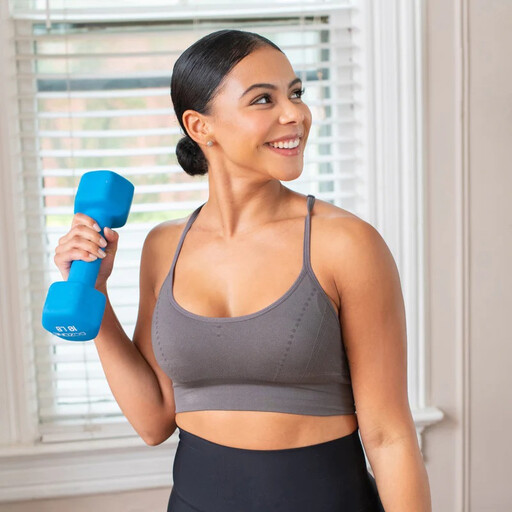
Why This Fits Their Persona: A straightforward fixed-weight option for home users who want a pair for general resistance work without managing plates or conversion parts.
The fixed 10 lb format removes uncertainty about plate adjustment, while the hexagonal ends help stop the weights rolling across the floor.
Textured neoprene coating, contoured handle, printed weight number and colour-coded identification.
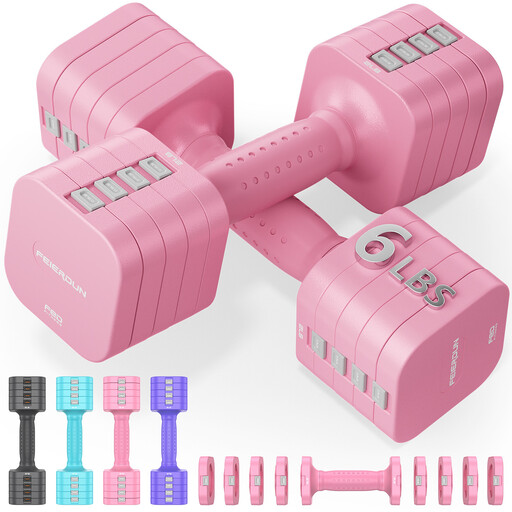
Why This Fits Their Persona: Designed around 2.7 kg (6 lb) per dumbbell, this compact pair suits lighter resistance sessions, Pilates-style routines and home workouts.
The stated weight per dumbbell makes comparison clearer, and the double-locking protection is intended to keep plates fixed when correctly tightened.
Cast-iron construction, anti-slip coating, quick weight adjustment and compact storage design.
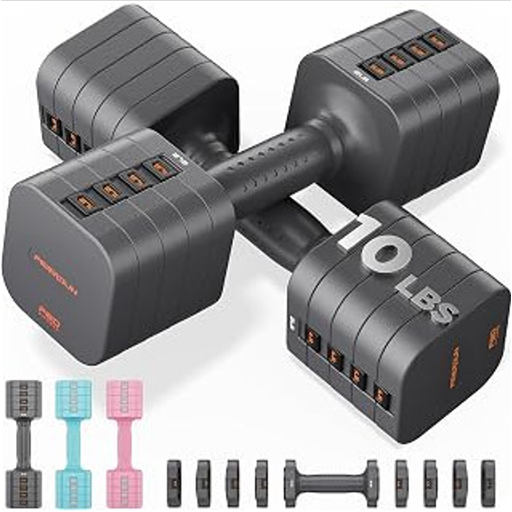
Why This Fits Their Persona: The 4.5 kg (10 lb) per-dumbbell format provides more resistance for users moving beyond lighter conditioning work while retaining a compact home-gym footprint.
The clearly stated per-dumbbell weight helps avoid confusing total-set measurements, while the locking system addresses loose-plate concerns when installed correctly.
Cast-iron plates, anti-slip coating, double-locking protection and quick adjustment.
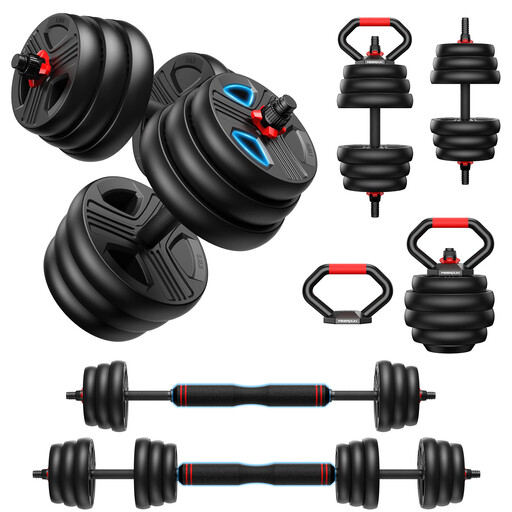
Why This Fits Their Persona: Suitable for people building versatile full-body strength training equipment into a limited home footprint, with several exercise configurations in one set.
Its listed 10 kg total set weight is clear, while the conversion design makes the space-saving benefit more practical than buying separate dumbbells, a barbell and a kettlebell.
5-in-1 format, adjustable resistance, cast-iron construction and modes for dumbbell, barbell, kettlebell and push-up stand use.
We have compiled a complete, real-time list of products that fully satisfy these strict selection criteria and UK safety regulations.
Place dumbbells on a stable, level surface and leave enough room to lift and lower them without striking furniture. For adjustable models, follow the supplied assembly instructions and check every locking component before use.
After training, wipe sweat and moisture from the handles, plates and connectors with a dry cloth. Periodically inspect coatings, threads, locking nuts and handles for visible wear. Stop using a component if it is cracked, loose or no longer secures correctly. Store weights away from damp areas and avoid dropping them, as repeated impact can damage both the equipment and flooring.
They can be, provided the starting resistance is appropriate and the user understands how to secure the plates. Fixed neoprene dumbbells may be simpler for someone who wants immediate, low-maintenance use, while adjustable sets offer more flexibility as training needs change.
A pair of 6 lb dumbbells can be suitable for lighter resistance exercises, Pilates, mobility routines and higher-repetition upper-body movements. Whether they are sufficient depends on the exercise and the user’s current strength. A set that allows adjustment may offer more flexibility over time.
Lifespan depends on construction, frequency of use, storage and handling. Cast iron components can remain serviceable for a long period when kept dry and checked regularly. Coated weights may show surface wear if repeatedly dropped or stored in damp conditions. Following the manufacturer’s maintenance and safety instructions helps preserve the set.