
24/7 Customer Support

Free returns

Same-day & Next-day Delivery

Quality Guaranteed

Unlock Your Welcome Offers: FREE Delivery | Up to 80% OFF | Free 30-day JoyPlus trial
Download the APP
Making dumplings at home can be straightforward when the pastry is suitable for the dish. The difficulty is choosing between dumpling wrappers, wonton wrappers, gyoza wrappers and spring roll pastry when pack descriptions often use overlapping terms.
For UK shoppers, the main risks are buying the wrong shape, overlooking storage requirements or assuming every wrapper suits vegetarian, vegan or allergy-conscious cooking. A little attention to the product specification can prevent torn pastry, wasted fillings and wrappers that dry out before the meal is ready.
Dumpling skins are usually round and designed for folded Chinese dumplings, jiaozi or potstickers. Gyoza skins are also round, but are commonly associated with Japanese dumplings and may be thinner or slightly different in size.
Wonton wrappers are generally square and work well for wontons, soup dumplings and fried appetisers. Spring roll pastry is different again: its larger, thin sheets are intended for rolling around fillings rather than pleating into small dumplings.
A square wonton pastry can be used creatively for dumplings, but it may not produce the same shape or folding experience as round Chinese dumpling wrappers or Japanese dumpling wrappers.
Many Asian pastry wrappers are sold frozen. This helps with storage, but the sheets can become sticky, brittle or difficult to separate if they are thawed repeatedly or left uncovered.
Check whether the product must be kept at -18°C or below, whether it should be thawed in the refrigerator or at room temperature and whether unused sheets can be refrozen. Several products specify that they should not be refrozen after thawing. Plan your quantities before opening the packet and keep the remaining wrappers covered to reduce drying.
Most dumpling pastry contains wheat and therefore gluten. Some wonton pastry also contains egg white, while certain spring roll pastry products may include coconut, milk or possible traces of soya and other allergens.
Always read the current packaging rather than relying only on a recipe description. People with coeliac disease, food allergies or specific dietary requirements should check the full ingredient and allergen statement before purchase.
Choose the format based on the food you intend to make:
Pack weight does not always indicate the number of sheets. For example, Imperial Dragon Wonton Wrappers 350g contains approximately 30 wrappers, while the TYJ Spring Roll Pastry 550g packs contain either 30 or 40 sheets depending on the product. If you are cooking for a family or preparing a party platter, sheet count can be more useful than weight alone.
Thin pastry can give a delicate bite, but it needs careful handling and sufficient moisture around the edge for sealing. Slightly more resilient wrappers may be easier for beginners or for fillings that contain more liquid.
Look for descriptions such as uniform thickness, pliable, flexible or resistant to breaking, but treat these as product characteristics rather than guarantees. Keeping wrappers covered while you work is equally important.
Confirm whether the wrappers are raw and require thorough cooking. Dumpling wrappers can generally be boiled, steamed or pan-fried, while spring roll pastry is commonly fried, baked or air-fried.
For a vegetarian or vegan meal, check the ingredients in the specific pack. Fillings may be vegetarian even when the pastry is not. Also remember that raw wheat pastry should not be eaten before cooking.
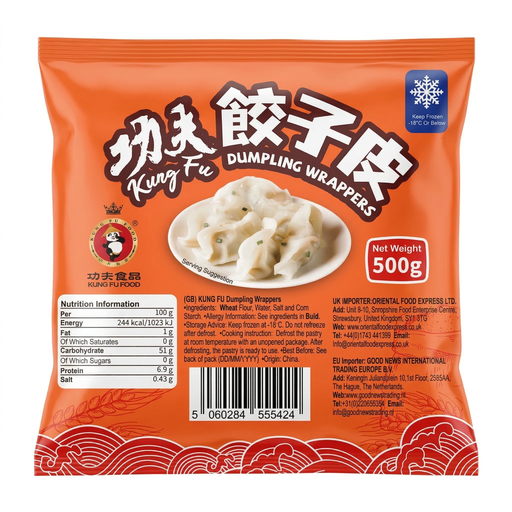
Why This Fits Their Persona: A 500g pack gives first-time cooks a practical quantity for family meals, batch preparation or trying several folding styles at home.
The product is clearly identified as frozen dumpling wrappers and includes thawing and cooking guidance, helping avoid confusion with wonton pastry or spring roll sheets.
Made with wheat flour, water, salt and cornflour; suitable for boiling, steaming or pan-frying after thawing.
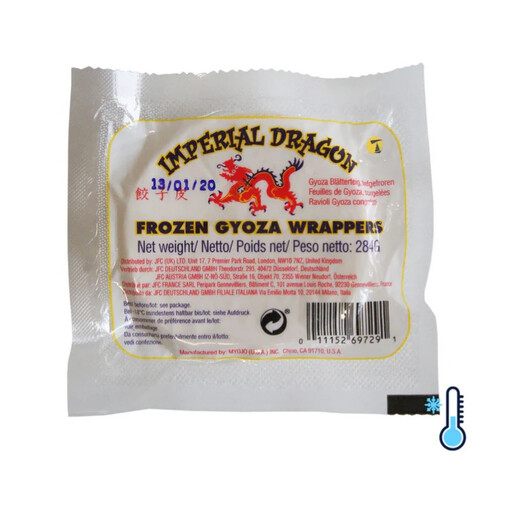
Why This Fits Their Persona: Suitable for cooks who want round, consistently shaped gyoza skins for a Japanese-style dinner or a hands-on meal with family and friends.
Its round format distinguishes it from square wonton wrappers, while the stated uniform thickness supports more consistent filling and folding.
Round wheat wrappers with potato starch; can be used for gyoza, potstickers and some wonton recipes.
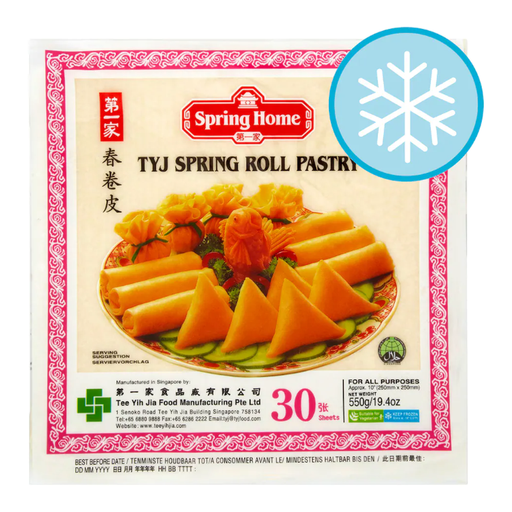
Why This Fits Their Persona: A useful option for parties, batch cooking and snack preparation when larger sheets are more suitable than traditional dumpling pastry.
The pack states 30 sheets and gives separate frying, baking and air-frying guidance, making the intended use clearer than a generic pastry label.
Ready to use without pre-cooking; suitable for savoury or sweet rolls and several cooking methods.
We have compiled a complete, real-time list of products that fully satisfy these strict selection criteria and UK safety regulations.
Thaw frozen dumpling skins according to the pack instructions. If refrigerator thawing is recommended, allow enough time before cooking. Separate sheets gently rather than forcing them apart, and cover the unused stack with a slightly damp, clean cloth or keep it in its packaging.
Use a modest amount of filling. Overfilled wrappers are more likely to split during boiling or release filling in a pan. Moisten the edge with water, press firmly to seal and cook the dumplings thoroughly. For spring roll pastry, keep the sheets covered and seal the final fold with water.
Often, yes, particularly when the wrapper is thin and flexible. However, square wonton wrappers are easier to fold into traditional wonton shapes, while round dumpling wrappers are more suitable for pleated jiaozi or potstickers.
Follow the date and storage instructions on the packaging. Keep them frozen at the stated temperature, avoid repeated thawing and do not refreeze products where the instructions prohibit it. Once thawed, use them promptly.
It depends on the ingredients. Some wrappers contain only wheat flour, water, salt and starch, while others include egg or may contain milk and soya traces. Check the latest UK packaging and allergen information before buying, especially when preparing food for guests with dietary restrictions.